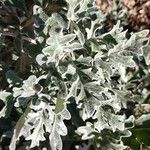
Jacobaea maritima
برگ نقره ای · Dusty-miller · Silver Ragwort · Silver groundsel
Description
Source: leafsnapJacobaea maritima, commonly known as silver ragwort or dusty miller, is a perennial plant in the Asteraceae family. Native to the Mediterranean region, it has gained popularity in gardens and landscapes worldwide for its attractive silver-gray foliage. The plant can grow up to 60 cm tall and features deeply lobed leaves covered with fine hairs, giving them a velvety texture. It produces small yellow flowers that bloom from mid-summer through fall. Silver ragwort thrives in well-drained soil and full sun but can also tolerate partial shade. Once established, it is drought-tolerant, although it benefits from occasional watering during extended dry periods. The plant can be propagated by division or stem cuttings. Besides its ornamental appeal, Jacobaea maritima has been used for medicinal purposes for centuries due to its anti-inflammatory properties. However, it is important to note that all parts of the plant contain toxic compounds that can cause skin irritation or gastrointestinal distress if ingested in large quantities. Overall, Jacobaea maritima is a striking addition to any garden or landscape, offering unique foliage color and texture. Its potential medicinal benefits should be approached cautiously and only under the guidance of a professional.
💡 This plant, despite being quite common, has a history of being misidentified by botanists and horticulturists. It has frequently been incorrectly classified as Centaurea, a mistake often repeated in various online sources. Jacobaea maritima was previously categorized under the genus Senecio and is still often mistakenly referred to as Senecio cineraria.
🌳 Silver ragwort is a popular choice for exposed cottage and informal gardens due to its ability to withstand wind, its low maintenance needs, and its attractive silvery-grey, felt-like leaves. When grown in containers, it fits well in city or courtyard gardens and also makes an excellent cut flower.
Care Guide
💧 Water Every 7 days
Silver ragwort thrives in dry coastal habitats and is drought-tolerant, needing only weekly watering. It flourishes in well-draining soil, similar to sandy substrates, to prevent root rot. Ideally grown outdoors, silver ragwort is resilient to sporadic moisture but should not be overwatered.
How should I water my Silver ragwort so it's happy and healthy?
Your Silver ragwort is not particular about how you water it. You can use any common watering tool, such as watering cans, hoses, or even cups. It is important to apply the water directly to the soil and make sure all areas are equally moistened to provide water to the entire root system. Filtered water is recommended to avoid harmful particles found in tap water. Additionally, using water at or slightly above room temperature is beneficial as extremely cold or hot water can be shocking to the Silver ragwort. However, the plant usually responds well to any type of water.
What do I do if I give too much or too little water to my Silver ragwort?
Outdoor plants, especially new ones or seedlings, can suffer from lack of watering. Make sure to water them enough for the first few months, until their roots are established and they can rely on rain. When planting Silver ragwort in pots, be careful not to overwater. If you accidentally overwater, take immediate action. Stop watering the plant and check its roots by removing it from the pot. If there is no root rot, you can put it back in the pot. If there is root rot, trim affected roots and use a fungicide to prevent further damage. Repot the plant in well-draining soil. On the other hand, if you underwater the Silver ragwort, its leaves will droop and dry out. Water it more frequently to fix the issue. Adjust your watering frequency as soon as you notice underwatering.
How often should I give water to my Silver ragwort?
Many outdoor plants can grow naturally with rainfall, but if your area lacks rainfall, you should water them every 2 weeks in the spring and fall, and more frequently in the summer. In the winter, when plants need less water, you should water them sparingly or not at all. However, if your Silver ragwort is young or newly planted, it needs more frequent watering to help it establish and grow. For potted plants, you have two options for determining how often to water your Silver ragwort. The first option is to follow a set watering schedule, such as once every week or every other week. However, this may not account for the specific conditions of your plant's environment. Another option is to base your watering frequency on the moisture level of the soil. Wait until the top two to four inches of soil have dried out completely before watering again. This method allows for more flexibility and takes into consideration the plant's increased water needs during the summer.
How much water does my Silver ragwort plant require?
To water your Silver ragwort effectively, you don't always need to use a lot of water. If only a few inches of soil have dried since the last watering, giving it about five to ten ounces of water should be sufficient for healthy growth. You can also determine the water volume based on the moisture of the soil. Take note of how many inches of soil have dried out between waterings. An effective way to ensure your Silver ragwort gets enough moisture is to water it until all the dry soil layers from the previous watering are moistened. If more than half of the soil is dry, it's advisable to give more water than usual. In such cases, continue watering until you see excess water draining from the pot's drainage holes. If your Silver ragwort is planted in an area that receives plenty of rain, you may not need to provide additional watering. However, when the plant is young or newly established, ensure it receives 1-2 inches of rain per week. As it grows and becomes established, it can rely solely on rainwater. Only in circumstances when the weather is hot and there has been no rainfall for 2-3 weeks should you consider giving a full watering to prevent stress to the Silver ragwort.
Am I giving enough water to my Silver ragwort?
The Silver ragwort is more commonly affected by overwatering, and there are specific signs to look for in this situation. If overwatered, the leaves of the Silver ragwort will turn yellow and possibly fall off. Moreover, overwatering can lead to the plant's overall structure shrinking and potentially cause root rot. Conversely, if the Silver ragwort is underwatered, it will start to droop and its leaves may become brown and fragile. Regardless of whether you observe signs of overwatering or underwatering, it is important to take action and restore the health of your Silver ragwort.
☀️ Light Full sun
Silver ragwort does well in locations that receive sunlight for most of the day. Although it can tolerate reduced light, abundant sun encourages robust growth. It naturally occurs in places with plenty of light. Too much or too little sun can harm its health and vigor.
What are the sunlight requirements for Silver Ragwort?
Silver Ragwort, known botanically as Jacobaea maritima, thrives in full sun, requiring above 6 hours of sunlight daily for optimal growth. It can also adapt well to partial sun conditions, where it receives about 3-6 hours of sunlight. Ensuring the right balance of light is crucial for the health and vitality of Silver Ragwort, as both overexposure and underexposure can be detrimental. Observing how sunlight moves through your garden to choose the perfect spot for your plants is advised, promoting their happiness and growth.
How does Silver Ragwort respond to artificial lighting?
In scenarios where natural sunlight is insufficient, especially during winter or in less sunny spaces, Silver Ragwort can benefit greatly from artificial lighting. Indoor plants, in particular, require adequate lighting for optimal growth. LED lights, being customizable to specific wavelengths needed by plants, are a popular choice for indoor plant lighting. Full sun plants need 30-50W/sq ft, partial sun plants need 20-30W/sq ft, and full shade plants need 10-20W/sq ft of artificial light. The appropriate distance for the light source is 12-36 inches above the plant, mimicking natural sunlight. Most plants need 8-12 hours of artificial light per day.
What symptoms indicate Silver Ragwort is not receiving enough light?
Symptoms of insufficient light in Silver Ragwort include the appearance of small leaves, leggy or sparse growth, faster leaf drop, slower or no new growth, lighter-colored new leaves, and conditions like chlorosis, sunscald, leaf curling, wilting, and leaf scorching. These symptoms highlight the plant's need for more light, as Silver Ragwort is naturally adapted to thrive in abundant sunlight.
What solutions exist for improving Silver Ragwort's light exposure?
To enhance light exposure for Silver Ragwort, indoor plant solutions include gradually moving the plant to a sunnier location each week until it receives at least 6 hours of direct sunlight daily, using a south-facing window, and considering the use of artificial light if the plant is large or not easily movable. Outdoor and ground solutions involve gradually acclimatizing plants to sunnier areas to avoid sunburn and implementing measures to reduce obstructions, such as pruning trees that block sunlight or transplanting smaller plants to sunnier locations during their dormant period. It's important to note that affected parts may not recover, but new growth will be healthy with increased light exposure.
🌡️ Temperature 10–35°C
Silver ragwort can tolerate a wide range of temperatures, but its range may still be restricted by different combinations of moisture and heat. It does best in warm summer conditions with sufficient rainfall or regular watering. Long stretches of cloudy, rainy weather, as well as extended periods of high heat, can raise the risk of Silver ragwort dying. In winter, giving it proper protection from the cold can increase its chances of survival.
What is Silver Ragwort?
Silver Ragwort, known botanically as Jacobaea maritima, is a plant species that currently does not have details provided regarding its essentials or symptoms. This entry focuses on its classification and naming.
💨 Humidity dry (<40%)
This plant prefers dry conditions, so don't mist it. However, watering it less often can also thrive in higher humidity.
🪴 Soil 6-7
🌱 Fertilizer
Timing is essential when fertilizing Silver ragwort. Apply fertilizer in early spring and repeat monthly up to early summer. Fertilizer encourages attractive blooms and supplies energy during both dormant periods and active growth.
Why should I put fertilizer on my Silver ragwort?
Fertilizing a Silver ragwort has several important benefits. Notably, it helps the plant produce beautiful blooms. Fertilizing in early spring is particularly effective in ensuring that the Silver ragwort has excellent flowers during that season. Additionally, fertilizer provides the plant with ample energy to store in the ground during dormant phases. By giving the Silver ragwort extra nutrients in the fall or late spring, it can retain more energy to use when active growth resumes.
When should I fertilize my Silver ragwort to get the best results?
To effectively fertilize Silver ragwort, timing is crucial. Applying fertilizer too early, while the plant is still dormant, is ineffective as it will be washed away by rainfall, leading to waste and pollution. Begin fertilizing in early spring and continue with applications once a month until early summer.
When is it not a good idea to fertilize my Silver ragwort?
To ensure the healthy growth and blooming of your Silver ragwort, it's important to be mindful of its fertilizer needs. Avoid using fertilizers with a high level of nitrogen, as this tends to promote leaf growth rather than blooming. Instead, look for a fertilizer that has a lower level of nitrogen compared to other nutrients. Timing is also crucial when it comes to fertilizing Silver ragwort. It is not recommended to fertilize after early autumn, as this can lead to excessive growth right before winter. Additionally, refrain from fertilizing during hot and dry months, as dry soil does not effectively deliver nutrients. Fertilizing during this time can result in stimulated growth, which requires more water that may not be available. For optimal results, it is best to apply fertilizer during earlier parts of the season when temperatures are cooler. Remember that Silver ragwort can absorb fertilizer from nearby plants or lawns, so be cautious to avoid accidentally giving other plants a double dose of fertilizer. By following these guidelines, you can ensure the proper nourishment for your Silver ragwort without compromising its growth and blooming schedule.
What kind of fertilizer does my Silver ragwort plant need?
For optimal growth of the Silver ragwort plant, it is best to use a fertilizer that contains a balanced mix of plant nutrients, with slightly higher levels of phosphorus. Alternatively, some gardeners prefer to enhance the plant's soil by adding organic materials like compost, worm castings, and manure. When the flower buds begin to appear, experienced gardeners may choose to supplement with water-soluble fertilizers containing phosphorus, as this promotes better flower development, larger blooms, and longer blooming periods. Fertilizers are available in various forms, and most of them will work well for your Silver ragwort. However, the most effective fertilizers come in liquid or powdered forms. Regardless of the type you choose, make sure to dilute the fertilizer and apply it while watering your Silver ragwort.
How should I fertilize my Silver ragwort?
To properly fertilize your Silver ragwort, it is essential to follow the specific instructions for the fertilizer you are using and do some research. Over-fertilizing can be harmful, so it is crucial to determine the correct amount to use. A general guideline is to use the age of the tree or the trunk diameter to gauge the amount of fertilizer needed. Usually, it is recommended to estimate one-tenth of a pound of fertilizer per year or per inch of trunk, but the maximum should not exceed one pound. Apply granular or organic fertilizers, like blood meal, by sprinkling them around the base of the tree, extending all the way to the drip line. Ensure that the fertilizer does not come into contact with the trunk. Over time, the granules will break down and seep into the soil, where the tree's roots can absorb them. After fertilizing, spread a one-inch layer of compost around the base of the tree and thoroughly water it.
🪴 Pot & Repot 2-3 years
Repot silver ragwort every 2 to 3 years in early spring, using a slightly larger pot to prevent overwatering. After repotting, place the plant in a sunny location and water it sparingly. Silver ragwort prefers well-draining soil and thrives with minimal care when repotted correctly.
✂️ Pruning
Silver ragwort, known for its silvery foliage, benefits from pruning in early spring or late winter, which encourages dense growth. For optimal appearance, regularly trim away dead stems and reduce the plant's height by a third. Removing stems after blooming also helps improve the plant's lifespan, light access, air flow, and overall health.
🌿 Propagating
🐛 Diseases & pets
☠️ Toxicity
Dusty miller is considered mildly toxic to humans but highly toxic to animals. It contains hepatotoxic pyrrolizidine alkaloids, harmful chemicals that can obstruct blood flow and cause liver damage. Ingesting any part of this plant can irritate the skin, mouth, tongue, and throat. It can also lead to swelling, respiratory difficulties, and stomach upset.
Characteristics
- Plant Type
- Herb, Shrub
- Life Cycle
- Perennial, Annual
- Genus
- Jacobaea
- Family
- Asteraceae
- Hardiness Zone
- 6-9
- Mature Height
- 15 cm to 46 cm
- Mature Spread
- 15 cm to 46 cm
- Leaf Color
- Silver, Gray
- Leaf Type
- Evergreen
- Flower Color
- Yellow
- Flower Size
- 1.27 cm to 1.52 cm
- Bloom Time
- Late spring, Early summer, Mid summer
- Planting Time
- Spring
- Harvest Time
- Mid summer
- Native Area
- Mediterranean region