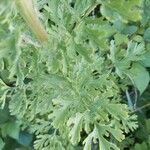
Jacobaea paludosa
Fen Ragwort · Great fen ragwort
Description
Source: leafsnapJacobaea paludosa, commonly known as marsh ragwort, is a perennial herbaceous plant belonging to the Asteraceae family. Native to Europe and Asia, it thrives in wetlands, marshes, bogs, and other moist environments. The plant can reach a height of up to 60 cm and features a basal rosette of deeply lobed, toothed leaves. Typically, the plant's stem is unbranched and bears clusters of yellow flowers, which bloom from June to August. Each flower measures approximately 2 cm in diameter. The leaves of Jacobaea paludosa contain toxic compounds, specifically pyrrolizidine alkaloids, which deter grazing animals due to their unpalatability. Interestingly, these same compounds have been utilized in traditional medicine for treating liver disorders. In wetland ecosystems, Jacobaea paludosa plays a crucial role by providing habitat and nectar for various insects, including butterflies and bees. Its extensive root system also aids in stabilizing soil erosion along riverbanks. Despite its ecological benefits, Jacobaea paludosa has been classified as an invasive species in some regions because it can spread rapidly via seed dispersal by wind or water currents. In summary, Jacobaea paludosa is a fascinating plant with significant ecological and medicinal properties. However, it requires careful management when introduced to new habitats outside its native range to prevent it from becoming invasive.
Care Guide
💧 Water Every 7 days
The great fen ragwort flourishes in wetland conditions, as it needs a balanced level of moisture. For optimal growth, it should be watered weekly, particularly during its active growing season, when its metabolic activity increases and requires more frequent hydration. As an herbaceous perennial, it benefits from consistent care to maintain its health and vibrancy.
☀️ Light Partial sun
Great fen ragwort occurs naturally in habitats such as forest understories or rocky areas, where it experiences natural shade. It prefers partial sun but can adapt to full sun or full shade, demonstrating its versatile and hardy nature.
🌡️ Temperature 5–32.2°C
Great fen ragwort can tolerate a wide range of temperatures, but its distribution may still be restricted by particular combinations of moisture and heat. It performs best in warm summer conditions with sufficient rainfall or watering. Extended periods of cloudy, rainy weather or prolonged high temperatures can raise the chance of Great fen ragwort dying. In winter, adequate protection from cold can increase the plant's survival rate.
💨 Humidity
🪴 Soil 6-7
🌱 Fertilizer
The best time to fertilize a Great fen ragwort is in early spring, as it comes out of dormancy and starts active growth. Fertilization supplies essential nutrients for healthy development. While Great fen ragwort has fairly low fertilizer requirements, an annual feeding can improve its survival and encourage better, longer-lasting flowers.
🪴 Pot & Repot
✂️ Pruning
Great fen ragwort flourishes in wetland habitats, its bright yellow flowers providing a striking display. To promote growth and improve its appearance, prune the plant from early to late spring. Remove any dead stems and spent flowers during this time. Be sure to use clean, sharp tools, and take care not to over-prune, as this helps maintain the plant's vitality and prevents disease.
🌿 Propagating
🐛 Diseases & pets
☠️ Toxicity
Characteristics
- Plant Type
- Herb
- Life Cycle
- Perennial
- Genus
- Jacobaea
- Family
- Asteraceae
- Hardiness Zone
- 4-8
- Mature Height
- 0.61 m to 1.83 m
- Mature Spread
- 30 cm to 61 cm
- Leaf Color
- Dark Green
- Leaf Type
- Semi-evergreen
- Flower Color
- Gold, Yellow
- Flower Size
- 2.03 cm to 3.05 cm
- Bloom Time
- Summer
- Planting Time
- Spring, Summer
- Harvest Time
- Late summer, Early fall, Mid fall