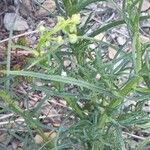
Jacobaea vulgaris
علف پیر گیاه · Common Ragwort · Ragwort · Jacobaea · Stinking Willie
Description
Source: leafsnapJacobaea vulgaris, commonly known as ragwort, is a perennial herbaceous plant in the Asteraceae family. Native to Europe and Asia, it has spread to other regions worldwide. The plant can grow up to 1 meter tall, featuring a branching stem adorned with yellow flowers that bloom from June to October. Ragwort is often considered a weed due to its rapid spread and toxicity. It contains pyrrolizidine alkaloids, which can be harmful if ingested by livestock or humans. Despite this, ragwort is an essential food source for many insects, including butterflies and moths. Interestingly, despite its toxic nature, ragwort has been used in traditional medicine to treat various ailments such as wounds, fever, and respiratory issues. In ancient times, it also served as a dyeing agent for fabrics, imparting a yellow color. To address the negative impact of ragwort on livestock health, governments worldwide have implemented control measures. Nevertheless, ragwort remains a common sight along roadsides and in fields across Europe. During the summer months, its bright yellow flowers attract pollinators like bees and butterflies. These pollinators play a crucial role in maintaining biodiversity within ecosystems where ragwort grows naturally, provided it is left undisturbed by humans or animals.
🎭 Safeguarding, the faerie realm
Care Guide
💧 Water Every 7 days
Tansy ragwort, suitable for moderate climates, thrives in consistently moist soil. It benefits from weekly watering but can tolerate brief periods of dryness. Primarily grown outdoors, tansy ragwort needs regular monitoring throughout the growing season to ensure it receives enough water, particularly during dry spells.
How should I water my Tansy ragwort plant at different stages of growth?
The water needs of the Tansy ragwort vary throughout its growth stages. When the plant is in its early years or has been recently transplanted, it requires more water than usual. During these stages, the plant focuses on developing new roots to support future growth, which necessitates additional moisture. As the Tansy ragwort matures, it will require less water. The bloom period is another stage where the plant may need more water, as flower development consumes a significant amount of moisture.
How should I water my Tansy ragwort plant to keep it healthy?
To properly water the Tansy ragwort, it is best to use filtered water at room temperature. Tap water may contain harmful particles that can affect the plant's health. The Tansy ragwort is accustomed to a warm environment, so using cold water can shock its system. It is advised not to water from above as it may cause problems with the foliage. Instead, apply filtered room temperature water directly to the soil until it is completely soaked. This will benefit the plant by keeping the roots moist and allowing them to spread and gather nutrients.
What do I do if I give my Tansy ragwort too much or too little water?
Overwatering is a common issue that can harm your Tansy ragwort. It causes wilting, yellowing leaves, and can lead to diseases like root rot, mold, and mildew, which can be fatal for your plant. Underwatering is less likely, but can still happen, causing brittle and brown leaves. It's important to notice signs of overwatering early to prevent irreparable damage. Reduce watering if you see these signs and check the soil quality. If it drains poorly, replace it with a well-draining mix. If your Tansy ragwort lacks water, increase watering until the signs go away.
How often do I need to water my Tansy ragwort plant?
If your Tansy ragwort plant is in a pot, you can determine if it needs water by checking the soil moisture. Simply stick your finger into the soil and if the top two to three inches are dry, it's time to water. If you're growing Tansy ragwort outdoors in the ground, you can use a similar method to test the soil. Again, if the top few inches of soil are dry, it's a sign to water. Typically, during spring and early fall, watering once a week is sufficient. However, in extremely hot weather, you may need to water twice a week or more. It's worth noting that mature, well-established Tansy ragwort plants have a good tolerance for drought.
How much water does my Tansy ragwort plant require?
To properly water your Tansy ragwort, be generous with the amount of water you give. When the top few inches of soil are dry, it's time for a thorough watering. Make sure the water fully soaks the soil, but add enough so that excess water drains through the holes at the bottom of the pot. If you don't see any excess water draining, you likely haven't watered enough. Be careful not to let water accumulate in the soil, as this can harm the plant. On the other hand, if water doesn't drain well, it could mean the soil isn't draining properly, which is bad for the plant's health. If the plant is outside, 1 inch of rain per week should be adequate.
☀️ Light Full sun
Tansy ragwort grows best with a broad range of light exposure typical of open areas. It can still do moderately well in lightly shaded conditions. However, low light can limit its growth, while excessive exposure can weaken it. It is originally accustomed to sites that receive substantial sunlight.
What are the sunlight requirements for Tansy ragwort?
Tansy ragwort requires a varying degree of sunlight exposure to flourish, thriving best in open settings where it can receive considerable sunlight throughout the day. Ideally, it should be placed in locations where it can enjoy full sun, which is above 6 hours of direct sunlight daily, or partial sun, approximately 3-6 hours of sunlight. Adapting to the movement of sunlight in your garden and finding a balance between light and shade ensures the plant's well-being. Nevertheless, while it can perform moderately well under slight shade, too little light will hinder its growth, and excessive exposure may affect its vitality negatively.
How does artificial lighting affect Tansy ragwort's growth indoors?
When natural sunlight is insufficient, especially during winter or in less sunny spaces, artificial lighting becomes crucial for Tansy ragwort's indoor growth. Adequate lighting ensures faster and healthier development of the plant. LED lights are recommended due to their ability to be customized to provide specific wavelengths needed by the plant. Full sun plants require 30-50W per square foot, partial sun plants need 20-30W per square foot, and full shade plants require 10-20W per square foot of artificial light. The light source should be placed 12-36 inches above the plant, simulating the natural sunlight's distance, and be kept on for 8-12 hours per day to mimic the natural daylight hours appropriate for the plant species.
What are the symptoms of improper light exposure in Tansy ragwort?
Tansy ragwort shows various symptoms when exposed to inappropriate light levels. Insufficient light may result in smaller new leaves, leggy or sparse growth, premature leaf drop, and a halt in new growth. Leaves might also develop irregular color patterns or appear pale due to lack of chlorophyll and nutrients. Overexposure to sunlight can cause chlorosis, where leaves lose their green color, sunscald with pale or necrotic areas on the plant, leaf curling as a defense mechanism against extreme sunlight, wilting from increased water loss, and leaf scorching characterized by brown, dry edges on leaves. These symptoms indicate the need to adjust the plant's light exposure.
What solutions can be applied to address Tansy ragwort's light exposure issues?
For indoor Tansy ragwort plants facing light deficiency, gradually moving them to a sunnier spot each week until achieving at least 6 hours of sunlight daily is recommended. Utilizing a south-facing window or artificial light like desk or ceiling lamps for 8 hours daily can help. For outdoor plants, adjusting their location to receive adequate sunlight gradually prevents sunburn. Eliminating obstructions such as tree branches can increase sunlight accessibility. In cases requiring relocation, transplant smaller plants during their dormant period in late winter or early spring, ensuring the new site has ample sunlight and good drainage. It's important to note that while affected parts may not recover, new growth will be healthy after improving light exposure.
🌡️ Temperature 0–32.2°C
Tansy ragwort is indigenous to habitats where temperatures range from 68 to 95 °F (20 to 35 ℃). It favors these warmer conditions and may need supplemental heat if temperatures fall below that range in certain seasons.
What are the ideal temperature conditions for Tansy ragwort to thrive?
Tansy ragwort, known botanically as Jacobaea vulgaris, thrives in warmer climates where temperatures range from 68 to 95 °F (20 to 35 °C). These conditions are essential for the plant's growth and health. Although Tansy ragwort is quite cold-resistant, it doesn't typically require special frost protection measures. However, if winter temperatures are expected to drop below the plant's tolerance level, measures such as providing supplemental warmth and applying mulch or straw for insulation are recommended. To help the plant withstand cold and drought conditions during winter and early spring, it's advised to water it abundantly before the first freeze in autumn, ensuring the soil remains moist and goes into a frozen state well-hydrated.
How does Tansy ragwort handle low and high temperatures and what are the solutions for temperature stress?
Tansy ragwort is notable for its cold tolerance, thriving best when temperatures stay within its suitable range and remaining resilient above its minimum tolerable temperature during winter. However, if temperatures fall below its growth limit, the plant might experience a decrease in sprouting or fail to sprout at all come spring. In this case, removing any un-sprouted parts during spring is recommended. On the flip side, during high temperatures exceeding its maximum tolerable limit, Tansy ragwort faces risks of leaf color lightening, curling, sunburn, and potentially severe wilting or drying. To manage this, affected parts should be trimmed away, the plant should be moved to a shaded area or protected with a shade cloth, and watering should be increased, especially in the mornings and evenings, to maintain soil moisture and support the plant during extreme heat.
💨 Humidity
🪴 Soil 5-7
🌱 Fertilizer
Tansy ragwort are regarded as heavy feeders in terms of nutrients. They require frequent, low doses of nitrogen and potassium fertilizers and periodic applications of phosphorus, micronutrients, sulfur, and magnesium to sustain good growth and bright coloration. Continuous fertilization throughout the growing season is needed to prevent deficiency symptoms and maintain optimal growth.
🪴 Pot & Repot
✂️ Pruning
🌿 Propagating
🐛 Diseases & pets
☠️ Toxicity
All parts of the plant are toxic due to the presence of toxic alkaloids like otosenine, jaconine, senkirkine, jacobine, senecionine, jacozine, seneciphylline, and retrorsine. The plant is highly toxic to human as well as it is unwanted for horses and livestock for its toxic effect.
Characteristics
- Plant Type
- Herb
- Life Cycle
- Biennial, Perennial
- Genus
- Jacobaea
- Family
- Asteraceae
- Hardiness Zone
- 3-8
- Mature Height
- 20 cm to 91 cm
- Mature Spread
- 49 cm to 91 cm
- Leaf Color
- Green, Blue, Black
- Leaf Type
- Deciduous
- Flower Color
- Yellow
- Flower Size
- 1.52 cm to 2.54 cm
- Bloom Time
- Early summer, Mid summer
- Planting Time
- Spring
- Harvest Time
- Mid summer
- Native Area
- Georgia, United Kingdom, France