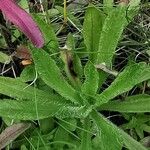
Jasione montana
Sheepbit · Sheep's-bit · Sheep's bit scabious · Sheep's Scabious · Mountain Sheep's Bit
Description
Source: leafsnapJasione montana, commonly known as Sheep's-bit or Blue Bonnets, is a perennial plant in the Campanulaceae family. Native to Europe, it thrives in meadows, grasslands, and rocky areas. The plant can grow up to 30 cm in height, forming a basal rosette of lance-shaped, toothed leaves. Its slender stem bears blue flowers that bloom from June to August. These flowers are arranged in clusters at the top of the stem, each with five petals fused to form a bell-shaped corolla. Jasione montana prefers well-drained soil and full sun exposure but can also tolerate partial shade. It attracts bees and butterflies, making it an excellent addition to any garden or landscape project by adding vibrant color and supporting pollinator populations.
🌳 Sheep's-bit is not commonly used for commercial purposes, but it has an important ecological role by supplying nectar to bees and butterflies, making it a valuable element of pollinator conservation strategies. It can also signal certain soil conditions—such as low nutrient levels—serving as a natural indicator of soil fertility.
Care Guide
💧 Water Every 7 days
Sheep's-bit grows best in rocky, well-drained soils and thrives with moderate moisture. It can withstand short dry spells, but for optimal health, it should be watered weekly. In temperate regions, it adapts well to natural rainfall during its active growing season.
How should I water my Sheep's-bit plant?
To properly water the Sheep's-bit, it is best to use filtered water at room temperature. Tap water may contain harmful particles, so filtered water is preferred. The Sheep's-bit thrives in warm environments, so using cold water can be a shock to its system. Avoid overhead watering to prevent foliage complications. Instead, carefully apply filtered room temperature water directly to the soil until it is thoroughly soaked. This helps to keep the roots moist and allows them to spread and collect nutrients effectively.
What should I do if I give my Sheep's-bit plant too much or too little water?
Overwatering is a more common issue for Sheep's-bit plants compared to underwatering. When a Sheep's-bit plant receives too much water, its stems and leaves may wilt and turn yellow. Overwatering over a long period can also result in diseases like root rot, mold, and mildew that can kill the plant. While underwatering is less common for Sheep's-bit, it is still a possibility. When this occurs, the leaves become brittle and brown. It is important to notice signs of overwatering early as some diseases, like root rot, may not be fixable if you wait too long. If you see signs of overwatering, reduce watering immediately and consider replacing poorly draining soil with a well-draining potting mix. On the other hand, if you notice signs of underwatering, increase watering until the signs subside.
How frequently should I water my Sheep's-bit plant?
If your Sheep's-bit plant is in a pot, the most precise way to determine if it needs water is by checking the soil. Plunge your finger into the soil and if you find that the top two to three inches are dry, it's time to water it. If you have your Sheep's-bit plant growing outdoors in the ground, you can use a similar method to test the soil. Once again, if the top few inches of soil have dried out, it's time to water the plant. Typically, during spring and early fall, you will likely need to water this plant once a week using this method. However, during extremely hot weather, you may need to increase the frequency to about twice a week or more. It's worth mentioning that mature, well-established Sheep's-bit plants have a remarkable ability to tolerate drought.
How much water does my Sheep's-bit plant need?
To properly water your Sheep's-bit, be generous with the amount of water you give it. Make sure that the first two to three inches of soil are dry before watering, and then give the plant a thorough watering that completely saturates the soil. You'll know you've added enough water when you see excess water flowing out of the drainage holes at the bottom of the pot. If there's no excess water draining out, it means you haven't watered enough. However, be careful not to let water accumulate in the soil, as it can harm the plant. On the other hand, if water isn't draining properly from the pot, it could be a sign of poorly draining soil, which is bad for the plant's health. Finally, if your Sheep's-bit is outside, it will generally only need about 1 inch of rain per week.
How do I water my Sheep's-bit at different stages of growth?
The water needs of the Sheep's-bit can vary depending on its growth stages. In the early years and after transplanting, it requires more water to support root development and future growth. As it matures, it requires less water. Additionally, during the bloom period, it may require increased water to facilitate flower development.
☀️ Light Full sun
Sheep's-bit performs best in locations that receive abundant sunlight throughout the day. Its growth can be hindered if light is insufficient. Although it comes from sun-rich habitats, the plant is resilient and is not necessarily harmed by occasional shortfalls in light.
What are the sun requirements for Sheep's-bit?
Sheep's-bit (Jasione montana) thrives in full sun, necessitating above 6 hours of direct sunlight a day. It's crucial to observe the dynamic nature of sunlight through your garden to identify the ideal locations that offer a harmonious balance of light and shade, ensuring the well-being of your plants. In environments with substantial sunshine throughout the day, Sheep's-bit exhibits optimal growth. However, it possesses resilience against occasional light deficits, despite its native preference for habitats rich in sunlight.
How does artificial lighting benefit indoor Sheep's-bit plants?
Indoor Sheep's-bit plants benefit significantly from artificial lighting, especially when natural sunlight is limited. Adequate lighting is essential for the plant's growth, with artificial lights acting as an indispensable substitute in less sunny spaces or during winter. Opting for the right type of artificial light, such as LED lights that provide specific light wavelengths, is crucial. Full sun plants require 30-50W/sq ft of artificial light, whereas partial sun plants need 20-30W/sq ft, and full shade plants require 10-20W/sq ft. Positioning the light source 12-36 inches above the plant mimics natural sunlight, and mimicking the natural daylight hours—typically 8-12 hours per day—is advisable for promoting healthier growth.
What are the symptoms of inadequate light for Sheep's-bit plants?
Sheep's-bit plants exhibit several symptoms when exposed to inadequate light. New leaves may appear smaller, and the plant may develop a leggy or sparse appearance due to longer spaces between leaves or stems. It's common for the plant to drop older leaves prematurely to conserve resources, leading to limited growth or a complete halt in new leaf production. Light deficiency can also result in leaves developing pale or irregular color patterns, indicating a lack of chlorophyll. Additionally, excessive sunlight can cause symptoms like chlorosis, sunscald, leaf curling, wilting, and leaf scorching, which adversely affect the plant's health.
How can I address Sheep's-bit's light requirements and remedy symptoms of light deficiency or excess?
To address Sheep's-bit light requirements and counteract symptoms of light deficiency or excess, consider gradually moving your plants to a location receiving at least 6 hours of direct sunlight daily. Indoor plants benefit from being placed near a south-facing window or utilizing artificial light sources like desk or ceiling lamps for at least 8 hours daily. Outdoors, adapt your plants to sunlight gradually to prevent sunburn. Minimize obstructions to sunlight by pruning nearby trees or relocating plants to sunnier spots. Note that parts of the plant damaged by insufficient light may not recover, but new growth should be healthy following improved light conditions. When transplanting, do so during the plant's dormant period for best results.
🌡️ Temperature 5–32.2°C
Sheep's-bit is a plant that favors moderate climates and performs best in temperatures of 68 to 95 °F (20 to 35 °C). It originates from areas where those temperature ranges are common, so in non-native settings care should be taken to recreate these conditions, particularly during seasonal transitions.
What are the ideal temperature conditions for growing Sheep's-bit?
Sheep's-bit thrives in moderate climates, flourishing in temperatures ranging from 68 to 95°F (20 to 35°C). It is native to regions with these temperature ranges, so it's crucial to replicate these conditions in non-native areas, especially during seasonal changes. The plant is highly cold-resistant, making special frost protection measures unnecessary in winter. However, adequate cold protection should be provided if winter temperatures are expected to drop below -25°C, by covering the plant with materials like soil or straw. To help prevent drought and water scarcity during winter and early spring, it's recommended to water the plant abundantly before the first freeze in autumn, ensuring the soil remains moist and enters a frozen state.
How does Sheep's-bit react to low temperatures?
Sheep's-bit is quite tolerant to cold and performs optimally when temperatures stay above 20°C. Throughout winter, maintaining the temperature above 0°C is advisable. If temperatures fall below -25°C, you might not observe any immediate changes during winter, but there may be a decrease in sprouting or complete lack of sprouting come springtime. Should this occur, it's suggested to remove any parts of the plant that have failed to sprout as a solution to this issue.
What should be done if Sheep's-bit is exposed to temperatures above its tolerance?
During the summer, it's important to ensure that Sheep's-bit's exposure to temperatures remains below 35°C. Exposure to temperatures above 38°C can lead to leaves becoming lighter, curling, becoming prone to sunburn, and in severe cases, the entire plant might wilt and dry out. To address this, sunburned and dried-up parts of the plant should be trimmed away. The plant should be moved to a location that offers shade during the midday and afternoon, or a shade cloth can be used. Additionally, watering the plant in the morning and evening can help keep the soil moist and mitigate heat stress.
💨 Humidity
🪴 Soil 6-7
🌱 Fertilizer
The best time to fertilize a Sheep's-bit is in early spring, as it emerges from dormancy and starts active growth. Fertilizing supplies essential nutrients for healthy development. Although Sheep's-bit has fairly low fertilizer requirements, applying fertilizer annually can improve its survival and encourage better, longer-lasting blooms.
Why do I have to put plant food on my Sheep's-bit?
The main structure of the Sheep's-bit consists of its leaves. Fertilization is essential for maintaining the leaves' appearance and function. Proper fertilization ensures consistent color and healthy texture of the leaves. Additionally, fertilization supports root growth in the soil. It helps generate new roots and maintain the existing ones in the root system. This not only keeps the plant healthy in the present but also improves its ability to absorb nutrients from the soil in the future.
When should I fertilize my Sheep's-bit plant?
When you grow your Sheep's-bit outdoors, it will start growing new leaves in early spring. This is a signal to start fertilizing for the year. Normally, one application of fertilizer in the spring is sufficient. However, if you want to maximize growth, you can fertilize multiple times during spring and early summer. In this case, feed your Sheep's-bit every month to a month and a half.
When is it not a good time to fertilize my Sheep's-bit plant?
During the late fall and winter, your Sheep's-bit goes into a dormant phase and stops growing. It is not recommended to fertilize it during this time. In the spring and summer, if you choose to fertilize, start reducing the amount of fertilizer as summer approaches because the growth rate of your Sheep's-bit will decrease. Avoid fertilizing during extremely hot weather or when the soil is very dry as this can stress and harm your Sheep's-bit.
What kind of fertilizer does my Sheep's-bit plant need?
Choosing the best fertilizer for a Sheep's-bit is easy. These plants thrive on a general-purpose garden fertilizer with equal amounts of nitrogen, phosphorus, and potassium. A 10-10-10 ratio or something similar works well. Avoid fertilizers with high nitrogen. The best fertilizer usually comes in granular form and should be slow-release, making application to the soil simple. Using organic soil amendments like compost can also be beneficial for feeding Sheep's-bit.
How should I make my Sheep's-bit plant grow better?
To ensure the best growth for your Sheep's-bit, wait until early spring when you see the plant's first leaves poking through the soil. Then, apply a granular slow-release fertilizer with a balanced formula to the soil around the base of your Sheep's-bit. You can repeat this process later in the season if desired. When fertilizing your Sheep's-bit, remember to apply the fertilizer to the soil at the base of the plant, not directly on the plant itself. You may need to move some leaves aside to access the soil above the roots. Additionally, it is a good idea to water your Sheep's-bit before and after feeding it for optimal results.
🪴 Pot & Repot
✂️ Pruning
Sheep's-bit showcases vibrant blue flower clusters and benefits significantly from regular pruning. The optimal time for pruning is from early to late spring. Removing dead stems enhances airflow, while deadheading faded flowers encourages more blooms. This practice fosters compact growth and boosts the plant's overall health and vitality.
🌿 Propagating
🐛 Diseases & pets
☠️ Toxicity
Jasione montana has no toxic effects reported.
Characteristics
- Plant Type
- Herb
- Life Cycle
- Perennial, Annual, Biennial
- Genus
- Jasione
- Family
- Campanulaceae
- Hardiness Zone
- 5-8
- Mature Height
- 20 cm
- Mature Spread
- 30 cm
- Leaf Color
- Green
- Leaf Type
- Deciduous
- Flower Color
- Blue
- Flower Size
- 0.51 cm to 1.52 cm
- Bloom Time
- Early summer, Mid summer
- Planting Time
- Summer
- Harvest Time
- Mid summer