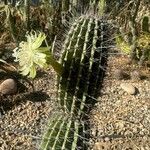
Jasminocereus thouarsii
Candelabra Cactus
Description
Source: wikipedia (CC BY-SA)Jasminocereus is a genus of cacti with only one species, Jasminocereus thouarsii, endemic to the Galápagos Islands, territorially a part of Ecuador. In English it is often called the candelabra cactus. At maturity it has a branched, treelike habit, and may be up to 7 m (23 ft) tall. The stems are made up of individual sections with constrictions between them. Its creamy white to greenish flowers open at night and are followed by greenish to reddish fruits.
Care Guide
💧 Water
The candelabra cactus is drought-tolerant and only needs a thorough watering when the soil is completely dry. During the growing seasons of spring, summer, and fall, water the cactus once or twice a week. In winter, reduce watering to once a week. It's best to use rainwater or distilled water to prevent mineral buildup, and be careful to avoid splashing the stem.
☀️ Light Full sun
Originating in arid regions, the Candelabra cactus grows best in full sun, as its natural habitat is marked by intense sunlight and little shade. It can also tolerate partial sun, providing some flexibility in its growth.
🌡️ Temperature 20–37.8°C
The candelabra cactus does best in warm conditions and needs elevated temperatures during the growing season to support its growth and metabolism. It prefers abundant sunlight, proper moisture, and good air circulation. It is vulnerable to harm from very low temperatures and from overwatering. Equally important is maintaining balance and avoiding excessively high heat and overly dry conditions.
💨 Humidity
🪴 Soil 0-0
🌱 Fertilizer
Candelabra cactus needs only light fertilizer applications once or twice a year during the growing season. Do not fertilize in winter or summer when it is dormant. Cut back on fertilizer for repotted plants and wait a couple of months after repotting before applying any. Fertilizing helps maintain healthy growth and encourages blooming.
🪴 Pot & Repot
✂️ Pruning
To ensure your candelabra cactus thrives, it's important to prune it properly, ideally in early spring. Focus on removing dead branches and thinning out any congested areas to enhance air circulation and light exposure. This approach encourages healthy growth and maintains an attractive shape. Always use clean, sharp tools to minimize the risk of injury to the plant.
🌿 Propagating
🐛 Diseases & pets
☠️ Toxicity
Characteristics
- Plant Type
- Succulent
- Life Cycle
- Perennial
- Genus
- Jasminocereus
- Family
- Cactaceae
- Hardiness Zone
- 10-12
- Mature Height
- 3.05 m to 4.88 m
- Mature Spread
- 0.91 m to 2.13 m
- Leaf Color
- Green
- Leaf Type
- Evergreen
- Flower Size
- 5.08 cm to 6.35 cm
- Bloom Time
- Late spring, Early summer, Mid summer
- Planting Time
- Spring, Summer, Autumn
- Harvest Time
- Mid summer, Late summer, Early fall