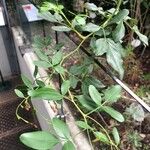
Jasminum odoratissimum
Yellow jasmine · True yellow Jasmine
Description
Source: leafsnapJasminum odoratissimum, commonly known as sweet jasmine or yellow jasmine, is a species of flowering plant in the Oleaceae family. Native to the tropical and subtropical regions of Asia and Africa, this woody climber can reach up to 10 meters in height. It features glossy green leaves and fragrant yellow flowers that bloom from spring to fall. The small, tubular-shaped flowers, each with five petals, emit a sweet fragrance that attracts bees, butterflies, and other pollinators. Sweet jasmine thrives in well-drained soil with moderate moisture levels and can grow in either full sun or partial shade. It can be propagated through stem cuttings or layering techniques. This plant also has various medicinal properties. It exhibits anti-inflammatory effects when used topically, making it useful for treating skin conditions such as eczema or psoriasis. Additionally, its essential oils have antifungal properties that can help treat fungal infections like athlete’s foot. Beyond its medicinal uses, Jasminum odoratissimum is widely cultivated for its ornamental value. Its beautiful foliage and fragrant flowers make it an excellent choice for trellises or arbors in gardens and landscapes. In summary, Jasminum odoratissimum is a versatile plant that offers both aesthetic appeal and potential health benefits, making it a valuable addition to any garden setting.
Care Guide
💧 Water Every 7 days
☀️ Light Full sun
Most scented jasmine grows best when exposed to sunlight for most of the day. It can tolerate locations with light shade. Native to regions with abundant sun, it is adapted to those conditions. Too little or too much sun can hinder its healthy growth or make it weak.
🌡️ Temperature 20–37.8°C
Most fragrant jasmine comes from tropical areas, where the weather is generally warm and humid. As a result, it is adapted to high temperatures and humidity. It dislikes sudden temperature shifts and prefers a steady thermal environment, so avoiding indoor temperature fluctuations is important. It usually cannot tolerate cold conditions and needs warmer temperatures to grow. If the surrounding temperature falls too low, the plant may stop growing or even die.
💨 Humidity
🪴 Soil 6-7
🌱 Fertilizer
The best time to fertilize a Most scented jasmine is in early spring as it comes out of dormancy. This encourages overall growth and flower development. Fertilization improves the foliage, stems, and branches and promotes large, vibrant, long-lasting flowers. It also helps move nutrients from the roots to the flowers and enhances the plant’s health and resistance to disease.
🪴 Pot & Repot
✂️ Pruning
🌿 Propagating
🐛 Diseases & pets
☠️ Toxicity
Characteristics
- Plant Type
- Shrub
- Life Cycle
- Perennial
- Genus
- Jasminum
- Family
- Oleaceae
- Hardiness Zone
- 9-11
- Mature Height
- 0.91 m to 4.57 m
- Mature Spread
- 1.52 m to 2.44 m
- Leaf Color
- Green
- Leaf Type
- Evergreen
- Flower Color
- Yellow, White
- Flower Size
- 2.03 cm to 3.05 cm
- Bloom Time
- All year round
- Planting Time
- Spring, Autumn
- Harvest Time
- All year round