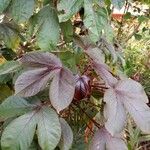
Jatropha gossypiifolia
Bellyache-bush · Cotton-leaf physicnut · Black physicnut · American purging nut · Cotton-leaf jatropha
Description
Source: leafsnapJatropha gossypiifolia, commonly known as bellyache bush or cotton-leaf physicnut, is a shrub that belongs to the Euphorbiaceae family. Native to Central and South America, it has also been introduced to other regions, including Africa and Asia. The plant can grow up to 3 meters tall and features green leaves that resemble those of cotton plants. It produces small greenish-yellow flowers that bloom year-round, followed by small fruits that contain three seeds each. Traditionally, Jatropha gossypiifolia has been used in medicine to treat various ailments such as constipation, fever, inflammation, and pain. However, caution is advised when using this plant, as it contains toxic compounds that can cause severe gastrointestinal distress if ingested in large quantities. In addition to its medicinal uses, the plant is being studied for its potential in biofuel production due to the high oil content in its seeds. Nevertheless, further research is required before it can be considered a viable alternative energy source. Overall, Jatropha gossypiifolia is a fascinating plant with both medicinal and industrial potential. However, it should be handled carefully due to its toxic properties when consumed improperly or in excess.
🌳 The bellyache bush attracts hummingbirds and butterflies, including swallowtails and monarchs, with its beautiful year-round blooms. You can prune this large tropical plant to create an espalier, or let it grow into a shade-providing landscape tree.
Care Guide
💧 Water Every 7 days
The bellyache bush thrives in tropical environments with high humidity and steady moisture levels. For optimal growth, it needs to be watered weekly, although it can withstand brief dry spells. In warmer climates, using mulch can help retain soil moisture, which in turn reduces the need for frequent watering during hot periods.
How should I water my Bellyache bush in the best way?
To properly water the Bellyache bush, it is recommended to use filtered water at room temperature. Tap water may contain harmful particles for the plant's health, so filtered water is a better choice. Additionally, using water that is at room temperature or slightly warmer is important because the Bellyache bush is accustomed to a warm environment and cold water can be a shock to its system. It is also important to avoid overhead watering for this plant as it can lead to issues with the foliage. Instead, the filtered room temperature water should be applied directly to the soil until it is completely soaked. This helps to benefit the plant by moisturizing the roots and aiding in their spread through the soil to collect essential nutrients.
What should I do if I give too much or too little water to my Bellyache bush?
Both overwatering and underwatering can harm your Bellyache bush, but overwatering is more common. Too much water can cause wilting, yellowing of leaves, and diseases like root rot, mold, and mildew, which can be fatal. Underwatering is less likely due to the plant's drought tolerance, but it can lead to brittle, brown leaves. Promptly recognizing signs of overwatering is crucial, as some diseases may become irreversible if not addressed quickly. Reduce watering immediately if you notice early signs and ensure proper soil drainage by using a loose, well-draining potting mix. Conversely, if your Bellyache bush seems to lack water, increase watering until signs of dehydration disappear.
How frequently do I need to water my Bellyache bush?
If your Bellyache bush is in a pot, the best way to determine if it needs water is by sticking your finger into the soil. If the top two to three inches of soil are dry, you should water it. If your Bellyache bush is planted outside, you can use the same method to check the soil. Once the top few inches of soil have dried out, it's time to water. In the spring and early fall, you'll probably need to water about once a week. In extremely hot weather, you may need to water twice a week or more. However, mature, well-established Bellyache bushes can tolerate drought quite well.
How much water does my Bellyache bush require?
To properly water your Bellyache bush, be generous with the amount of water you provide. Make sure that the top few inches of soil are dry before watering. It's best to give the plant a thorough watering, making sure the soil is completely soaked. You should add enough water that it flows out through the drainage holes at the bottom of the pot. If you don't see water draining from the pot, it means you haven't given enough water. On the other hand, be careful not to let water accumulate in the soil, as this can harm the plant. If there is no water draining through the pot, it could be a sign of poorly draining soil, which is not good for the plant's health. If the plant is outside, about 1 inch of rain per week should be enough.
What is the best way to water my Bellyache bush as it grows?
The water requirements of the Bellyache bush can vary depending on its growth stages. In the early years or right after transplanting, it needs more water. During these stages, the plant focuses on sprouting new roots, which require extra moisture for optimal growth. As the bush matures, it will require less water. Additionally, during the bloom period, the plant may need additional water as the flower development process consumes a significant amount of moisture.
☀️ Light Full sun
Bellyache bush grows best in unobstructed sunlight, receiving plentiful golden rays for its physiological processes. Native to regions of strong brightness, it is well adapted to those radiant conditions. However, care must be taken to avoid solar stress from overexposure, which can reduce its vitality.
What are the sunlight requirements for a Bellyache bush?
The Bellyache bush requires various levels of sunlight depending on its stage of growth and environmental conditions. Full sun, defined as more than 6 hours of direct sunlight daily, is essential for its optimal growth, whereas partial sun, about 3-6 hours of sunlight, is sufficient during less intense growth phases. It's important to observe the movement of sunlight through your garden, selecting locations that provide an ideal balance of light and shade. This ensures the plant receives the light it needs without the risk of overexposure.
What essentials should be considered for growing Bellyache bush?
Bellyache bush thrives when exposed to unobstructed solar rays, benefiting from ample sunlight for its physiological processes. Originating from high-luminosity zones, it's well adapted to conditions of strong light. Nonetheless, attention should be given to preventing solar stress which can impair its health. When natural light is scarce, especially during winter or in darker spaces, artificial lighting becomes crucial. Indoor plants, for instance, may require artificial lights to ensure optimal growth, with LED lights being a preferred option due to their ability to be tailored to specific plant needs, including adjusting brightness and duration to mimic natural sunlight conditions accurately.
What are the symptoms of inadequate lighting for Bellyache bush?
Inadequate lighting can lead to several issues for the Bellyache bush, including smaller new leaves, leggy or sparse growth, premature leaf drop, halted growth, pale or irregularly colored new leaves, chlorosis, sunscald, curling or twisting leaves, wilting, and leaf scorching. Each of these symptoms indicates the plant is not receiving its required level of sunlight, affecting its ability to perform photosynthesis efficiently and maintain healthy growth.
How can light-related issues be mitigated for Bellyache bush?
To address light deficiency or overexposure in Bellyache bush, a gradual adaptation strategy is recommended. For indoor plants, progressively relocate them to sunnier spots until they achieve at least 6 hours of direct sunlight daily, utilizing south-facing windows and removing any light obstructions like curtains. If natural light is insufficient, supplement with artificial plant grow lights for at least 8 hours daily. For outdoor settings, avoid abrupt light intensity changes to prevent sunburn by slowly acclimatizing plants to sunnier locations. Pruning nearby trees or vegetation can help reduce light obstructions, and for smaller plants, consider transplanting during their dormant period to a site with better sunlight exposure and drainage.
🌡️ Temperature 15–37.8°C
Bellyache bush is suited to a tropical climate, thriving best at temperatures between 59 and 100 °F (15 to 38 ℃). In colder seasons, provide greenhouse conditions or indoor heating to maintain this preferred environment. Avoid extreme temperatures.
What is the optimal climate for growing Bellyache Bush?
Bellyache bush, botanically known as Jatropha gossypiifolia, thrives in a tropical climate. It grows best in temperatures between 59 to 100 °F (15 to 38 °C). During colder seasons, achieving this preferred environment may necessitate greenhouse conditions or indoor heating to maintain these ideal temperatures. Extreme temperatures beyond this range should be avoided to ensure the health and growth of the plant.
What should I do if the temperature drops below the tolerance level of Bellyache Bush?
If the temperature is expected to drop below the bush's tolerable growing temperature minimum, temporary measures should be taken to protect the plant from the cold. This can include wrapping the plant with materials such as plastic film, fabric, or other suitable coverings to insulate it against the cold. Once temperatures rise back to a suitable level, these protective measures should be promptly removed to prevent any potential damage to the plant.
How does Bellyache Bush react to low temperature conditions?
Bellyache Bush has a moderate tolerance to low temperatures and fares best when kept above a certain minimum temperature. When the temperature falls below its growth limit, the leaves may begin to droop, and in severe cases, wilt and eventually fall off. To address frost damage, trim off the affected parts. To prevent cold damage in the future, wrap the plant with insulating materials like non-woven fabric or cloth, and consider setting up a wind barrier to protect it from cold winds.
What are the effects of high temperatures on Bellyache Bush, and how can I mitigate them?
During hot summers, Bellyache Bush should ideally be kept below its maximum tolerable growing temperature. Exceeding this temperature can cause the leaves to lighten in color, dry out at the tips, curl, and make the plant more prone to sunburn. To mitigate these effects, trim away any sunburned or dried parts of the plant. Provide shade during the hottest parts of the day by relocating the plant or using a shade cloth, and ensure the soil remains moist by watering the plant in the morning and evening.
💨 Humidity normal (40-60%)
This plant will thrive in moderate humidity, which is probably the level in your home. However, misting it a few times a week can be very beneficial. Make sure the room has good ventilation.
🪴 Soil 6-7
🌱 Fertilizer
The best time to fertilize a Bellyache bush is in early spring, as it comes out of dormancy and begins active growth. Fertilizer supplies the essential nutrients needed for healthy development. Although the Bellyache bush has relatively low fertilizer requirements, an annual application can improve its survival and encourage better, longer-lasting blooms.
🪴 Pot & Repot 2-3 years
Repot the bellyache bush every 2 to 3 years during the spring to accommodate its growth in a larger pot. After repotting, place the plant in indirect sunlight. Water it moderately, using well-draining soil to prevent root rot. This care will help ensure the bush is well-established and blooms optimally.
✂️ Pruning
The Bellyache bush, native to tropical regions, is known for its reddish-purple leaves and vibrant flowers. To encourage bushy growth and remove dead branches, prune the plant from early to late spring. Always use sharp, sterilized tools to minimize the risk of disease. Additionally, consult reliable sources to maintain the plant's health and appearance.
🌿 Propagating
🐛 Diseases & pets
☠️ Toxicity
Characteristics
- Plant Type
- Herb, Shrub
- Life Cycle
- Perennial
- Genus
- Jatropha
- Family
- Euphorbiaceae
- Hardiness Zone
- 8-11
- Mature Height
- 2.44 m to 3.96 m
- Mature Spread
- 91 cm
- Leaf Color
- Dark Green, Maroon
- Leaf Type
- Deciduous
- Flower Color
- Red
- Flower Size
- 2.03 cm to 3.56 cm
- Bloom Time
- All year round
- Planting Time
- Spring
- Harvest Time
- All year round
- Native Area
- Chile, Honduras, Mexico, Guatemala, Peru, Dominican Republic, Trinidad and Tobago, Panama, Jamaica, Colombia, Bahamas, Cuba, Paraguay, Argentina, Bolivia, Venezuela, Brazil, Guyana, Nicaragua, Ecuador, Costa Rica