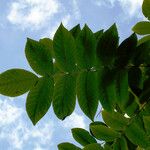
Juglans mandshurica
Manchurian walnut · Japanese Walnut
Description
Source: leafsnapJuglans mandshurica (Chinese: 胡桃楸), also known as Manchurian walnut, or Tigernut, is a deciduous tree of the genus Juglans (section Cardiocaryon), native to the Eastern Asiatic Region (China, Russian Far East, North Korea and South Korea). It grows to about 25 m. This species was first described by the Russian botanist Carl Johann Maximowicz, in Bulletin de la Classe Physico-Mathématique de l'Académie Impériale des Sciences de Saint-Pétersbourg, which was published in 1856.The leaves are alternate, 40–90 cm long, odd-pinnate, with 7–19 leaflets, 6–17 cm long and 2–7.5 cm broad (margin serrate or serrulate, apex acuminate). The male flowers are in drooping catkins 9–40 cm long, the wind-pollinated female flowers (April–May) are terminal, in spikes of 4 to 10, ripening in August–October into nuts, 3-7.5 × 3–5 cm, with densely glandular pubescent green husk and very thick shell. The tree is exceptionally hardy (down to at least -45 °C), has a relatively short vegetation period compared to other walnuts, grows rapidly and is cultivated as an ornamental in colder temperate regions all over the Northern Hemisphere. (For example, it has been found to grow satisfactorily in Edmonton, Alberta, Canada.) The kernels of the nuts are edible, but small and difficult to extract. The timber is in use, but less valuable than that of English walnut or black walnut. The Manchurian walnut contains and exudes much lesser quantities of allelopathic compounds (such as juglone) than other popular Juglans species and usually causes few significant allelopathic effects in cultivation. Juglans cathayensis, characterized by tomentose leaflets, producing more flowers per spike and growing south of the Yellow River, was sometimes recognized as a species separate from J. mandshurica. The Japanese walnut (オニグルミ) is listed by some authorities as Juglans mandshurica var. sachalinensis (syn. "Juglans ailantifolia")
Care Guide
💧 Water
The Manchurian walnut, native to moderate climates, thrives in well-drained soils that retain some moisture. While it is drought-tolerant once established, it benefits from bi-weekly watering. Typically grown outdoors, this tree benefits from mulching, which helps conserve moisture—especially during the growing season when its water needs increase.
How should I water my Manchurian walnut tree in the best way?
To optimize root development, it is recommended to place a garden hose at the base of the plant. It is important to avoid spraying the leaves directly, especially if the plant is outdoors and exposed to direct sunlight. Another option is to use bubblers to keep the roots moist for each individual plant. Soaker hoses can also be used to cover the entire garden or bed when adding or removing plants, ensuring that the roots are well-watered. After watering, it is advised to drain any excess water and allow the soil to dry before the next watering. Watering at ground level is recommended to prevent diseases. On sunny days, it may be beneficial to spray the entire bush with water. Whether the plant is in a pot or in the ground, it is important to remember that Manchurian walnut prefers deep watering rather than light sprinkling.
What should I do if I give the Manchurian walnut tree too much or too little water?
An overwatered Manchurian walnut can show signs of yellowing, dropping leaves, and wilting. It may also look dull and unhealthy, with mushy stems. To address these issues, adjust your watering schedule as necessary. Wilting can also indicate under watering, with leaves becoming crispy and dry. If the soil is dry and watering alone is insufficient, give the plant a thorough watering. While this will help the walnut recover, it may still have dry, yellow leaves due to root damage. Once the plant is back to normal, the yellowing will stop. When keeping the walnut indoors, regularly check soil moisture levels and avoid overwatering. Look for signs of black spots, and if present, allow the soil to dry out by withholding water for a few days. Overwatering can lead to root rot, so transfer the plant to a different pot if you see discolored and slimy roots. Prevent root rot by avoiding overly soggy soil. When planting the Manchurian walnut outdoors, check soil moisture by digging deeper. If the soil is too dry, it may indicate underwatering, in which case adequate watering is necessary for the plant's recovery.
How many times a week should I water my Manchurian walnut?
The Manchurian walnut thrives with deep, infrequent watering. It's best to give them a gallon of water, especially if they are planted in pots. Potted plants dry out faster due to limited water storage. In cold regions, water them every 3 to 5 days, ideally in the morning when the soil is dry. To check if watering is needed, feel the top 2-3 inches of soil - if it's dry, give the plant a thorough watering. During hot days, monitor the soil moisture daily, as heat can quickly dry out potted soil. For garden plants in hot climates, watering once a week is sufficient when the top 2-3 inches of soil are dry. Be mindful of rainfall and avoid overwatering to prevent root rot. Manchurian walnut mainly grows in spring and fall, so apply 3-4 inches of mulch to outdoor plants for better water conservation. Sandy soil drains faster, requiring more frequent watering, while clay soil needs less watering to avoid root rot. Keep track of watering dates to ensure plants are adequately hydrated. If you notice the leaves drooping, it may be a sign of needing water.
How much water should I give my Manchurian walnut?
The Manchurian walnut generally needs about a gallon of water on a regular schedule. For potted plants, water them deeply until you see water dripping from the bottom of the pot. Then, wait for the soil to dry before watering again. You can use a water calculator or moisture meter to determine how much water you've given your plant in a week. During the flowering period, provide plenty of water but allow the moisture to evaporate afterwards to prevent root rot. If the Manchurian walnut is planted outdoors where there is sufficient rainfall, it may not need additional watering. When the walnut is young or newly planted, make sure it receives 1-2 inches of rain per week. As the walnut grows, it can rely solely on rainfall. However, if the weather is extremely hot or there is no rainfall for 2-3 weeks, consider giving the plant a thorough watering during the cooler part of the day to prevent heat damage. Additional watering will be necessary during prolonged dry spells.
Do I need to water my Manchurian walnut tree more or less depending on the time of year or the weather?
To ensure the successful growth of the Manchurian walnut tree, it needs to be exposed to natural rainwater outdoors, only requiring additional watering during persistent dry spells. During the spring and fall seasons, the soil should be kept moist but not overly saturated, as alternating between dry and moist conditions promotes healthy growth. In the summer, the hot weather can cause water to evaporate quickly, so frequent and extra watering may be necessary if rainfall is insufficient to maintain moisture levels. In winter, the Manchurian walnut requires less water as it goes dormant and sheds its leaves. To facilitate efficient evaporation, it is recommended to use a well-draining soil mixture like terracotta. Once the tree begins to leaf out and go dormant, watering can be suspended, relying on fall and winter rains to sustain it throughout the dormant period. During warmer temperatures in spring, cultivation and encouraging growth and blooming should be done. It is important to ensure good drainage at all times, particularly in winter, as the plant dislikes excessive moisture. When the tree is in a pot, its limited root growth necessitates regular watering, especially in summer. Shallow sprinkles that only reach the leaves should be avoided, as they promote fungal growth and do not penetrate deep into the roots. Even during fall or winter dormancy, the tree should not be allowed to completely dry out. Overwatering, however, should be avoided, as it can be detrimental and lead to death, especially in winter when the soil does not drain well. Applying mulch is advisable whenever possible as it helps reduce stress, conserve water, and promote healthy blooms.
☀️ Light Full sun
the manchurian walnut prefers spots where sunlight is unobstructed for most of the day. Its native habitats offer plentiful light that supports lush growth. All stages of its development thrive in this setting. Excessive exposure has not been shown to cause harm, but insufficient sun can impede its growth.
What are the sunlight requirements for the Manchurian walnut?
The Manchurian walnut requires areas where the sun is unobstructed for most of the day, thriving in environments with substantial light exposure through all stages of its growth. Full sun, defined as above 6 hours of sunlight, is ideal, while partial sun, about 3-6 hours of sunlight, can also suffice. It's crucial to observe how sunlight moves through your garden to ensure the perfect balance of light and shade, as the right amount of sunlight ensures the plant's happiness and lush growth. Lack of sufficient sunlight can hinder its growth, so it's essential to choose planting spots accordingly.
How can artificial lighting support the growth of indoor Manchurian walnut plants?
For indoor Manchurian walnut plants where natural sunlight is insufficient, especially during winter or in less sunny spaces, artificial lighting provides an essential solution. It's advisable to select the right type of artificial light, such as LEDs that offer customizable wavelengths needed by plants. Full sun plants require 30-50W/sq ft of artificial light, partial sun plants need 20-30W/sq ft, and full shade plants 10-20W/sq ft. The light source should be placed 12-36 inches above the plant to mimic natural sunlight, with 8-12 hours of light per day to promote faster, healthier growth.
What are the symptoms of insufficient sunlight in Manchurian walnut plants?
Manchurian walnut plants may show several symptoms if they receive insufficient sunlight. These symptoms include small new leaves, leggy or sparse growth, quicker leaf drop, halted new growth, and paler new leaves. Chlorosis, or the yellowing of leaves due to chlorophyll breakdown, sunscald manifesting as pale, bleached areas on plant tissue, leaf curling as a defense against excessive sun exposure, wilting from increased water loss, and leaf scorching characterized by dry, crispy leaf edges are all indicators of sunlight-related stress.
How can I address sunlight-related issues for my Manchurian walnut plant?
Addressing sunlight-related issues involves providing your Manchurian walnut plant with adequate exposure. For indoor plants, gradually move them to sunnier spots until they receive at least 6 hours of direct sunlight daily, utilizing a south-facing window for natural light, or artificial light if the plant is not easily movable. For outdoor plants, gradually adapt them to more sunlight by moving them weekly to prevent sunburn. Additionally, reducing obstructions like pruning trees can help, and for smaller plants, consider transplanting during their dormant period to a location with ample sunlight and good drainage. Remember, affected parts may not recover, but new growth will be healthy with improved light exposure.
🌡️ Temperature 5–25°C
Manchurian walnut is native to regions with temperatures that typically range from 41 to 77 °F (5 to 25 °C). It favors conditions within that span. However, seasonal shifts may require temperature adjustments to mimic its natural habitat.
What temperature is best for growing Manchurian walnuts?
Manchurian walnut is a cool-weather plant that thrives within a specific temperature range. To ensure optimal growth, it is best to keep the temperature between 65-75℉(18-25℃). Although Manchurian walnut can tolerate temperatures outside this range, it is recommended to maintain the growing area within a few degrees of these limits whenever possible. The upper and lower temperature limits that Manchurian walnut can withstand are 75-85℉(25-30℃) and 5℉(-15℃) respectively. Since Manchurian walnut prefers cooler temperatures, it is more important to avoid higher temperatures. Exposing the plant to temperatures above 85℉(30℃) for extended periods can restrict growth and potentially lead to damage and death.
Do Manchurian walnuts need different temperatures at different stages of growth?
To ensure proper growth of Manchurian walnut at each phase, it is important to maintain temperatures between 65-75℉(18-25℃). These walnut plants can handle lower temperatures better than higher ones, so if your growing area gets as cold as 5℉(-15℃), it shouldn't significantly hinder their growth. However, temperatures below that can start to slow down their growth, so if you plan to continue growing them during winter, make sure to keep the room temperature above that threshold.
Here are three easy ways to keep Manchurian walnuts at the right temperature.
Here are three tips to keep in mind when caring for Manchurian walnut trees: Tip #1: Watch for signs of heat damage. If the tree overheats, there may be warning signs before it starts to die off. First, the leaves may turn brown, followed by branches falling off. This happens because the branches themselves are dying as the tree tries to conserve moisture. To prevent heat damage, keep temperatures lower and water your tree more frequently in hot conditions. Tip #2: Avoid extreme cold temperatures. Although Manchurian walnut prefers cooler environments, rapid drops in temperature can lead to freeze damage. If the temperature in your growing area falls below 5℉ (-15℃), the water in the tree can freeze and cause the bark to crack. This can significantly slow down growth and potentially cause the tree to die. Take measures to protect the tree from extreme cold. Tip #3: Use shade and ventilation to regulate temperature. If you notice your Manchurian walnut tree is overheating, you can utilize shade and ventilation to cool it down. If you don't have access to air conditioning or fans, shading the tree and allowing for air circulation can be a cost-effective way to bring temperatures back to the optimal range. However, remember to expose the tree to sunlight once temperatures are regulated. Manchurian walnut thrives with ample sunlight, so prolonged shading should be avoided.
Does the Manchurian walnut tree require different temperatures during different seasons?
If you plan on growing Manchurian walnut outside, you should keep an eye on the outdoor temperature, especially during spring and early summer. It's crucial to avoid temperatures above 85℉ (30℃), as this can harm and even kill the walnut tree. If you decide to grow them indoors, ensure the space has sufficient sunlight. Manchurian walnut requires plenty of sun, but be cautious not to raise the temperature too much. While direct sunlight is essential, excessive sun combined with high heat can damage the walnut tree.
What is the best way to keep Manchurian walnut at the right temperature?
To maintain the right temperature for Manchurian walnuts, it is recommended to grow them in a climate-controlled environment. It is important to select a room with air conditioning or fans to provide cooler conditions. Monitoring the temperature is crucial, checking it once or twice a day to ensure it stays between 65-75℉(18-25℃). If it falls outside this range, adjust the climate control settings accordingly. Alternatively, if growing Manchurian walnuts outdoors, it is best to do so in the spring and early summer. However, maintaining the optimal temperature range becomes more challenging in an outdoor setting. Therefore, growing them outdoors might be ideal for facilitating maximum growth.
💨 Humidity
🪴 Soil 6-7
🌱 Fertilizer
Fertilize your Manchurian walnut in early spring to encourage healthy growth. Regular feeding boosts the tree’s overall health, leading to vigorous growth, increased resilience to harsh conditions, and improved resistance to pests and diseases. Maintain a specific fertilization schedule for your Manchurian walnut to preserve vibrant, deep-colored foliage and a lush appearance.
Why should I put fertilizer on my Manchurian walnut tree?
No matter what type of Manchurian walnut tree you have, regular fertilization is crucial for its overall health. Providing the proper nutrients will promote stronger growth and enhance its ability to withstand harsh conditions, diseases, and pests. The foliage of your Manchurian walnut is particularly beautiful, so it's important to maintain it. To achieve this, follow a specific fertilization schedule tailored to your tree, which will result in vibrant leaves and an overall lush appearance.
When should I fertilize my Manchurian walnut tree?
To ensure healthy growth, the best time to fertilize your Manchurian walnut is during late winter or early spring. This provides the necessary nutrients for growth once the weather warms up. Additionally, if you live in a warm climate, it's beneficial to give your walnut tree another round of fertilizer in early fall. This not only provides extra nutrients for the following growing season, but also helps the tree survive winter without leaf damage. Fertilizing earlier in fall allows the new branches to grow and withstand the cold winter better.
When is it a bad idea to put fertilizer on my Manchurian walnut?
To properly care for your Manchurian walnut, there are specific times during the year when you should avoid fertilizing it. Firstly, when the early and mid-winter months arrive, your Manchurian walnut will be dormant and doesn't require any feeding. Secondly, it is not advisable to fertilize the plant during the late spring and throughout summer due to the hotter temperature and potential dryness. These conditions can have a harmful impact on your Manchurian walnut if you choose to fertilize it. To avoid any negative effects, it is recommended to follow a fertilization schedule that focuses on feeding only in early spring and early fall.
What kind of plant food does my Manchurian walnut tree need?
The most important nutrient for a Manchurian walnut is usually nitrogen. However, phosphorus and potassium are also important for its growth. A balanced fertilizer with equal amounts of all three nutrients, like a 10-10-10 ratio, can be effective. However, a slightly higher ratio of nitrogen, such as 10-6-4, may be even better for optimal growth. You can use either granular or liquid-based fertilizer when nourishing your Manchurian walnut.
How do I give nutrients to my Manchurian walnut tree?
To fertilize your Manchurian walnut, there are two options: using granular fertilizer or liquid fertilizer. For granular fertilizer, simply sprinkle it on the soil at the right time. The slow-release feature of this fertilizer will gradually release nutrients into the soil. It is recommended to lightly water your walnut before applying the fertilizer. On the other hand, liquid fertilizer is less common. To use it, mix the fertilizer with water and pour it onto the soil around the base of your walnut tree. In some cases, it may be helpful to conduct a soil test beforehand to determine if any pH adjustments are necessary.
🪴 Pot & Repot
✂️ Pruning
For optimal health and vigor, prune Manchurian walnut trees in early spring. Key techniques include removing dead branches, thinning the tree to improve airflow, and shaping it to control the size. These practices minimize sap loss and promote growth, especially in young trees, while ensuring that cuts are made in a way that maintains the tree's structure.
🌿 Propagating
🐛 Diseases & pets
☠️ Toxicity
Characteristics
- Plant Type
- Tree
- Life Cycle
- Perennial
- Genus
- Juglans
- Family
- Juglandaceae
- Hardiness Zone
- 5
- Mature Height
- 20.12 m
- Mature Spread
- 20.12 m
- Leaf Color
- Green, Yellow
- Leaf Type
- Deciduous
- Flower Color
- Green, Yellow
- Flower Size
- 2.54 cm
- Bloom Time
- Late spring, Early summer
- Planting Time
- Spring, Summer
- Harvest Time
- Mid summer
- Native Area
- Russia, Koppen, South Korea, China