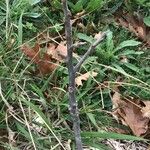
Juglans microcarpa
Texas walnut · River walnut · Little walnut · Namboca · Nogalito
Description
Source: leafsnapJuglans microcarpa, known also as the little walnut, Texas walnut, Texas black walnut or little black walnut (as it belongs to the "black walnuts" section Juglans sect. Rhysocaryon), is a large shrub or small tree (10–30 ft tall) which grows wild along streams and ravines in Texas, New Mexico, Oklahoma, and Kansas, and the northernmost states of Mexico. It produces nuts with a width of 1/2—3/4 in. The pinnately compound leaves bear 7—25 untoothed to finely-toothed leaflets, each 1/4—1/2 in wide. It is found at elevations ranging from 700 ft to 6700 ft.Two varieties are recognized: J. microcarpa var. microcarpa and J. microcarpa var. stewartii. Where the range of J. microcarpa overlaps with J. major, the two species interbreed, producing populations with intermediate characteristics. This phenomenon has also been found where J. microcarpa trees grows near J. nigra trees. Juglans (literally "Jupiter's acorn") is the Latin name of the walnut. Microcarpa means "having small fruit". Though very small, the seeds contained within the nuts are edible.
Care Guide
💧 Water Every 7 days
The Texas black walnut thrives in conditions similar to its natural habitat, where it experiences occasional wet periods interspersed with dry intervals. This tree is drought-tolerant and only needs to be watered every three weeks. It prefers well-draining soil, which helps prevent overwatering and supports healthy growth.
How should I water my Texas black walnut tree the best way?
To promote excellent root development, consider using a garden hose at the base of your plants instead of directly spraying the leaves. If the plants are outdoors and exposed to direct sunlight, keep in mind that the leaves may require more water. You can use bubblers or soaker hoses to keep the roots moist, placing them on each plant or covering the entire garden or bed when adding or removing plants. Make sure to drain any excess water and allow the soil to dry before watering again. When watering, it's best to do so at ground level to prevent diseases. On a sunny day, you may want to spray the entire bush with water. Whether your plants are in pots or in the ground, it's important to remember that Texas black walnut prefers deep watering rather than light sprinkling.
What should I do if I give the Texas black walnut tree too much or too little water?
If a Texas black walnut is overwatered, it may exhibit yellowing and wilting leaves, as well as a dull and unhealthy appearance with mushy stems. When these signs appear, it is advisable to adjust your watering schedule accordingly. On the other hand, wilting can also be a sign of under watering, in which case the leaves may become crispy and dry. To address this, check the soil for dryness and provide a thorough watering if necessary. While sufficient water can help the Texas black walnut recover, it may still exhibit dryness and yellowing leaves due to damage to the root system. Once the plant returns to normal, the yellowing of leaves should cease. When caring for a Texas black walnut indoors, always check the moisture levels in the pot and avoid overwatering. Look out for black spots, and if present, allow the soil to dry out by refraining from watering for a few days. Overwatering can lead to root rot, so if you notice discolored and slimy roots, consider transplanting the plant into a different pot. It is important to prevent root rot by avoiding overly soggy soil. When planting a Texas black walnut outdoors, ensure that the soil is adequately moisturized, as excessively dry soil may indicate under watering. Provide sufficient water to facilitate recovery.
How frequently should I give water to my Texas black walnut tree?
The Texas black walnut prefers deep and infrequent watering, especially when planted in pots. Pots have limited water storage, so the soil dries out faster. In cold regions, water every 3 to 5 days. Water early in the morning when the soil is dry, both indoors and outdoors. Check the soil inside to see if watering is needed. When the top 2-3 inches of soil are dry, water the plant fully. During hot days, check the soil moisture daily as heat can quickly dry out the pot. If you have a garden, irrigation is necessary. In hot climates, water once a week when about 2-3 inches of soil are too dry inside or outside. Avoid watering when it rains a lot to prevent root rot. Texas black walnut grows in spring and fall. Use 3-4 inches of mulch outdoors to conserve water. Sandy soil drains faster and requires more frequent watering. Clay soil needs less frequent watering, allowing the plant to dry for 2-3 days without root rot. Mark the watering dates on a calendar. Drooping leaves indicate that watering may be a day late.
How much water should I give my Texas black walnut tree?
The Texas black walnut needs about a gallon of water on a regular schedule. For potted plants, water them deeply until the water drips out of the bottom of the pot, and then wait for the soil to dry before watering again. To measure the amount of water you give your plant each week, you can use a water calculator or moisture meter. During the flowering period, provide plenty of water, but let the moisture evaporate afterwards to avoid root rot. If the Texas black walnut is planted outdoors and receives adequate rainfall, it may not need extra watering. However, when it is young or newly planted, make sure it gets 1-2 inches of rain per week. As the Texas black walnut grows, it can rely solely on rainfall. Only during exceptionally hot weather or when there has been no rainfall for 2-3 weeks should you consider giving the plant a thorough watering during the cooler part of the day to prevent heat damage. Additional watering will be necessary during long periods of dry weather.
Should I change how often I water my Texas black walnut depending on the time of year or the weather?
The Texas black walnut grows best outdoors in rainy conditions, but can tolerate dry weather if watered. During the spring and fall, keep the soil moist but not soggy for optimal growth. Alternating between dry and moist soil conditions is beneficial. In hot summer weather, water may evaporate quickly, so additional watering may be necessary if there is limited rainfall. Less water is typically needed during winter when the walnut goes dormant. Use well-draining, moisture-retentive soil like terracotta during this time. Once the walnut starts to leaf out and go dormant, watering can be skipped as it can rely on fall and winter rains. In the spring, encourage growth and blooming as temperatures rise. Good drainage is important year-round, especially during winter, to avoid ponding or drought. When in pots, the walnut has limited root growth and should be well-watered in summer. Avoid cold and wet roots by ensuring adequate drainage. Deep soaking of the entire root system once or twice a week, depending on weather, is best. Shallow sprinkles that reach the leaves promote fungi growth and don't benefit the roots. Even during dormancy, don't allow the walnut to completely dry out in fall or winter. Avoid overwatering to prevent sitting in water for too long, which can be fatal during winter. Apply mulch to decrease stress, conserve water, and promote healthy blooms.
☀️ Light Full sun
The Texas black walnut thrives with a generous amount of sunlight each day, reflecting its preference for sun. While it can tolerate intermediate light conditions, its best health and growth come with abundant sun exposure. Too much or too little light can harm it, leading to stunted growth or wilting.
For Texas black walnut to grow healthy, how many hours of sunlight should it get each day?
To support the healthy growth of the Texas black walnut, it is important to ensure it receives a minimum of 3-6 hours of sunlight daily. While this is the minimum requirement, plants that can tolerate partial sunlight can also do well in full sunlight. However, these plants are more adaptable because they need less light for photosynthesis compared to plants that specifically need full sunlight or partial shade.
What kind of sunlight does the Texas black walnut tree need?
Texas black walnut thrives in full or part sun. It flourishes when it receives direct morning light, but during the summer, it should be shielded from the intense afternoon sun. In temperate climates, excessive hot afternoon sun can scorch the leaves, negatively impacting the plant's overall health and aesthetic.
Can the sun harm Texas black walnut? How can I keep Texas black walnut safe from the sun and heat?
To prevent damage to Texas black walnut plants when transitioning them from indoors to outdoors, it's important to gradually move them from a shaded area to a brighter spot. However, even when acclimated to the summer sun, these plants can still be harmed by extreme heat. To protect them during a heatwave, it's essential to keep the soil consistently moist. Additionally, moving plants in containers to areas with afternoon shade or using a shade cloth can offer protection from extreme weather events.
Should I make sure Texas black walnut is not exposed to the sun?
Texas black walnut thrives in bright morning sun and some full sun exposure, but the intense midday sun of summer can be too harsh. When planted in the ground, the gradual increase in summer sun allows the tree to adapt. However, potted plants that have been indoors or in protected areas may be injured if suddenly exposed to the blazing midday summer sun. To prevent damage, it is best to plant or place the Texas black walnut in an understory location where taller trees, plants, a building, or a landscape feature can provide shade during the hottest part of the day.
What happens if Texas black walnut doesn't get enough sunlight?
If a Texas black walnut doesn't get enough sunlight, it can show signs like pale green color or drooping, yellow leaves. While losing some leaves is normal, if they keep falling without new ones growing back, it indicates a problem. In cases where the walnut does manage to grow with insufficient light, the new growth is usually thin, light-colored, and vulnerable to bugs. By noticing these signs and adjusting the lighting conditions, you can make a big improvement.
🌡️ Temperature 5–35°C
The Texas black walnut is indigenous to temperate climates, thriving in temperatures from 41 to 95 °F (5 to 35 °C). It benefits from shade in summer, yet tolerates cold in winter. It also copes well with mild temperature fluctuations.
What temperature is best for Texas black walnut?
The ideal temperature range for Texas black walnut to thrive is between 65 and 80℉ (18-27℃). During the main growing phase, the highest temperature that the tree can tolerate is 95℉ (35℃), while the lowest tolerable temperature is 15℉ (-10℃). This species can withstand cold temperatures and survive freezing winters. Here is a breakdown of the perfect, highest, and lowest temperature ranges: - Perfect range: 65-80℉ (18-27℃) - Highest range: 85-95℉ (30-35℃) - Lowest range: -5 to 15℉ (-20 to -10℃) or below
Do I need to change the temperature for Texas black walnut as it grows?
According to research, prolonged periods of higher temperatures can cause Texas black walnut trees to show signs of stunted growth. This is particularly true during the development of axillary buds and the growth of main shoots. To promote healthy growth after germination or transplanting, it is recommended to maintain consistent and cooler temperatures, around 65℉(18℃).
How can I protect Texas black walnut from the cold in winter?
Texas black walnut can tolerate freezing temperatures as long as it is planted in the ground in areas where the temperature does not dip below 15℉(-10℃) during winter. However, if planted in pots or containers, the roots need to be shielded from the cold. This can be done by wrapping the container with a blanket or bringing it indoors for complete protection from the elements.
If the temperature is too high or too low, how will it affect the Texas black walnut tree?
Texas black walnut is at a greater risk when the temperature is consistently too high rather than too low. When it becomes too hot, heat stress triggers hormonal changes that reduce seed germination and photosynthesis efficiency. This can be observed through signs of wilting, leaf browning, and potentially even death. On the other hand, if the temperature drops too low, the plant's functions like nutrient uptake and photosynthesis may stop, potentially leading to its death. Additionally, a single freezing event during the growing season can result in a membrane phase transition, causing the plant's functions to cease and resulting in its death.
What should I remember about temperature when taking care of Texas black walnut?
To ensure the health of Texas black walnut, it is crucial to maintain a consistent soil temperature. This can be achieved by regularly watering the plant, applying mulch to exposed soil, and selecting shady areas for planting. These practices will promote successful budding, flowering, and new growth.
💨 Humidity
🪴 Soil 6-7
🌱 Fertilizer
Fertilize your Texas black walnut in early spring to encourage healthy growth. Consistent fertilization boosts overall health, producing vigorous growth, increased tolerance of harsh conditions, and improved resistance to diseases and pests. Keep a specific fertilization schedule for your Texas black walnut to ensure foliage that is vibrant, deeply colored, and lush in appearance.
Why should I put fertilizer on my Texas black walnut tree?
No matter what kind of Texas black walnut you have, regular fertilization is important for overall plant health. Providing the right nutrients helps promote strong growth, making your Texas black walnut more resilient to tough conditions and better able to fight off diseases and pests. One of the most appealing aspects of your Texas black walnut is its foliage, so it's important to prioritize its maintenance. This involves creating and following a regular fertilization schedule tailored to your specific walnut type, resulting in deep-colored leaves and a lush appearance.
When should I fertilize my Texas black walnut tree for the best results?
To ensure healthy growth, it is recommended to fertilize your Texas black walnut for the first time in late winter or early spring. This provides the tree with the necessary nutrients to thrive when the weather becomes warmer. If you live in a warm climate region, it is also beneficial to give your Texas black walnut an additional fertilizer feeding in early fall. This not only supplies extra nutrients for the tree's upcoming growing season, but it also helps to improve its ability to survive the cold winter without any damage to its foliage. Fertilizing earlier in the year will ensure that the new branches have enough time to grow and become more resilient to the winter conditions.
When is the best time to not put fertilizer on my Texas black walnut tree?
There are certain times of the year when you should not fertilize your Texas black walnut. The first instance is during the early and mid-winter months when the plant is dormant and does not require feeding. It is also not advisable to fertilize this plant in late spring and throughout the summer. These months tend to have hotter and drier weather conditions, which can lead to a negative reaction if fertilized. To prevent any issues, it is best to follow a fertilization schedule that involves only feeding during early spring and early fall.
What kind of fertilizer should I use for my Texas black walnut tree?
Texas black walnuts require a good amount of nitrogen, but that doesn't mean phosphorus and potassium are not important. A balanced fertilizer like a 10-10-10 can be effective as it provides all three main nutrients. However, a ratio with slightly higher nitrogen content, like 10-6-4, often promotes optimal growth. You can choose between granular or liquid-based fertilizers when applying.
How should I fertilize my Texas black walnut tree?
To fertilize your Texas black walnut tree, you have two options: using a granular fertilizer or a liquid fertilizer. If you choose the granular fertilizer, simply sprinkle it on the soil at the right time. The slow-release nature of this fertilizer will gradually provide nutrients to the soil. However, it's advisable to lightly water the tree before applying the fertilizer. Alternatively, you can opt for a liquid fertilizer, although this is not as common. To use the liquid fertilizer, mix it with water and pour the mixture around the base of the tree. Sometimes, it's helpful to conduct a soil test beforehand to determine if any adjustments to the pH levels are necessary.
🪴 Pot & Repot
✂️ Pruning
The Texas black walnut, a deciduous tree, benefits greatly from pruning in early spring. By removing dead or overcrowded branches, you can improve both air circulation and light penetration. Keeping a strong central leader and a balanced structure will encourage healthy growth and increase nut production. For detailed guidance on proper pruning techniques, consult reliable horticultural resources.
🌿 Propagating
🐛 Diseases & pets
☠️ Toxicity
Characteristics
- Plant Type
- Tree, Shrub
- Life Cycle
- Perennial
- Genus
- Juglans
- Family
- Juglandaceae
- Hardiness Zone
- 5-9
- Mature Height
- 7.01 m to 10.97 m
- Mature Spread
- 7.92 m to 10.97 m
- Leaf Color
- Green, Dark Green
- Leaf Type
- Deciduous
- Flower Color
- Green, Yellow
- Flower Size
- 0.51 cm to 1.02 cm
- Bloom Time
- Early spring, Mid spring
- Planting Time
- Spring, Summer
- Harvest Time
- Late summer, Early fall, Mid fall
- Native Area
- Mexico