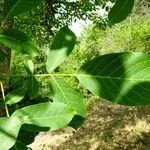
Juglans regia
گردوی ایرانی · Black Walnut · English walnut · Walnut · Carpathian walnut
Description
Source: leafsnapJuglans regia, the Persian walnut, English walnut, Carpathian walnut, Madeira walnut, or especially in Great Britain, common walnut, is an Old World walnut tree species native to the region stretching from the Balkans eastward to the Himalayas and southwest China. It is widely cultivated across Europe. It is the origin of cultivated varieties which produce the edible walnut, consumed around the world. China is the major commercial producer of walnuts.
💡 English walnuts are often crafted into exquisite hollowed-out designs and are also used in health-preserving products. There is a popular saying in China: "People can live to 99 if they always have English walnuts in their hands."
🌳 The appeal of the english walnut extends beyond producing flavorful nuts. It also produces 'Juglone', a compound that suppresses competing plants and serves as a natural weed-killer. Moreover, its nutshells contain activated carbon, known for removing impurities, particularly in water purification. The english walnut's wood, both strong and attractive, is preferred for making high-quality furniture and carvings, demonstrating a mix of practicality, environmental benefit, and artistry.
🎭 Insight, tactics, understanding, judgment, plenty
Care Guide
💧 Water Every 1-2 weeks
The English walnut tree grows well in temperate regions, where it prefers moderate moisture and can withstand short periods of drought. It should be watered every 1-2 weeks, allowing the soil to dry out slightly between waterings. During its dormant period, the tree's water needs decrease. When cultivating English walnuts outdoors, it's important to consider the climate zones, as water requirements vary with temperature changes.
What should I do if I give too much or too little water to an English walnut tree?
Overwatering an English walnut can cause yellowing, wilting, and leaf drop. The plant may look dull and show signs of mushy stems. If you notice these signs, adjust your watering schedule. Wilting can also be a sign of under watering, which causes crispy and dry leaves. Check the soil moisture and water thoroughly when needed. However, even with enough water, the damaged root system may cause the plant to remain dry with yellow leaves for a few days. Once it recovers, the yellowing will stop. When keeping an English walnut indoors, monitor moisture levels to avoid overwatering and watch for black spots. If present, allow the soil to dry by withholding water for a few days. Overwatering can lead to root rot, indicated by discolored and slimy roots. To prevent root rot, avoid overly soggy soil and consider transferring the plant to a different pot if necessary. When planting an English walnut outdoors, check the soil moisture by digging deeper. If it feels too dry, it may be underwatering, so adequate watering is essential for plant recovery.
Why is it important to water my English walnut tree?
Watering the English walnut is crucial for delivering necessary nutrients from the soil to the entire plant. To maintain the health of this species, it is important to understand the appropriate amount of water to provide. The specific watering requirements depend on both the local weather conditions and the quality of the plant's soil. Although the English walnut thrives in moist soil, excessive water saturation should be avoided. When planting on the ground, make sure to use sufficient mulch and avoid under-watering. For potted plants, ensure that the water reaches the base and keeps the soil moist. When using the English walnut for foliage, water should penetrate the soil to a depth of 10 to 20 inches in order to support continued growth. During rainy periods, refrain from watering and let the plant obtain necessary nutrients from the rainwater.
What's the best way to water my English walnut tree?
To ensure excellent root development, consider placing a garden hose at the base of the plant. Avoid spraying water directly onto the leaves, as this can be detrimental. If the plant is outdoors in direct sunlight, the leaves may require more watering. To moisten the roots, you can also use bubblers or soaker hoses. When planting or removing plants, use soaker hoses that can cover the entire garden or bed to encourage deep root growth. After watering, ensure any excess water drains and allow the soil to dry before watering again. Watering at ground level is recommended to prevent diseases. On sunny days, it may be beneficial to spray the entire bush with water. Whether in a pot or planted in the ground, remember that English walnut plants thrive with deep watering rather than light sprinkling.
How frequently should I give water to my English walnut tree?
The English walnut prefers deep and infrequent watering, especially when planted in pots. To ensure proper hydration, soak them in a gallon of water each time. Since flower pots have limited water storage and soil dries out faster, watering is required every 3 to 5 days in cold regions. Water in the morning when the soil is dry, both indoors and outdoors. Check the soil moisture by examining the top 2-3 inches; if dry, it's time for a full watering. In hot weather, monitor the moisture daily as the heat quickly dries out the pot soil. For garden plants, irrigation is necessary. In hot climates, water once a week when about 2 to 3 inches of soil is too dry both indoors and outdoors. Consider rainfall and avoid watering if there is sufficient natural moisture to prevent root rot. The growing season for English walnuts is spring and fall. Outdoors, add about 3 to 4 inches of mulch to conserve water. Sandy soil requires more frequent watering, while clay soil needs less to prevent root rot. Mark dates on the calendar to keep track of watering, especially if leaves start drooping, indicating potential delay.
How much water should I give my English walnut?
To properly water an English walnut tree, it generally requires about a gallon of water on a schedule. For potted plants, it's best to water them deeply until you see water dripping from the bottom of the pot. Wait for the soil to dry out before watering again. You can use a water calculator or moisture meter to keep track of how much water you've given your plant in a week. During the flowering period, provide plenty of water, but allow the moisture to evaporate afterwards to prevent root rot. If an English walnut tree is planted outdoors with sufficient rainfall, it may not need additional watering. However, when the tree is young or newly planted, make sure it receives 1-2 inches of rain per week. As the English walnut tree grows, it can rely solely on rainfall. Only during extremely hot weather or prolonged periods without rainfall should you consider giving the tree a thorough watering during the cooler parts of the day to prevent it from being damaged by the heat. Additional watering will also be required during extended dry spells.
☀️ Light Full sun
English walnut prospers in plentiful sunlight, owing to the abundant sun exposure of its native habitat. It can adjust to areas with reduced light, but these limits may impede its healthy growth. Sunlight sustains every stage of its development. Withering or discoloration may signal either too little or too much sun.
What are the sunlight requirements for English walnut?
English walnut requires full sun, which means it thrives in areas that receive above 6 hours of sunlight per day. It can also adapt to partial sun conditions, receiving about 3-6 hours of sunlight. However, insufficient sunlight might limit its growth, indicating the importance of choosing the right spot for planting. Observing how sunlight moves through your garden and selecting locations that provide a balance of light and shade are crucial for the plant's happiness and healthy development. Excessive or insufficient sunlight can cause issues like withering or discoloration, reflecting the plant's need for an optimal amount of sunlight.
How do artificial lights support plant growth?
Artificial lighting plays a vital role, especially for indoor plants when natural sunlight is insufficient, like during winter or in less sunny spaces. They promote faster, healthier growth by providing the necessary light intensity and spectrum. Choosing the right type of artificial light, such as LED lights, is crucial as they can offer the specific wavelengths needed by plants. For full sun plants, 30-50W per square foot is ideal, whereas partial sun plants need 20-30W, and full shade plants require 10-20W. The correct placement (12-36 inches above the plant) and duration (8-12 hours per day) mimic natural sunlight conditions, supporting the plant's growth even indoors.
What symptoms indicate English walnut is not getting enough light?
Symptoms of insufficient light for English walnut include small new leaves, leggy or sparse growth, faster leaf drop, slower or stopped new growth, lighter-colored new leaves, and specific conditions like chlorosis and sunscald. These symptoms signal the plant is not receiving the adequate sunlight it needs for photosynthesis and healthy growth. Conversely, excessive sunlight can cause issues like leaf curling, wilting, and leaf scorching, indicating the need for a balanced light exposure.
How can I improve light conditions for English walnut?
Improving light conditions for English walnut involves gradual exposure to more sunlight, the use of artificial lights if needed, and minimizing obstructions like trees by pruning. Indoors, move the plant closer to south-facing windows or use grow lights for at least 8 hours a day. Outdoors, transition the plants gradually to sunnier spots to prevent sunburn. For plants in the ground, pruning nearby trees can help increase sunlight exposure. When transplanting for better light, do it during the plant's dormant period with careful handling. Although parts of the plant affected by inadequate light may not recover, new growth should be healthy with improved light conditions.
🌡️ Temperature 0–32.2°C
The English walnut is native to regions with cooler climates, typically from the mid-20s to the mid-70s ℉ (-6 to 24 ℃). It favors temperatures between 32 and 90 ℉ (0 to 32 ℃) for best growth and fruiting. In winter, if temperatures fall below 20 ℉ (-6 ℃), the tree should be insulated to avoid damage. In hot weather above 90 ℉ (32 ℃), the tree can suffer heat stress and will need extra watering.
What is the native temperature range for the English walnut?
The English walnut, or Juglans regia, is native to areas that enjoy cooler temperatures, specifically within the range of the mid 20s to mid 70s Fahrenheit (-6 to 24 Celsius). For optimal growth and fruit production, this tree prefers temperature ranges from 32 to 90 Fahrenheit (0 to 32 Celsius).
How should I protect my English walnut tree in winter?
During the winter months, it's crucial to offer your English walnut tree proper insulation, especially when temperatures dip below 20 Fahrenheit (-6 Celsius), to prevent injury. Although the English walnut possesses strong cold resistance and usually doesn't require special frost protection measures, in extreme cold below -35 Celsius, it's important to safeguard the tree. Wrapping the trunk and branches with non-woven fabric or cloth can provide necessary cold protection. Additionally, ensure the soil around the tree is moist before the first freeze in autumn to help prevent drought and water scarcity during winter and early spring.
What are the symptoms of low temperature on an English walnut tree and how can I address them?
An English walnut tree is quite cold-tolerant, ideally thriving in temperatures above 0 Celsius and requiring protection when temperatures drop below -30 Celsius. Exposure to temperatures lower than -35 Celsius may not show immediate damage during winter, but come spring, the branches might appear brittle, dry, and fail to produce new shoots. To address this, prune away any dead branches that failed to produce new leaves in spring.
What should I do if my English walnut tree experiences high temperatures?
To protect your English walnut during the summer, it's important to ensure the temperature remains below 32 Celsius. If temperatures exceed 35 Celsius, the plant's leaves may lighten in color, tips may become dry and withered, and the plant could become susceptible to sunburn. To mitigate these effects, trim away the sunburned and dried-up parts of the plant, relocate it to a shaded area or employ a shade cloth to protect it against the midday and afternoon sun. Additionally, watering the plant in the morning and evening will help keep the soil moist and reduce heat stress.
💨 Humidity
🪴 Soil 6-7
🌱 Fertilizer Every 90 days
Fertilize your English walnut in early spring to encourage healthy growth. Regular feeding improves the tree’s overall condition, leading to vigorous development, increased tolerance of challenging conditions, and enhanced resistance to diseases and pests. Keeping to a defined fertilization schedule for your English walnut will promote foliage that is vibrant, richly colored, and lush in appearance.
What kind of fertilizer does my English walnut tree require?
English walnut trees require a significant amount of nitrogen, but that doesn't mean phosphorus and potassium are not important. In fact, a balanced fertilizer like 10-10-10 is recommended as it provides all three main nutrients. However, for optimal growth, a more nuanced nutrient ratio is often preferred, with slightly higher nitrogen content. A ratio of 10-6-4, for example, can work well. As for application, you can choose between granular or liquid-based fertilizers.
What happens if I give too much fertilizer to my English walnut?
When feeding an English walnut, be cautious of the risk of overfertilization. This risk is particularly high if you feed the plant at the wrong time, feed it too often, or skip watering the soil beforehand. Overfertilization can result in the development of brown leaves and stunted growth for your English walnut. Conversely, excessive fertilizer may cause rapid, weak new growth that is susceptible to breaking. This weak new wood can negatively impact the overall shape and structure of your English walnut.
Why should I put fertilizer on my English walnut tree?
No matter the type of English walnut you have, regular fertilization is key for its overall health. Providing the right nutrients will promote stronger growth, making it more resilient to harsh conditions and better at resisting diseases and pests. Maintaining the attractive foliage of your English walnut is important, so follow a consistent fertilization schedule tailored to its needs. This will result in vibrant leaves with a deep color and a lush appearance.
When should I fertilize my English walnut tree for the best results?
To ensure your English walnut tree stays healthy and continues to grow well, it is recommended to fertilize it in late winter or early spring. This provides the tree with the necessary nutrients for healthy growth when the weather warms up. If you live in a warm climate region, it is also beneficial to give your walnut tree an additional round of fertilizer in early fall. This helps provide extra nutrients for the following growing season and makes the tree more resistant to the cold winter without any damage to its foliage. Fertilizing earlier in the year also allows the new branches to grow and develop enough strength to withstand the winter weather.
When is it best to not put fertilizer on my English walnut tree?
There are a few occasions throughout the year when you should avoid fertilizing your English walnut tree. The first time is during the early and mid-winter months when the tree is dormant and does not require nourishment. It is also not recommended to fertilize the tree during late spring and summer, as these seasons are usually hotter and drier. During this time, fertilization can have a detrimental effect on the tree. To avoid any problems, it is best to stick to a fertilization schedule that involves feeding only during the early spring and early fall.
🪴 Pot & Repot Every 12 months
✂️ Pruning
The English walnut tree has a broad canopy and produces valuable nuts. To enhance its shape and health, prune the tree in early spring. Focus on removing dead wood and thinning overcrowded branches to improve air circulation. Use sharp tools to make clean cuts, and avoid heavy pruning to prevent stressing the tree. This will help ensure optimal nut production.
🌿 Propagating
🐛 Diseases & pets
☠️ Toxicity
Characteristics
- Plant Type
- Tree
- Life Cycle
- Perennial
- Genus
- Juglans
- Family
- Juglandaceae
- Hardiness Zone
- 3-8
- Mature Height
- 20.12 m to 24.99 m
- Mature Spread
- 11.89 m to 17.98 m
- Leaf Color
- Green
- Leaf Type
- Deciduous
- Flower Color
- Green, Yellow
- Flower Size
- 2.54 cm
- Bloom Time
- Mid spring, Late spring
- Planting Time
- Summer
- Harvest Time
- Mid summer
- Native Area
- Turkey, India, Austria, Slovakia, Montenegro, Bulgaria, Croatia, Slovenia, China, Serbia, Afghanistan, Iraq, Germany, Kyrgyzstan, Italy, Spain, Switzerland, Iran, Romania, Turkmenistan