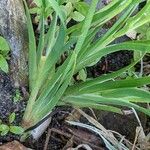
Juncus ensifolius
Sword-leaf rush · Sword-leaved Rush · Swordleaf Rush · Three-stamened Rush · Dagger Rush
Description
Source: leafsnapJuncus ensifolius is a species of rush known by the common names swordleaf rush, sword-leaved rush, and three-stamened rush. It is native to much of western North America from Alaska to central Mexico, and into eastern Canada. It is present in Japan and far eastern Russia, and it has been introduced to many other regions of the world, including Europe, New Zealand, Hawaii, and Australia. It is a plant of wet areas in many types of habitat. This is a rhizomatous perennial herb forming clumps of stems 20 to 60 centimeters tall. The flat but curving leaves are mostly located at the base of the stems and are variable in length. The inflorescence is an array of many rounded clusters of many flowers each. Each flower has a number of dark brown to black tepals a few millimeters long and usually three small stamens enclosed between them. The fruit is an oblong capsule with a small beak on the tip.
Care Guide
💧 Water Twice per week
Sword-leaved rush prospers in moist environments, needing consistent watering twice a week. Mainly an outdoor plant, it thrives in evenly damp soil throughout its active growing season, which is crucial for maintaining its lush, sword-like leaves.
What do I do if I give my Sword-leaved rush too much or too little water?
Proper watering is essential for maintaining the health and performance of this beautiful ornamental grass. When planted in the ground, any watering issues can generally be resolved. However, when planted in a container, it is crucial to avoid both overwatering and underwatering, as either extreme can quickly kill the Sword-leaved rush. If the grass is not receiving the right amount of water, it may stop growing. Overwatering can cause yellow leaves with brown tips, while underwatering can result in drooping leaves, weak seed head production, and browned leaves. If you suspect watering problems, first determine if it is due to too much or too little water. If there is excessive watering, immediately stop watering and allow time for heavy soils to dry out. Once new growth appears, test the soil for moisture and decide if more water is needed. On the other hand, if the grass is not receiving enough water, simply provide a deep drink and observe if it perks up. Remember that it is better to water deeply and less frequently, as this promotes the growth of deep roots, making the grass more resistant to drought and less prone to watering-related issues.
How frequently should I give water to my Sword-leaved rush?
The watering needs of Sword-leaved rush will vary depending on its location. Generally, it should be watered once a week. In hot climates, watering once or twice a week in the summer may be necessary. In moderate climates, watering once every seven days or more may be sufficient. Container grasses usually require more frequent watering than grasses in the ground. However, the watering frequency also depends on whether the grass is in full sun or part shade. Shaded grasses need less frequent watering than grasses in the ground. Sword-leaved rush should only be watered when the soil is dry. There are a few signs to look for to determine when to water. Pressing your finger a couple of inches into the soil will reveal if it is dry. For potted grass, you can weigh the grass with a portable scale or feel the lightness of the pot to check for lack of water. When the roots lack sufficient water, the blades may appear folded and thinner than usual. Despite its drought tolerance, regular deep waterings will result in a beautiful color. In the wild, Sword-leaved rush grows in open scrubland, experiencing extreme heat, bright sun, and intermittent rain. Although this grass is drought resistant, it still requires care and attention. Consistent watering is recommended by gardeners for optimal thriving. When first planted, Sword-leaved rush needs more frequent watering until it establishes deep roots. Potted Sword-leaved rush dries out quickly, particularly when exposed to hot, direct sun. Test the soil every 3 to 4 days and water only when it feels dry. Sword-leaved rush in the ground generally requires less watering, but it depends on the type of soil. Clay soil holds water for a long time, appearing dry at the surface while still retaining moisture below. Sandy soils that drain quickly will need more frequent watering.
What do I need to pay attention to when watering my Sword-leaved rush in different seasons, climates, or during different growing phases?
To determine if you are watering your grass enough, pay attention to its growth rate. Sword-leaved rush, for instance, grows twice its size in a year during the hottest months. If the weather is hot but the grass is not growing well, you may need to adjust your watering schedule. In winter, you can probably water once a month, but don't forget to check the soil for moisture. Generally, during the warmest months, the grass needs more water, while during winter and cooler months, water needs are significantly lower. The key rule for Sword-leaved rush is to let the soil dry out completely before watering again.
☀️ Light Full sun
Sword-leaved rush generally does best in full sun but can tolerate some shade. Its development is aided by abundant sunlight, a principal environmental factor in the areas where it naturally occurs. Excessive or insufficient sunlight can impair its vitality. Adequate light is required throughout all stages of growth because it drives photosynthesis and maintains overall health.
What are the sunlight requirements for Sword-leaved rush?
Sword-leaved rush thrives best in locations that receive full sun, which is above 6 hours of sunlight daily, but it can also tolerate partial sun, receiving about 3-6 hours of sunlight each day. The plant's growth and vitality are highly dependent on ample sunlight, which is crucial for photosynthesis and overall health. It is recommended to observe how sunlight moves through your garden to find the best spot that offers a balance of light and shade, ensuring the plants' wellbeing.
How does artificial lighting support Sword-leaved rush indoor growth?
For Sword-leaved rush cultivated indoors, adequate lighting is essential, especially when natural sunlight is insufficient. During winter or in less sunny spaces, artificial lights can provide a necessary boost, promoting faster and healthier growth. LED lights are a preferred choice for indoor plant lighting, as they can be customized to emit specific light wavelengths needed by the plants. Full sun plants require 30-50W/sq ft, partial sun plants need 20-30W/sq ft, and full shade plants need 10-20W/sq ft of artificial light. The light source should be placed 12-36 inches above the plant, mimicking natural sunlight for 8-12 hours per day to support the plant’s growth stages optimally.
What are the common symptoms of inappropriate sunlight exposure in Sword-leaved rush?
Symptoms of insufficient light in Sword-leaved rush include smaller new leaves, leggy or sparse growth, faster leaf drop, slowed or ceased growth, and lighter-colored or yellowing leaves indicating chlorosis. Excessive sunlight can cause symptoms like sunscald, where plant tissues are damaged, leaf curling as a defense mechanism against water loss, wilting due to increased transpiration, and leaf scorching characterized by brown, dry edges on leaves. Monitoring and adjusting the plant's light exposure are key to preventing these symptoms.
How can you address light exposure issues for both indoor and outdoor Sword-leaved rush plants?
To optimally grow Sword-leaved rush, adjust the plant's light exposure gradually. For indoor plants, consider moving them to a sunnier location step by step, ensuring they get at least 6 hours of direct sunlight daily or use artificial lighting when natural light is not sufficient. For outdoor plants, also adjust their position gradually to prevent sunburn. Reduce sunlight obstructions by pruning or transplanting smaller plants to sunnier spots. It's important to remember that while affected parts may not recover, new growth should flourish under improved lighting conditions.
🌡️ Temperature 15–37.8°C
Sword-leaved rush originates from regions where temperatures range from 59 to 100.4 °F (15 to 38 °C). It favors moderate warmth and may need temperature adjustments during extreme seasonal shifts to mimic its native surroundings.
What is the native environment temperature range for Sword-leaved rush?
Sword-leaved rush, or Juncus ensifolius, is adapted to environments with temperature ranges between 59 to 100.4°F (15 to 38°C). This plant thrives in moderate warmth and may require adjustments to its environment during extreme seasonal changes to emulate its native conditions, ensuring optimal growth and health.
How does Sword-leaved rush react to cold temperatures, and what measures should be taken to protect it?
Sword-leaved rush has some tolerance to cold and typically does not need extra protection if the temperature stays above -5°C. Nonetheless, if temperatures are anticipated to fall below -5°C, it's crucial to implement temporary protective steps, such as covering the plant with plastic, fabric, or other insulating materials to ward off frost damage. Once temperatures increase, these protective coverings should be removed promptly to prevent any potential harm to the plant.
What are the effects of low temperatures on Sword-leaved rush, and how can it be protected?
When exposed to temperatures below -10°C, Sword-leaved rush may show signs of stress, with leaves beginning to droop. In mild conditions, the plant may recover on its own, but in severe cold, leaves might wilt and detach. To protect the plant from low temperatures, it's advisable to trim off frost-damaged parts. Before further cold periods, it's beneficial to wrap the plant in non-woven fabric or similar material and build a wind barrier for added protection.
How does Sword-leaved rush respond to high temperatures, and what actions should be taken?
During peak summer heat, it's essential to keep Sword-leaved rush below 38°C to prevent stress. Temperatures exceeding 43°C can lead to symptoms such as lighter leaf color, dry and withered leaf tips, curled leaves, and increased risk of sunburn. To mitigate these effects, damaged parts should be trimmed, and the plant should be relocated to shaded areas or covered with shade cloth during the hottest parts of the day. Additionally, watering in the morning and evening helps maintain soil moisture and supports the plant's health.
💨 Humidity
🪴 Soil 6-8
🌱 Fertilizer
Sword-leaved rush needs extra nutrients to encourage healthy new growth. In spring, putting compost around the base of the plant will effectively supply the nutrition it requires. Fertilizing supports strong growth and helps the plant resist diseases and pests.
Why should I put fertilizer on my Sword-leaved rush plant?
Fertilizing Sword-leaved rush is essential for its overall health. By providing extra nutrients, you can promote the growth of healthy new leaves, while also supporting the wellbeing of existing foliage. This additional boost of nutrients can aid in protecting the plant from diseases and pests.
When should I fertilize my Sword-leaved rush plant?
To ensure the survival of Sword-leaved rush in your garden, it is important to know the right time to use fertilizer. This plant does not require a lot of nutrients and does not need any additional fertilization when it is dying back. While it is possible to apply diluted fertilizer at the beginning of the growing season, it is not recommended. Instead, it is better to use mulch or compost around the base of the plant.
When is it best not to use fertilizer on my Sword-leaved rush plant?
If you're not using packaged fertilizers, you can forget about when to stop feeding the Sword-leaved rush. Just apply a layer of compost or mulch in the spring to keep it happy all year. No need to worry about mulching or composting in the winter when the plant is dormant.
What kind of fertilizer does my Sword-leaved rush plant need?
You don't have to buy fertilizer for sword-leaved rush from the garden center. Instead, in the spring, you can use compost to provide the necessary nutrients. If you mulch your garden annually, the bark will also nourish and keep your plant content.
How can I give my Sword-leaved rush plant the nutrients it needs to grow well?
When using either mulch or compost for Sword-leaved rush, the steps are the same: apply a layer of the material, ensuring it covers the plant's base. If you choose to use both mediums, decrease the amount of compost. Applying a layer of mulch has dual benefits: it helps the soil retain moisture and provides nutrients for your plant.
🪴 Pot & Repot
✂️ Pruning
The sword-leaved rush is known for its sword-like leaves and thrives in moist, grassy areas. To encourage new growth and maintain its appearance, prune it in early spring using sharp, sterilized tools. Be careful not to cut excessively at the base, as this helps preserve the plant's integrity, improve air circulation, and enhance its overall vigor.
🌿 Propagating
🐛 Diseases & pets
☠️ Toxicity
Characteristics
- Plant Type
- Grass
- Life Cycle
- Perennial
- Genus
- Juncus
- Family
- Juncaceae
- Hardiness Zone
- 8-11
- Mature Height
- 49 cm
- Mature Spread
- 49 cm
- Leaf Color
- Green
- Leaf Type
- Deciduous
- Flower Color
- Brown, Green, Purple
- Flower Size
- 0.25 cm to 0.51 cm
- Bloom Time
- Early summer, Mid summer
- Planting Time
- Spring, Summer
- Harvest Time
- Late summer, Early fall
- Native Area
- Russia, Mexico, Japan