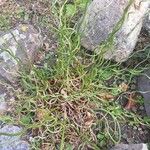
Juncus filiformis
Thread rush · Filiform rush · High Mountain Rush · Lakeside Rush
Description
Source: leafsnapJuncus filiformis, commonly known as thread rush or wire rush, is a perennial herbaceous plant belonging to the Juncaceae family. Native to North America, it thrives in wetlands, marshes, and along the edges of ponds and streams. The plant features thin, greenish-brown stems that can grow up to 60 cm in height and measure 1-2 mm in diameter. It lacks leaves and branches. The flowers, which bloom from June to August, are small clusters that are brownish-green in color. Juncus filiformis plays a crucial role in wetland ecosystems. It helps stabilize soil erosion along waterways and provides habitats for various aquatic animals, including frogs, turtles, and fish. Additionally, indigenous people have traditionally used the plant for medicinal purposes, such as treating headaches and stomach ailments. Overall, Juncus filiformis is a key component of wetland ecosystems, offering both ecological benefits and cultural significance through its medicinal uses by indigenous communities.
Care Guide
💧 Water Every 7 days
Thread rush thrives in consistently moist environments similar to its native wetlands. It prefers damp conditions and also shows moderate drought tolerance. For optimal growth, it needs to be watered weekly, especially during the growing season. However, natural rainfall can affect its hydration requirements.
What should I do if I give my Thread rush plant too much or too little water?
Proper watering is essential for this beautiful ornamental grass to thrive. When planted in the ground, watering issues can be resolved. However, in a container, excessive or insufficient water can quickly lead to the death of Thread rush. When Thread rush doesn't receive the correct amount of water, it may stop growing. Overwatering causes yellow leaves with brown tips, while underwatering results in drooping leaves, weak seed head production, and browned leaves. If you suspect improper watering, first determine if the issue is too much or too little water. If there is an excess of water, immediately stop watering and wait for the soil to dry out, which can take weeks. When new growth appears, test the soil for moisture and decide whether further watering is needed. On the other hand, if Thread rush is not getting enough water, simply give it a deep drink and observe if it improves. Remember that deep watering is more beneficial than shallow, frequent waterings as it encourages the growth of deep roots, making the grass more resistant to drought and watering-related problems.
How regularly do I need to water my Thread rush?
The watering needs of Thread rush grass vary depending on its planting location. As a general guideline, watering once a week is recommended. However, in hot climates, watering once or twice a week during the summer may be necessary. In moderate climates, watering once every seven days or even less may be sufficient. Grass in containers typically requires more frequent watering compared to grass in the ground. Additionally, the location of the grass, whether in full sun or part shade, also affects its watering needs. Shaded grasses generally require less frequent watering compared to grasses in the ground. It is important to only water Thread rush when the soil is dry. To determine this, you can press your finger a couple of inches into the soil or weigh the potted grass to see how light it is. The blades of the grass may appear folded and thinner than usual when the roots lack sufficient water. Despite its drought tolerance, regular and deep waterings will result in a beautiful color. In its natural habitat of open scrubland, Thread rush experiences extreme heat, intense sun, and occasional rain. Although it is drought resistant, it still requires care and attention. Consistent watering is recommended for optimal growth. When newly planted, Thread rush requires more frequent watering until it establishes deep roots. For potted Thread rush, the soil may dry out quickly, especially if exposed to hot, direct sun. Testing the soil every 3 to 4 days and watering when it feels dry is advised. Thread rush planted in the ground generally requires less watering, but this depends on the type of soil. Clay soil, even if it feels dry on the surface, may still hold moisture below ground. On the other hand, sandy soil that drains quickly may need more frequent watering.
What should I watch out for when watering my Thread rush in different seasons, climates, or during different stages of growth?
You can determine if you are watering enough by observing how quickly your grasses are growing. Thread rush, for example, can double in size within a year during the hottest months. If it is hot and the grass is not growing well, you may need to adjust your watering schedule. In the winter, you can probably water just once a month, but always check the soil for moisture. During the warmer months when the grass is actively growing, it will require more water. However, during the winter and cooler months, its water needs will be significantly reduced. Always remember that the soil should be completely dry before watering Thread rush.
☀️ Light Full shade
Thread rush does best in places where light is largely blocked. It tolerates total darkness well. It comes from areas with dense cover that shelter it from unfiltered light. Excessive light can impede its healthy development, and conversely, although it can survive in complete darkness, some light is useful for optimal growth.
What are the sunlight requirements for Thread rush?
Thread rush, or Juncus filiformis, thrives in conditions where light is largely obscured and can survive under no light at all, originating from areas with significant cover. It requires less than 3 hours of sunlight (full shade), and excessive light can inhibit its growth. However, some light is beneficial for optimal growth, and when natural sunlight is insufficient, especially in less sunlit spaces or during winter, artificial lighting such as LED lights can be utilized. For artificial lighting, full sun plants need 30-50W/sq ft, partial sun plants need 20-30W/sq ft, and full shade plants like Thread rush need 10-20W/sq ft. It's important to watch the sunlight in your garden to ensure plants receive the ideal balance of light and shade.
What are the signs of insufficient light for Thread rush?
Thread rush may exhibit subtle symptoms of light deficiency when grown indoors with insufficient light. These symptoms include smaller new leaves, leggy or sparse growth, faster leaf drop, slower or halted growth, lighter-colored new leaves, chlorosis (yellowing leaves due to a lack of chlorophyll), sunscald (damage from intense sunlight exposure), leaf curling (as a defense against excessive sunlight), wilting, and leaf scorching (brown, dry edges on leaves due to excessive sunlight). These symptoms indicate the plant is not receiving adequate light for its needs.
How can you address insufficient light for Thread rush?
To address insufficient light for Thread rush, consider moving your plants closer to light sources. Indoors, position them 1-2 meters away from a window for ample filtered light and supplement with artificial light, such as desk or ceiling lamps kept on for at least 8 hours daily, or invest in professional plant grow lights. Outdoors, gradually relocate your plants to sunnier spots each week to avoid sunburn. Minimize obstructions by pruning trees or relocating smaller plants to sunlit locations with good drainage. It's key to make these changes gradually to allow the plant to adapt without stress. Note that parts of the plant affected by insufficient light may not recover, but new growth after increasing light exposure will be healthy.
🌡️ Temperature 5–32.2°C
Thread rush is native to temperate regions where temperatures generally fall between 41 and 90 °F (5 to 32 ℃). It favors this moderate temperature band for optimal growth. As the seasons change, be mindful of temperature adjustments, particularly during the winter and summer months.
What is the natural habitat and preferred temperature range for Thread rush?
Thread rush, or Juncus filiformis, is native to temperate climates where it thrives in temperatures typically ranging from 41 to 90 °F (5 to 32 °C). It favors these moderate temperatures for optimal growth. With the change of seasons, it's important to keep temperature adjustments in mind, especially during winter and summer months.
Does Thread rush require any special care during winter?
Thread rush is highly cold-tolerant and does not require additional frost protection measures during winter. However, it is recommended to water the plant generously before the first freeze in autumn. This ensures the soil remains moist and enters a frozen state which helps prevent drought and water scarcity for the plant during winter and early spring.
What should be done if the temperature falls below -25°C?
Thread rush is extremely cold-tolerant, but if the winter temperature falls below -25°C, it may affect the plant's ability to sprout during spring. Although there may not be noticeable changes during winter, there could be a decrease in sprouting or even no sprouting at all during springtime. In spring, it's advisable to remove any parts of the plant that have failed to sprout.
How does Thread rush react to high temperatures and how should it be cared for if temperatures exceed 32°C?
Thread rush is not tolerant to high temperatures. When temperatures exceed 32°C, its growth will stop, and it becomes susceptible to rot. To care for Thread rush in high temperatures, trim away the sunburned and dried-up parts. Move the plant to a location that provides shade from the midday and afternoon sun, or use a shade cloth. Additionally, water the plant in the morning and evening to maintain soil moisture.
💨 Humidity
🪴 Soil
🌱 Fertilizer
To encourage the growth of thread rush, apply organic mulch or compost every 2-3 months. Adjust this frequency during the growing season and ensure that the mulch or compost does not come into direct contact with the base of the plants to prevent rot. Using fertilizer with care also supports a healthy thread rush.
🪴 Pot & Repot
✂️ Pruning
Thread rush has slender, cylindrical stems and requires occasional pruning to maintain its vitality. The best time to remove dead or damaged stems is in early spring, which helps to promote airflow and encourage new growth. Regular trimming not only improves the plant's appearance and health but also controls its spread, ensuring a robust and neat look.
🌿 Propagating
🐛 Diseases & pets
☠️ Toxicity
Characteristics
- Plant Type
- Grass
- Life Cycle
- Perennial
- Genus
- Juncus
- Family
- Juncaceae
- Hardiness Zone
- 5-7
- Mature Height
- 49 cm
- Mature Spread
- 49 cm
- Leaf Color
- Green
- Leaf Type
- Semi-evergreen
- Flower Color
- Brown, Green
- Flower Size
- 0.25 cm to 0.51 cm
- Bloom Time
- Early summer, Mid summer
- Planting Time
- Spring, Summer, Autumn
- Harvest Time
- Late summer, Early fall
- Native Area
- Turkey, Sweden, Austria, Slovakia, Slovenia, Croatia, Belarus, Russia, Germany, Iceland, Estonia, Romania, Latvia, Belgium, Netherlands, France, Czech Republic, Bulgaria, Armenia, Poland, Greece, Ukraine, Serbia, China, Lithuania, Norway, Italy, Kazakhstan, Spain, Switzerland, Denmark, Japan, Mongolia, Finland, Azerbaijan, United Kingdom