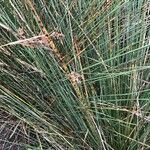
Juncus inflexus
سازوی شلاقی · Hard Rush · Blue rush · Sea-green rush · Incurved rush
Description
Source: leafsnapJuncus inflexus, commonly known as hard rush or blue rush, is a perennial herbaceous plant belonging to the Juncaceae family. Native to Europe and Asia, it has been introduced and naturalized in various regions worldwide. This plant exhibits a clumping growth habit, with long, slender stems that can reach up to one meter in height. The cylindrical stems are bluish-green with pointed tips. The leaves are reduced to small sheaths at the base of each stem. Juncus inflexus thrives in wet habitats such as marshes, swamps, and wet meadows but can also endure drier conditions. It plays a crucial role in wetland ecosystems by providing habitat for numerous aquatic animals, including insects and amphibians. Historically, humans have utilized this plant for various purposes. Its tough stems have been woven into baskets, and it has been used medicinally due to its anti-inflammatory properties. In summary, Juncus inflexus is vital to wetland ecosystems for its ecological contributions and carries cultural significance through its historical human uses.
Care Guide
💧 Water Every 7 days
European meadow rush thrives in moist environments and prefers consistent humidity along with moderate drought tolerance. To maintain optimal moisture, it should be watered every two weeks. When grown outdoors in riparian zones, European meadow rush takes advantage of seasonal water fluctuations to support its growth and reproduction.
What should I do if I give too much or too little water to my European meadow rush plant?
Proper watering is essential for the health of this beautiful ornamental grass. When planted in the ground, watering issues can be easily resolved. However, in a container, too much or too little water can quickly kill European meadow rush. Insufficient watering can cause it to stop growing, while overwatering can result in yellow leaves with brown tips. Signs of underwatering include drooping leaves, weak seed production, and browning leaves. If you suspect watering issues, the first step is to determine if it's receiving too much or too little water. If it's being overwatered, stop watering immediately and wait for the soil to dry out. Once new growth appears, test the soil for moisture and adjust watering accordingly. Conversely, if it's underwatered, give the grasses a deep drink and observe if it improves. It's important to remember that a long, deep watering is better than frequent shallow waterings. Deep watering encourages deep root growth, making the grass more drought-resistant and less susceptible to watering problems.
How frequently should I water my European meadow rush plant?
The watering needs of European meadow rush will vary depending on location. In general, watering this grass once a week is sufficient. However, in hot climates, watering once or twice a week in the summer may be necessary. In moderate climates, watering once every seven days or more should be enough. Grass in containers generally need more frequent watering than grasses in the ground. Additionally, shaded grasses require less frequent watering compared to grasses in the ground. It is important to only water European meadow rush when the soil is dry. A couple of ways to determine if the soil is dry include pressing your finger a few inches into the soil or weighing the grass to check if the pot feels light. Lack of sufficient water can cause the blades of the grass to appear folded and thinner than usual. Despite its drought tolerance, regular and deep waterings will result in beautiful color. Although European meadow rush is drought-resistant, it still requires care and attention, and consistent watering is recommended for optimal growth. When first planted, European meadow rush will need more frequent watering until it establishes deep roots. For potted grass, the soil may dry out quickly, especially in hot and direct sun. Testing the soil every 3 to 4 days and watering when it feels dry is recommended. The frequency of watering in the ground depends on the type of soil. Heavy clay soil tends to retain moisture below the surface even if it feels dry at the top, while sandy soils that drain quickly may require more frequent watering.
What should I watch out for when I water my European meadow rush in different seasons, climates, or during different growing periods?
To determine if you are watering your grass enough, observe its rate of growth. European meadow rush tends to double in size within a year during the hottest months. If the weather is hot but the grass isn't growing vigorously, adjust your watering schedule accordingly. In winter, you may only need to water once a month, but it's still important to check the soil for moisture. During the grass's growth cycle in the warmest months, it will require more water than usual, while in winter and cooler months, the water needs will decrease significantly. One crucial tip for European meadow rush is to always let the soil dry out completely before watering again.
☀️ Light Full sun
European meadow rush grows best under strong daytime sunlight, yet it can also perform well in conditions with reduced sun. It comes from a habitat where light is plentiful and required for healthy growth. Too much or too little light impairs the plant’s health, causing wilting or stunted growth, respectively.
What are the sunlight requirements for European meadow rush?
European meadow rush requires specific sunlight conditions to thrive. It thrives under full sun, which means it needs above 6 hours of sunlight daily, but it can also grow in partial sun, defined as about 3-6 hours of sunlight each day. It's essential to observe how sunlight moves through your garden to find spots that offer an ideal balance between light and shade, ensuring your plants grow healthily.
How does sunlight affect the health of European meadow rush?
The health and growth of European meadow rush are significantly influenced by sunlight exposure. Originating from environments rich in light, it excels under intense radiant energy but can also adapt to conditions with less sunlight. Both overexposure and underexposure to sunlight can harm the plant, leading to symptoms like wilting or stunted growth. Adequate sunlight is crucial for maintaining its health and vitality.
Can artificial lighting be used for European meadow rush, and how?
Yes, artificial lighting can support the growth of European meadow rush, especially when natural sunlight is insufficient, such as during winter or in less sunny indoor spaces. Optimal growth is achieved with adequate lighting, for which LED lights are recommended due to their ability to provide specific light wavelengths needed by plants. For full sun plants, 30-50W/sq ft of artificial light is ideal; partial sun plants require 20-30W/sq ft, and full shade plants need 10-20W/sq ft. The light source should be placed 12-36 inches above the plant to mimic natural sunlight conditions, ensuring it receives 8-12 hours of light daily.
What are the signs of inadequate lighting for European meadow rush?
Inadequate lighting can cause several symptoms in European meadow rush, including the growth of smaller leaves compared to older ones, leggy or sparse growth, early leaf drop to conserve resources, delayed or halted growth, paler new leaves indicating a lack of chlorophyll, and the overall appearance of the plant may appear weak and stretched. These symptoms indicate that the plant is not receiving the optimal light conditions it requires for healthy growth.
What are the symptoms of overexposure to sunlight in European meadow rush?
Overexposure to sunlight can lead to several problems for European meadow rush, including chlorosis, where leaves lose their green color and turn yellow due to the breakdown of chlorophyll. Sunscald, leaf curling, wilting, and leaf scorching are also common symptoms, manifesting as damage from intense sunlight, such as bleached areas, curled leaves to minimize water loss, drooping from loss of water pressure, and brown, crispy edges on leaves respectively. These issues highlight the importance of monitoring and adjusting the plant's exposure to sunlight.
🌡️ Temperature 5–32.2°C
European meadow rush occurs naturally in areas where temperatures range from 41 to 89.6 °F (5 to 32 ℃). Its preferred temperature conditions are characteristic of temperate climates. Adjust the temperature when required, ensuring it stays within this range throughout the seasons.
What is the ideal temperature range for European meadow rush?
The ideal temperature range for European meadow rush spans from 41 to 89.6 °F (5 to 32 °C), reflecting its preference for temperate climates. Adjusting the plant's environment to maintain this temperature range across different seasons is crucial for its optimal growth. The plant possesses strong cold resistance, meaning special frost protection measures aren't typically required during winter. However, in extreme conditions where winter temperatures could drop below -30°C, it's important to provide additional cold protection, such as covering the plant with soil or straw. Adequate watering before the first freeze in autumn helps ensure the soil remains moist and enters a frozen state, offering further protection against drought and water scarcity during the winter and early spring.
How does European meadow rush react to low temperatures?
European meadow rush is notably cold-tolerant and fares best when temperatures remain above 5°C. Throughout the winter, ensuring temperatures stay above -25°C is advisable. Exposure to temperatures below -30°C might not show immediate damage during the winter months, but could result in decreased sprouting or complete failure to sprout come springtime. The recommended solution for any parts that fail to sprout in the spring is to remove them to promote healthier growth for the remainder of the plant.
What should I do if European meadow rush is exposed to high temperatures?
During the summer, it's important to keep the European meadow rush's surrounding temperature below 32°C to avoid heat stress. Exposure to temperatures above 35°C can cause the leaves to lighten in color, curl, become prone to sunburn, and, in severe cases, lead to the entire plant wilting and drying out. To combat the effects of high temperatures, you should trim away the sunburned and dried-up parts of the plant. Additionally, relocating the plant to a shaded area or using a shade cloth to protect it from the midday and afternoon sun is beneficial. Watering the plant in the morning and evening can help keep the soil moist and reduce stress on the plant.
💨 Humidity
🪴 Soil
🌱 Fertilizer
European meadow rush is low-maintenance when it comes to feeding. It benefits from a 2-inch layer of mulch or compost applied each spring, which enriches the soil and helps retain moisture. Be careful not to over-fertilize during the growing season, as this can lead to burning and structural problems. Its nutrient needs remain consistent throughout the year. When applying fertilizer, make sure to keep it away from the base of the plant to prevent rot.
Why is it necessary to feed my European meadow rush plant?
Fertilizing European meadow rush is important because it provides your plant with the necessary nutrients for healthy new growth. These nutrients also promote the well-being of the existing growth and assist your plant in defending against diseases and pests.
When should I fertilize my European meadow rush plant?
To help European meadow rush thrive in the garden, timing the fertilizer application is crucial. This plant is not a heavy feeder and therefore does not need extra nutrients when it is dying back. While you have the option to use diluted fertilizer during the growing season, it is not advisable. Instead, a better approach is to apply a layer of mulch or compost around the base of the plant.
When is it better for me to not use fertilizer on my European meadow rush?
You don't need to worry about stopping the feeding of European meadow rush if you're not using packaged fertilizers. In the spring, simply apply a layer of compost or mulch to keep the plant happy all year round. Remember, there's no need to mulch or compost during the winter when the plant is dormant.
What kind of plant food does my European meadow rush need?
Instead of rushing to the garden center to buy fertilizer for European meadow rush, you can simply apply a layer of compost in the spring. This will provide the plant with the necessary nutrients. Additionally, if you mulch your garden every year, the bark will also help to nourish and maintain the plant's health and happiness.
How can I add nutrients to my European meadow rush?
For European meadow rush, whether you choose mulch or compost, the steps are the same. First, lay down a layer of the chosen material, ensuring it covers the base of the plant. If you decide to use both, decrease the amount of compost. Applying a layer of mulch has two benefits - it helps retain moisture in the soil and provides nourishment to your plant.
🪴 Pot & Repot 2-3 years
Repot the "European Meadow Rush" every 2 to 3 years in the spring. Use a medium-sized pot with good drainage. Keep the soil moist and ensure the plant receives partial to full sunlight for optimal recovery and robust growth in its new environment.
✂️ Pruning
The European meadow rush is a plant that grows in dense clumps with cylindrical stems. To keep it healthy, prune it in early spring by cutting back any damaged stems to the base to encourage new growth. Regularly thin out the plant to prevent overcrowding and manage its spread. Be sure to watch for any signs of pests or diseases and remove any affected areas right away.
🌿 Propagating
🐛 Diseases & pets
☠️ Toxicity
Characteristics
- Plant Type
- Grass
- Life Cycle
- Perennial
- Genus
- Juncus
- Family
- Juncaceae
- Hardiness Zone
- 4-8
- Mature Height
- 61 cm to 91 cm
- Mature Spread
- 61 cm
- Leaf Color
- Green, Blue
- Leaf Type
- Evergreen
- Flower Color
- Brown
- Flower Size
- 0.20 cm
- Bloom Time
- Early summer, Mid summer
- Planting Time
- Spring, Summer, Autumn
- Harvest Time
- Late summer, Early fall