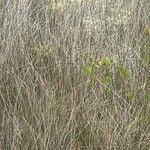
Juncus roemerianus
Needlegrass rush · Roemer's rush · Needle rush · Needle-grass rush · Black rush
Description
Source: wikipedia (CC BY-SA)Juncus roemerianus is a species of flowering plant in the rush family known by the common names needlegrass rush, black rush, needlerush, black needlerush and Roemer's rush. It is native to North America, where its main distribution lies along the coastline of the southeastern United States, including the Gulf Coast. It occurs from New Jersey to Texas, with outlying populations in Connecticut, New York, Mexico, and certain Caribbean islands.
Care Guide
💧 Water
☀️ Light Full shade
The plant known as needlegrass rush typically springs up in settings such as woodland undergrowth or rocky landscapes, offering inherent shade. It thrives in full shade but can also withstand partial sunlight.
🌡️ Temperature 15–37.8°C
Needlegrass rush displays significant resilience to temperature, possessing the ability to withstand higher temperatures and greater temperature fluctuations. It's vital to monitor watering and provide suitable shade to avoid sunburn when temperatures rise. Yet, Needlegrass rush demonstrates a comparatively limited resistance to low temperatures. Although it can survive a certain level of cold, extremely cold conditions can result in frost injury.
💨 Humidity
🪴 Soil
🌱 Fertilizer
🪴 Pot & Repot
✂️ Pruning
🌿 Propagating
🐛 Diseases & pets
☠️ Toxicity
Characteristics
- Plant Type
- Grass
- Life Cycle
- Perennial
- Hardiness Zone
- 7-11
- Mature Height
- 0.3 m to 1.83 m
- Mature Spread
- 30 cm to 61 cm
- Leaf Color
- Dark Green
- Leaf Type
- Evergreen
- Flower Size
- 0.25 cm to 0.51 cm
- Bloom Time
- Late spring, Early summer, Mid summer
- Planting Time
- Autumn
- Harvest Time
- Mid summer, Late summer, Early fall
- Native Area
- Bahamas