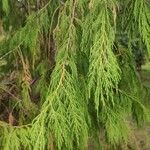
Juniperus flaccida
Mexican juniper · Drooping juniper · Weeping juniper · Mexican Drooping Juniper
Description
Source: leafsnapJuniperus flaccida (drooping juniper, weeping juniper or Mexican juniper; Native American names include tláscal) is a large shrub or small tree reaching 5–10 metres (16–33 feet) (rarely to 15 m) tall. It is native to central and northern Mexico (from Oaxaca northward) and the extreme southwest of Texas, United States (Brewster County). It grows at moderate altitudes of 800–2,600 metres (2,600–8,500 feet), on dry soils. The bark is brown, with stringy vertical fissuring. The shoots are strongly pendulous, 1–1.2 mm diameter, and often borne in flattened sprays (the only juniper commonly showing this character). The leaves are arranged in opposite decussate pairs; the adult leaves are scale-like, 2–4 mm long (to 7 mm on lead shoots) and 1–1.5 mm broad. The juvenile leaves (on young seedlings only) are needle-like, 5–10 mm long. The cones are berry-like, 8–20 mm in diameter, green maturing brown, and contain 6-12 seeds (the most seeds per cone of any juniper); they are mature in about 18 months. The male cones are 3–5 mm long, and shed their pollen in spring. It is largely dioecious, producing cones of only one sex on each tree. There are three varieties, not accepted as distinct by all authorities: Juniperus flaccida var. flaccida. Throughout the range of the species. Cones 9–15 mm diameter, with inconspicuous scale margins. Juniperus flaccida var. martinezii. Restricted to a small area in Jalisco. Cones 6–8 mm diameter, with inconspicuous scale margins. Juniperus flaccida var. poblana. Throughout the southern two thirds of the range of the species. Cones 12–20 mm diameter, with conspicuous scale margins.
🎭 Safeguarding, Anti-Theft Affection
Care Guide
💧 Water
Drooping juniper is well-suited for arid regions due to its excellent drought tolerance. It needs watering only every one to two weeks, making it an ideal choice for outdoor growth. As an evergreen plant, drooping juniper keeps its foliage all year long and requires less frequent watering compared to deciduous plants.
How should I water my Drooping juniper plant?
Watering your Drooping juniper is a simple task. The easiest way to do it is by using a garden hose to slowly soak the soil. This is ideal for mature trees that require a lot of water. However, if you have smaller trees, you could use a watering can or a smaller watering tool. It's important to avoid overhead watering, as too much moisture on the leaves can cause disease, especially for young trees.
What should I do if I give too much or too little water to my Drooping juniper?
Overwatering can be caused by poor soil, which prevents effective drainage. If the soil for your Drooping juniper doesn't drain well, the plant may start to decline. To remedy this, you can either improve the soil's drainage by adding amendments or relocate the plant to a more suitable area. If you're growing the juniper in a pot, you may also need to repot it with looser soil in a container that allows for better drainage. Overwatering can lead to diseases, so it's important to treat them promptly. On the other hand, if your Drooping juniper is underwatered, simply increase the watering frequency to restore its health. To determine if your juniper is overwatered, examine the foliage, particularly the new growth. Discoloration or easily breakable new growth indicates excessive moisture. Standing water or slow drainage in the growing area is another sign of overly moist soil. Underwatered junipers display symptoms such as sparse and brown leaves. Consider recent excessive rainfall or consistently high temperatures as potential causes for these symptoms.
How many times should I water my Drooping juniper?
A mature Drooping juniper is generally drought tolerant and can survive solely on rainfall. During the hottest months, you may need to water it once a week, but in other seasons, watering may not be necessary. However, newly planted junipers require regular watering to establish their roots and maintain soil moisture. It's crucial to avoid standing water, so it's better to under-water than over-water your Drooping juniper.
How much water does my Drooping juniper plant need?
During the height of summer, you'll usually need to water your Drooping juniper. Normally, it's recommended to give it one inch of water per week. However, this can vary depending on how much rain there has been. If it has rained one inch or more that week, you can skip watering. It's important to note that newly planted Drooping juniper will need more water during the establishment period. Generally, you should water it once every one to two weeks for the first few growing seasons.
How do I water my Drooping juniper plant in different seasons?
The Drooping juniper tree requires the most water during the summer months when it's the hottest. During this time, water the plant about once per week if there is no rainfall. In other seasons, the plant can often survive without any water. Occasionally, in very hot weather during spring and fall, you may need to provide some water, but this is rare. Unlike many plants, the Drooping juniper doesn't fully go dormant in winter, so it continues to grow even in the coldest months. However, the water needs in winter are still low because the cool temperatures don't dry out the soil quickly.
☀️ Light Full sun
The drooping juniper grows best with abundant sunlight but can tolerate moderately lit conditions. Coming from outdoor environments, it prefers a generous amount of light. However, excessive exposure can cause discoloration, while insufficient light can stunt growth. Variations in light levels may not significantly impact its health throughout its growth stages.
How many hours of sunlight does Drooping juniper need each day to grow well?
To promote healthy growth in Drooping juniper, ensure it gets a minimum of 3-6 hours of sunlight daily. Although it is capable of thriving in full sun, it is more adaptable than plants that need full sun or part shade due to its lower light requirements for photosynthesis.
What kind of sunlight does Drooping juniper require?
Drooping junipers thrive in full or part sun, but they prefer direct morning light. However, during the summer, it's important to shield them from the strong afternoon sun. Too much heat in the afternoons can scorch the leaves of the plant, harming both its overall look and its health.
Can the sun harm Drooping juniper plants? How can I shield Drooping juniper from sun and heat damage?
When moving a drooping juniper plant from indoors to outdoors, it can easily get damaged by direct sunlight. To prevent this, it is best to slowly transition the plant from a shaded area to a brighter spot. Keep in mind that even if the plant is used to the sun, extreme heat can still harm it. During a heatwave, it's important to regularly water the soil to help the plant handle the excessive heat levels. If the weather becomes extreme, you can protect the drooping juniper by moving it to a shaded area or using a shade cloth over it.
Should I keep Drooping juniper away from the sun?
Drooping juniper thrives in bright morning sun and some full sun exposure, but it struggles with the harsh midday summer sun. When planted in the ground, the plant can gradually adapt to the increasing intensity of the summer sun. However, if the plant is potted and kept indoors or in a protected area, it can suffer damage when suddenly exposed to direct summer sun during the hottest part of the day. To protect the plant from the intense afternoon sun, it is best to plant or place it in an understory location where it is shaded by taller trees, plants, a building, or a landscape feature at midday.
What will happen if Drooping juniper doesn't get enough sunlight?
If the Drooping juniper doesn't get enough sunlight, it can turn pale green or have drooping, yellow leaves. While it's normal for some leaves to drop, if no new leaves are growing back, it means something is wrong. The new growth of a Drooping juniper that lacks sufficient light is usually weak, pale, and attracts insects. By paying attention to these signs and adjusting the lighting conditions, you can make a big improvement for the plant.
🌡️ Temperature 15–37.8°C
Drooping juniper originates from regions with seasonal temperatures between 59 and 100.4 degrees Fahrenheit (15 to 38 degrees Celsius). It does well in warmer climates but can tolerate colder periods. Adjust watering and placement according to temperature changes.
What temperature is best for Drooping juniper?
Plants can be affected by colder temperatures because they have the same temperature as the air around them. Normally, when exposed to the sun, they warm back up. However, in winter, this process doesn't happen. The Drooping juniper, for example, requires a temperature range of 70~85℉(21~30℃) to thrive. It might be able to tolerate temperatures of 20~30℉(-6~0℃), or even 15℉(-10℃), but not for extended periods as frost damage can occur. To ensure optimal growth, the maximum temperatures should hover around 70~85℉(21~30℃). Moreover, remember to periodically spray water on them and provide some shade to prevent wilting.
Do I need to change the temperature for Drooping juniper at different stages of growth?
To ensure successful growth of Drooping juniper, it's important to research and monitor the temperature. Some growers may opt to lower their plants' thermostats during the growing season to save on HVAC costs. However, it's crucial to understand that temperature can impact various aspects such as flowering, pest management, and overall plant quality. During winter, certain species of Drooping juniper may enter a dormant state, causing growth to cease. As the seasons change and temperatures rise, the base temperature becomes warmer, enabling faster growth of Drooping juniper. It's worth noting that species naturally found in warmer habitats have higher optimum temperatures compared to those in cooler climates. Exposing Drooping juniper seeds to cooler temperatures can lead to reduced uniformity and delays in growth. Lowering the temperature during flowering might be beneficial, but it's important to maintain appropriate temperature levels for other growth phases. Additionally, cooler nighttime temperatures will require less water, so irrigation adjustments may be necessary.
How can I make sure Drooping juniper stays warm during cold seasons?
To help the Drooping juniper withstand colder temperatures, stop fertilizing the plant to prevent new growth and allow the existing ones to become hardier. Build structures such as cages or trellises around the juniper to keep them warm. Another option is to use heat mats that can gently warm the soil and maintain an ideal temperature range for the juniper consistently.
How can I keep a Drooping juniper safe from being damaged by temperature changes?
In winter, when the temperatures drop, you can safeguard the Drooping juniper from frost by using various materials like cloths, tarps, burlaps, sheets, or plastic buckets to cover it. Just make sure to secure the covers properly to prevent them from being blown away by the wind. However, be cautious not to let the plastic sheets or burlap covers touch any part of the fruit or foliage because this could result in burns from the cold temperatures transferring to the material. As the daytime temperatures start to warm up, you can take off the covers.
Should I change the temperature for Drooping juniper in different seasons?
To improve growing conditions for the Drooping juniper in spring, it may be beneficial to increase humidity due to the cooler air temperature. Dry conditions can cause added stress for different species, so boosting humidity can help. As summer approaches, the greenhouse's ample covering and warmer temperatures will naturally lead to higher humidity levels. It's important to monitor for condensation on the greenhouse walls, as this can impact pollination and promote leaf infections when the water eventually drips onto the leaves. Adjustments should be made based on temperature, and spraying may be necessary on hotter days to maintain optimal conditions.
💨 Humidity
🪴 Soil 6-7
🌱 Fertilizer
Drooping juniper has specific nutrient needs and does not require heavy fertilization. Spring is the best time to apply fertilizer for ideal growth. Providing nutrients improves its health, strengthens its resistance to pests and diseases, and helps maintain a long lifespan.
🪴 Pot & Repot
✂️ Pruning
To prune a drooping juniper, do so from early to late winter. Remove any dead or crowded branches to enhance air circulation. Avoid over-pruning to minimize stress on the plant. This practice encourages new growth and helps maintain a manageable size for landscaping purposes. Always use clean, sharp tools to prevent the spread of disease.
🌿 Propagating
🐛 Diseases & pets
☠️ Toxicity
Characteristics
- Plant Type
- Tree
- Life Cycle
- Perennial
- Genus
- Juniperus
- Family
- Cupressaceae
- Hardiness Zone
- 8-11
- Mature Height
- 4.88 m to 14.94 m
- Mature Spread
- 3.05 m to 11.89 m
- Leaf Color
- Green
- Leaf Type
- Evergreen
- Flower Size
- 0.25 cm to 0.51 cm
- Bloom Time
- Early spring, Mid spring
- Planting Time
- Spring, Autumn
- Harvest Time
- Late summer, Early fall, Mid fall
- Native Area
- Mexico