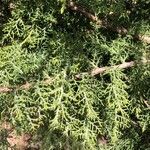
Juniperus monosperma
Cherry-stone juniper · One-seed juniper · Oneseed juniper · Utah juniper · Cherrystone Juniper
Description
Source: leafsnapJuniperus monosperma, commonly known as the one-seed juniper, is an evergreen shrub or small tree in the cypress family. Native to North America, it thrives in a variety of habitats, including deserts, grasslands, and woodlands. This plant has a distinctive look, featuring blue-green, needle-like leaves that grow in clusters of three. It also produces small cones that start off green and turn brown as they mature. For centuries, Native American tribes have utilized the one-seed juniper for various purposes. The berries were valued for their medicinal properties, used to treat respiratory infections and digestive issues. Beyond its medicinal uses, the one-seed juniper plays a crucial ecological role, offering habitat and food for wildlife such as birds and mammals. The plant is relatively low-maintenance and can tolerate drought conditions once established. Its attractive appearance makes it popular in landscaping, yet it also grows naturally in the wild. In summary, Juniperus monosperma is a versatile plant with both ecological importance and practical applications, making it a valuable species in North American ecosystems.
🎭 Safeguarding, Anti-Theft Affection
Care Guide
💧 Water Every 7 days
Right after planting, water the one-seed juniper every other day to help it adapt to its new environment. After the first week, reduce the frequency of watering, as this plant is drought-tolerant and can suffer from overwatering. During hot summer months, increase watering to prevent the plant from drying out.
☀️ Light Full sun
One-seed juniper is native to open habitats, such as sunny meadows and forest margins, which supply abundant light. It performs best in Full Sun but will also tolerate Partial Sun, adapting well to a variety of sunlight conditions.
What are the sunlight requirements for One-seed juniper (Juniperus monosperma)?
The One-seed juniper (Juniperus monosperma) thrives under different sunlight conditions depending on what you're able to provide. For those plants that need 'Full sun,' it's important they receive above 6 hours of sunlight daily to flourish. Meanwhile, if your garden setup only allows for 'Partial sun,' aiming for about 3-6 hours of sunlight would suffice. An essential tip to ensure the health and happiness of your One-seed juniper is to observe how sunlight moves through your garden throughout the day. Choosing spots that offer a harmonious balance of light and shade can significantly impact the well-being of your plants.
🌡️ Temperature 5–35°C
One-seed juniper is highly adaptable to a wide range of climates, tolerating both scorching summers and cold winters. Nevertheless, it has an optimal temperature range for growth. When temperatures rise too high, the plant is susceptible to heat and humidity stress, which can cause its death. In areas where temperatures near the lower limit of its cold tolerance, it is important to provide insulation to protect the plant.
💨 Humidity
🪴 Soil 6-8
🌱 Fertilizer
One-seed juniper has particular nutrient needs and does not require heavy fertilization. Spring is the best time to apply fertilizer for optimal growth. Supplying nutrients improves its health, increases its resistance to pests and diseases, and supports a long lifespan.
🪴 Pot & Repot
✂️ Pruning
The one-seed juniper is a drought-resistant plant that produces single-seed berries. Pruning in early spring helps improve air circulation and overall plant health by removing dead branches and controlling the plant's size. However, it's important to avoid over-pruning, as it can cause stress to the plant. Proper pruning encourages denser foliage, which is beneficial for windbreaks and erosion control. This practice aligns with the growth cycle of the one-seed juniper, allowing for optimal recovery.
🌿 Propagating
🐛 Diseases & pets
☠️ Toxicity
Characteristics
- Plant Type
- Tree
- Life Cycle
- Perennial
- Genus
- Juniperus
- Family
- Cupressaceae
- Hardiness Zone
- 4-9
- Mature Height
- 3.66 m to 10.97 m
- Mature Spread
- 3.05 m to 4.88 m
- Leaf Color
- Dark Green
- Leaf Type
- Evergreen
- Bloom Time
- Early spring, Mid spring
- Planting Time
- Spring, Summer, Autumn
- Harvest Time
- Late summer, Early fall, Mid fall
- Native Area
- Mexico