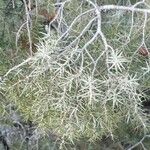
Juniperus oxycedrus
Αγριόκεδρο (Agriokedro) · Cade juniper · Prickly juniper · Red-berry juniper · Redberry juniper
Description
Source: leafsnapJuniperus oxycedrus, commonly known as Prickly Juniper or Cade Juniper, is an evergreen shrub or small tree that belongs to the cypress family. Native to the Mediterranean region, it thrives in various habitats such as rocky slopes, dry hillsides, and open woodlands. This plant has a distinctive appearance with needle-like leaves arranged in whorls of three. The dark green leaves are sharply tipped, and the plant's bark is reddish-brown with a rough texture. Prickly Juniper produces small yellowish-green flowers that bloom from late winter to early spring. These flowers give way to small berries that transition from green to black as they ripen. Historically, the plant has had diverse uses. Its wood was utilized in furniture making, while the berries served medicinal purposes, particularly in treating skin conditions like eczema and psoriasis. Additionally, Cade oil, extracted from this species, was traditionally used by shepherds as an insect repellent on sheep's wool during transhumance periods. This migration involved moving flocks between high-altitude summer pastures and lower-altitude winter pastures where insects were more prevalent. In summary, Juniperus oxycedrus is a fascinating evergreen shrub with unique features, distinguishing it from other plants within its range.
🌳 Prickly juniper serves various purposes beyond its most recognized uses. The essential oil extracted from its berries and wood has been used in perfumery and aromatherapy. The wood is also durable and resistant to rot, making it a desirable material in traditional carpentry for furniture and fence posts.
Care Guide
💧 Water Every 7 days
The prickly juniper is a drought-tolerant plant ideal for arid environments. It needs to be watered only once every one to two weeks. This evergreen plant thrives in full sun and well-drained soil. Since it retains its foliage throughout the year, it minimizes water loss through transpiration.
How should I water my Prickly juniper plant?
Watering your Prickly juniper is a straightforward task. To water the tree, simply turn on your garden hose and slowly soak the soil. This method is ideal for larger trees that require a high volume of water. For smaller trees, using a watering can or another smaller tool can suffice. It is important to avoid overhead watering, as excessive moisture on the leaves can lead to disease, especially in young trees.
What do I do if I give my Prickly juniper plant too much water or too little water?
Overwatering Prickly juniper can be caused by poor soil quality, particularly if the soil doesn't drain well. If this is the case, you can improve the drainage by amending the soil or moving the plant to a better location. If you're growing the juniper in a pot, you might need to switch to looser soil in a container with better drainage. Overwatered plants are more susceptible to diseases, which should be treated promptly. If your Prickly juniper is underwatered, simply increase the frequency of watering and the plant will recover. To determine if the plant is overwatered, check the foliage, especially new growth, for signs of discoloration or fragility. Standing water or slow drainage in the growing area can also indicate excessive moisture. Underwatered Prickly junipers may have sparse or brown leaves. Consider recent rainfall and high temperatures as possible factors affecting the plant's condition.
How frequently should I water my Prickly juniper?
Mature Prickly juniper trees are highly drought tolerant and typically survive on rainfall alone. During the hottest months of the year, you may need to water them about once per week. However, in other seasons, watering may not be necessary. The exception is if you have recently planted a Prickly juniper, in which case you should water regularly to maintain soil moisture and help the roots establish. It's important to note that Prickly junipers do not tolerate standing water, so it's better to avoid overwatering them.
How much water does my Prickly juniper plant need?
During the height of summer, watering your Prickly juniper becomes necessary. Usually, it requires about one inch of water per week, but this amount may vary based on rainfall. If it has rained one inch or more in a week, you can skip watering your Prickly juniper. For newly planted Prickly junipers, they need more water during their establishment period. Typically, they should be watered once every one to two weeks for the first few growing seasons.
How do I water my Prickly juniper throughout the year?
During the summer months, the Prickly juniper tree requires the most water since it's the hottest time of the year. In the absence of rainfall, you should water the plant about once per week. However, during other times of the year, this plant can often survive without any water at all. In spring and fall, you may need to provide some water if the weather is exceptionally hot, but this doesn't happen often. Unlike many other plants, the Prickly juniper doesn't go into full dormancy in winter, which means it continues to grow even during the coldest months. However, the water needs during winter will remain low as the cool temperatures don't dry out the soil quickly.
☀️ Light Full sun
Prickly juniper grows best with strong, unobstructed sunlight. Coming from an environment rich in sun, it withstands a lack of shade quite well. Insufficient light can limit its growth, while excessive light is typically tolerated. Its light needs stay the same at all stages of development.
What are the sunlight requirements for Prickly juniper?
Prickly juniper requires intense and unobstructed solar exposure to thrive optimally, originating from environments abundant in sunlight and tolerating an absence of shade commendably well. The plant needs more than 6 hours of full sun daily to ensure good growth. However, it can also adapt to partial sun conditions, receiving about 3-6 hours of sunlight. It's important to ensure that the plant gets adequate sunlight at different stages of its growth to avoid any hinderance in its development. Excessive light is generally well-tolerated, whereas insufficient light might impede its growth.
How can artificial lighting be used for Prickly juniper indoors?
Indoor Prickly junipers require adequate lighting for optimal growth, especially when natural sunlight is insufficient, like in winter or in less sunny spaces. Artificial lights, such as LED lights, can be customized to provide specific wavelengths of light needed by plants. For full sun plants, 30-50W per square foot is recommended; partial sun plants require 20-30W per square foot, and full shade plants need 10-20W per square foot. The artificial light source should be placed 12-36 inches above the plant to mimic natural sunlight and kept on for about 8-12 hours per day, depending on the plant species’ needs.
What are the symptoms of light deficiency or excessive sunlight in Prickly juniper?
Prickly juniper may show several symptoms due to inadequate or excessive sunlight. Light deficiency can lead to smaller new leaves, leggy or sparse growth, faster leaf drop, slower or halted growth, and lighter-colored or pale new leaves. On the other hand, excessive sunlight can cause chlorosis (leaves turning yellow due to chlorophyll breakdown), sunscald (pale or necrotic areas on plant tissue), leaf curling (to minimize water loss), wilting (loss of turgor pressure), and leaf scorching (brown, dry edges on leaves). These symptoms indicate that adjustments in light exposure are necessary for plant health.
How can you effectively manage sunlight exposure for Prickly juniper?
To manage sunlight exposure for Prickly juniper effectively, gradually acclimate your plants to their ideal sunlight conditions. For indoor plants needing more light, gradually move them to sunnier locations each week until they receive at least 6 hours of direct sunlight daily, use a south-facing window, or provide artificial light for at least 8 hours daily. For outdoor plants, gradually move them to sunnier spots to prevent sunburn. Also, minimize obstructions like branches blocking sunlight or transplant smaller plants to sunnier locations during their dormant period. It's important to note that parts of the plant affected by insufficient sunlight may not recover, but new growth should be healthy with proper light exposure.
🌡️ Temperature 5–35°C
Prickly juniper comes from areas with moderate temperatures. It does best in temperatures of 41 to 95 °F (5 to 35 ℃). In cooler climates it may need protection, especially in winter; in hotter areas, provide extra water during the summer to help it maintain suitable temperature conditions.
What are the ideal temperature conditions for Prickly Juniper?
Prickly juniper is native to regions that experience moderate temperatures, thriving best within a temperature range of 41 to 95 °F (5 to 35 °C). In cooler climates, it may require protection during winter, while in hotter areas, extra watering during summer can help maintain the suitable temperature conditions. The plant has strong cold resistance, generally not needing special frost protection measures during winter. However, if temperatures are expected to drop below -25°C, it's important to provide cold protection by wrapping the trunk and branches with materials like non-woven fabric or cloth. Additionally, watering the plant abundantly before the first freeze in autumn, to keep the soil moist, can help prevent drought and water scarcity during winter and early spring.
How does low temperature affect Prickly Juniper and what can be done?
Prickly juniper is cold-tolerant, ideally kept above 5°C during winter and should remain above -20°C. If the temperature falls below -25°C, although there may not be noticeable changes during winter, the branches can become brittle and dry in spring, with no new shoots emerging. To address this, it's recommended to prune away any dead branches in spring that have failed to produce new leaves, helping the plant to recover from the cold damage.
How does high temperature affect Prickly Juniper and what are the remedies?
During the summer, the temperature for Prickly juniper should not exceed 35°C. When temperatures go beyond 38°C, the plant's leaves may lighten in color, tips may become dry and withered, and it becomes more susceptible to sunburn. To mitigate these issues, it's advisable to trim away the sunburned and dried-up parts and move the plant to a location that provides shade during the midday and afternoon sun. Using a shade cloth can also create suitable shade. Additionally, watering the plant in the morning and evening helps keep the soil moist and supports the plant's well-being under high-temperature conditions.
💨 Humidity
🪴 Soil 5-7
🌱 Fertilizer
Prickly juniper has specific nutrient needs and does not require heavy fertilizing. Spring is the best time to apply fertilizer for optimal growth. Providing nutrients enhances its health, raises its resistance to pests and diseases, and helps ensure a long lifespan.
Why should I put fertilizer on my Prickly juniper?
To promote healthy growth in Prickly juniper, it is recommended to fertilize it in the spring. Keep in mind that this plant has a long lifespan and requires support. Additionally, adding nutrients to the soil can enhance its overall health, enabling it to better withstand common pests and diseases that may hinder growth or reduce its lifespan.
When should I fertilize my Prickly juniper plant?
Prickly juniper differs from regular garden plants as it doesn't need a lot of nutrients. The growing medium may not always provide enough nutrients for healthy growth. To ensure optimal growth, it is best to fertilize Prickly juniper in the spring before new growth begins.
When should I not add fertilizer to my Prickly juniper plant?
Prickly juniper, unlike other plants, doesn't need frequent fertilization. It can actually be harmed by excessive nutrients, leading to its deterioration. To prevent this, only apply fertilizer in the spring and avoid using any in the summer, fall, and winter. Additionally, refrain from adding any organic matter to the soil during these seasons.
What kind of fertilizer should I use for my Prickly juniper plant?
The age of your plant is important when choosing fertilizer. However, Prickly juniper doesn't need a lot of extra nutrients. Look for a balanced plant food that promotes healthy root development and growth, but avoid fertilizers with high nitrogen levels.
How should I fertilize my Prickly juniper?
To properly fertilize Prickly juniper, it is crucial to consider both the timing and application method. Add the fertilizer only once in the spring, focusing on the plant's base. Be cautious not to get any fertilizer on the trunk. In the case of granulated fertilizer, make sure to cover the pellets with a thin layer of soil to enhance absorption into the soil.
🪴 Pot & Repot
✂️ Pruning
Prickly juniper needs very little pruning. However, to encourage a fuller plant, trim the top buds regularly, which stimulates the growth of lateral buds. In winter, remove any old or diseased branches and thin out dense areas to enhance ventilation and light exposure. This practice reduces the risk of pests and diseases.
🌿 Propagating
🐛 Diseases & pets
☠️ Toxicity
The berries of Juniperus oxycedrus are not safe for human consumption and should be avoided.
Characteristics
- Plant Type
- Shrub
- Life Cycle
- Perennial
- Genus
- Juniperus
- Family
- Cupressaceae
- Hardiness Zone
- 5-9
- Mature Height
- 14.94 m
- Mature Spread
- 3.05 m
- Leaf Color
- Green, Blue, Variegated
- Leaf Type
- Evergreen
- Flower Color
- Yellow, Green, Orange
- Bloom Time
- Mid spring, Late spring
- Planting Time
- Autumn
- Harvest Time
- Early spring, Mid spring, Mid summer, Late summer, Fall, Winter