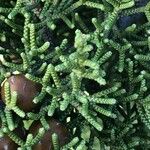
Juniperus phoenicea
Phoenician juniper · Phoe juniper
Description
Source: leafsnapJuniperus phoenicea, the Phoenicean juniper or Arâr, is a juniper found throughout the Mediterranean region.
Care Guide
💧 Water Every 7 days
Phoenician juniper is a highly drought-tolerant plant that thrives with minimal water, enduring long periods of dryness. It should be watered every 1-2 weeks, with the soil allowed to dry out between waterings. As an evergreen, this plant flourishes outdoors and is well-suited for xeriscaping in a variety of climate zones.
How should I water my Phoenician juniper plant?
Watering your Phoenician juniper is a simple task. For mature trees, use a garden hose to slowly soak the soil, while smaller trees can be watered using a watering can or a smaller tool. Avoid overhead watering to prevent disease, especially for young trees.
What should I do if I give my Phoenician juniper plant too much water or too little water?
Overwatering can be caused by poor soil conditions for Phoenician juniper plants. If the soil does not drain well, the plant will start to decline. To fix this issue, you can improve the soil drainage or relocate the plant to a better spot. If your juniper is in a pot, you might need to repot it with looser soil and a container that allows for better drainage. Overwatering can lead to diseases, so it's important to treat them promptly. On the other hand, underwatered juniper plants can be revived by watering more frequently. To determine if your juniper is overwatered, check for discolored or fragile new growth. Standing water or slow drainage in the plant's area can also indicate excessive moisture in the soil. Underwatered junipers will have sparse, brown leaves. Consider recent heavy rain or consistently high temperatures if you notice these symptoms.
How frequently do I need to water my Phoenician juniper?
A mature Phoenician juniper typically doesn't require much water and can survive solely on rainfall. During the hottest months, watering once a week may be necessary, but in other seasons, watering may not be needed at all. The only exception is for newly planted junipers, which should be watered regularly to establish their roots. It's crucial to avoid overwatering as Phoenician junipers cannot tolerate standing water. When unsure, it's better to err on the side of not watering rather than risking overwatering.
How much water does my Phoenician juniper tree need?
During the height of summer, you may need to water your Phoenician juniper. Typically, it requires about one inch of water per week. However, this amount may vary based on rainfall. If it has rained one inch or more that week, you do not need to water your Phoenician juniper. For newly planted Phoenician junipers, more water is needed during the establishment period. Generally, watering once every one to two weeks for the first few growing seasons is recommended.
How do I water my Phoenician juniper throughout the year?
The Phoenician juniper tree requires the most water during the summer when it is hottest. In the absence of rainfall, water the plant once per week during this time. The plant can generally survive without water during other times of the year. In spring and fall, you may need to provide some water if it is unusually hot, though this is rare. Unlike many plants, the Phoenician juniper does not fully go dormant in winter, so it continues to grow even in the coldest months. However, the water needs remain low during winter due to the slower drying of soil caused by cool temperatures.
☀️ Light Full sun
The phoenician juniper grows best with plenty of sunlight and strongly favors spots that are sunlit. It can tolerate slight shading, but abundant light supports its optimal growth and health. However, both too little and too much light can disturb growth and potentially cause harm.
What are the sunlight requirements for the Phoenician juniper?
The Phoenician juniper thrives best under full sun exposure, requiring more than 6 hours of sunlight daily for optimal growth and health. It can also grow in partial sun, where it receives about 3-6 hours of sunlight. However, it's important to note that both extremely low and excessively high levels of sunlight can hinder its growth and may cause damage. Observing the movement of sunlight through your garden to find the perfect spot that offers a balance of light and shade is crucial for the plant's wellbeing.
How can artificial lighting be used for Phoenician juniper plants indoors?
Indoor Phoenician juniper plants require adequate lighting for optimal growth, especially when natural sunlight is insufficient, such as in winter or in less sunny spaces. Artificial lights, such as LED lights, provide a vital solution as they can be customized to offer specific wavelengths needed by the plants. For full sun plants, 30-50W per square foot of artificial light is recommended, for partial sun plants, 20-30W per square foot, and for full shade plants, 10-20W per square foot. The light source should be placed 12-36 inches above the plant to mimic natural sunlight, and most plants need 8-12 hours of light per day.
What are the signs of insufficient light in Phoenician juniper?
Signs of insufficient light in Phoenician juniper include smaller new leaves compared to older ones, leggy or sparse growth, faster old leaf drop, delayed or halted new growth, lighter-colored or pale new leaves, symptoms of chlorosis (leaves turning yellow), symptoms of sunscald (pale, bleached areas on leaves or stems), leaf curling or twisting to minimize surface area exposed to extreme sunlight, wilting due to increased water loss, and leaf scorching characterized by brown, dry, and crispy leaf edges. These symptoms indicate the plant is not receiving adequate sunlight for photosynthesis and overall health.
How to address light-related issues for Phoenician juniper indoors and outdoors?
To address light-related issues for indoor Phoenician junipers, gradually move the plants to sunnier locations, ensuring at least 6 hours of direct sunlight daily. Using a south-facing window maximizes sunlight exposure. For plants that are large or not easily movable, consider using artificial light, keeping lamps on for at least 8 hours daily or investing in professional grow lights. For outdoor plants, it's important to gradually adapt them to increased light by moving them weekly to sunnier spots, avoiding sudden changes that can cause sunburn. Also, regularly prune any obstructions like tree branches to improve sunlight access. Note that parts of the plant damaged by insufficient sunlight might not recover, but new growth should be healthy with better light conditions.
🌡️ Temperature 0–35°C
Phoenician juniper is native to areas where temperatures range from 32 to 95 °F (0 to 35 ℃). It prefers temperate conditions and may need protection if exposed to extreme heat or cold. If temperatures move outside its comfort zone, provide ample shade or insulation.
What is the native temperature range for Phoenician juniper?
Phoenician juniper is native to areas where temperatures range from 32 to 95 °F (0 to 35 °C). It thrives in moderate climates and may need adaptations to cope with extreme heat or cold. For temperatures outside of its ideal range, it's suggested to provide shade in extreme heat or insulation in extreme cold. Despite its strong cold resistance, where winter temperatures fall below -35°C, protective measures should be considered, such as wrapping the trunk and branches with fabric. It's also recommended to water the plant heavily before the first autumn freeze to ensure the soil is moist entering winter, which helps prevent drought and water scarcity in winter and early spring.
How does Phoenician juniper handle low temperatures?
Phoenician juniper is cold-tolerant, preferring temperatures to remain above 0°C and ideally above -30°C during winter. In conditions colder than -35°C, the plant's branches may not show immediate damage but can become brittle and dry by spring, leading to a lack of new shoots. The recommended solution for affected plants is to prune any dead branches that fail to produce new leaves come spring.
What should be done if a Phoenician juniper experiences high temperatures?
In high temperatures, particularly during summer, it's best to keep Phoenician juniper below 35°C. Exposure to temperatures above 41°C can cause the leaves to lighten in color and the tips to dry out and wither, making the plant more prone to sunburn. In such cases, sunburned and dried parts should be trimmed, and the plant should be moved to a shaded location or protected with a shade cloth during the peak sun hours. Adequate watering in the morning and evening is crucial to maintain soil moisture.
💨 Humidity normal (40-60%)
This plant will thrive in moderate humidity, which is probably the level in your home. However, misting it a few times a week can be very beneficial. Make sure the room has good ventilation.
🪴 Soil 6-7
🌱 Fertilizer
Phoenician juniper has particular nutrient needs and does not require heavy fertilization. Fertilizing in spring is best for promoting optimal growth. Supplying nutrients enhances its health, strengthens its resistance to pests and diseases, and helps sustain its long lifespan.
Why should I put fertilizer on my Phoenician juniper tree?
To ensure healthy growth and support the long lifespan of the Phoenician juniper, it is recommended to fertilize it in the spring. By adding nutrients to the soil, the plant's health can be improved, allowing it to better resist common pests and diseases that can hinder growth or shorten its lifespan.
When should I fertilize my Phoenician juniper to get the best results?
Phoenician juniper is unique compared to garden annuals and perennials because it doesn't need a lot of extra nutrients to thrive. While the growing medium might not always provide enough nutrients, fertilizing the juniper in the spring before new growth emerges is the best time to enhance its health.
When should I not put fertilizer on my Phoenician juniper?
Unlike some plants that benefit from regular fertilization, Phoenician juniper does not require excessive nutrients. Applying too much fertilizer can actually harm this plant, leading to its decline. For optimal growth, it is recommended to only apply fertilizer in the spring, and refrain from adding any during the summer, fall, and winter seasons. Additionally, it is advised not to introduce any organic matter to the soil during these times.
What kind of plant food does my Phoenician juniper need?
The age of your plant determines the fertilizer it needs. However, Phoenician juniper doesn't need many extra nutrients. Look for a balanced plant food that promotes healthy root development and growth, but avoid fertilizers with high nitrogen contents.
How can I give food and nutrients to my Phoenician juniper plant?
Applying fertilizers to Phoenician juniper is crucial, both in terms of timing and method. During springtime, it is recommended to fertilize the plant at the base, while being careful not to let any fertilizer touch the trunk. If you are using granulated fertilizer, remember to cover the pellets lightly with soil to aid their absorption into the soil.
🪴 Pot & Repot
✂️ Pruning
Phoenician juniper benefits from pruning done between early and late winter. Focus on removing dead branches and thinning out dense areas to improve air circulation and light penetration. Light shaping is recommended to maintain its natural form. Taking proper care of the juniper enhances its resistance to disease and promotes healthy growth, ensuring it remains both healthy and attractive.
🌿 Propagating
🐛 Diseases & pets
☠️ Toxicity
Characteristics
- Plant Type
- Shrub
- Life Cycle
- Perennial
- Genus
- Juniperus
- Family
- Cupressaceae
- Hardiness Zone
- 3-10
- Mature Height
- 10.06 m
- Mature Spread
- 10.06 m
- Leaf Color
- Green, Blue
- Leaf Type
- Evergreen
- Flower Color
- White
- Bloom Time
- Early spring, Mid spring
- Planting Time
- Spring, Summer, Autumn
- Harvest Time
- Late summer, Early fall, Mid fall