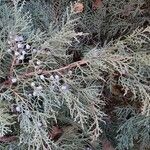
Juniperus scopulorum
Rocky Mountain juniper · Rocky Mountain red-cedar · River juniper · Red-cedar · Western juniper
Description
Source: leafsnapJuniperus scopulorum, commonly known as Rocky Mountain juniper, is a species of coniferous tree native to western North America. It typically grows to a height of 10-20 meters and features a conical or columnar shape. The bark is reddish-brown and peels off in long strips, revealing an orange-brown inner bark. The leaves of the Rocky Mountain juniper are needle-like and arranged in whorls of three. They are usually blue-green and have a waxy coating that helps them retain moisture. The tree produces small cones that start green but turn brown as they mature. These cones contain small seeds that are dispersed by birds and other animals. Rocky Mountain junipers thrive in rocky or sandy soils at elevations ranging from 1,500 to 3,000 meters above sea level. They are often found growing alongside other conifers such as Douglas fir and ponderosa pine. Beyond its ornamental value as an attractive landscape plant, the Rocky Mountain juniper has been used for medicinal purposes by Native American tribes for centuries. Its wood is also valued for making furniture, fence posts, and other items due to its durability. Overall, Juniperus scopulorum is an ecologically important species, playing a vital role within its ecosystem. It also holds cultural significance due to its traditional medicinal uses by Native American tribes and practical applications in woodworking.
🌳 Apart from its familiar uses in landscaping and woodworking, rocky mountain juniper has a number of less obvious applications. Its sturdy, aromatic wood is valued for making high-quality furniture and fence posts. Oil can be extracted from rocky mountain juniper to be used as a fragrance in aromatherapy and cosmetics. Its hardy nature makes it suitable for reclamation projects to stabilize soils and prevent erosion, while its foliage provides food for browsing wildlife.
🎭 Safeguarding, Anti-Theft Affection
Care Guide
💧 Water Every 7 days
The Rocky Mountain juniper is a drought-tolerant plant that thrives in arid conditions by storing water in its dense foliage. When cultivated, it requires watering only once every one to two weeks, and the soil should be allowed to dry out between waterings. Favoring dry air and well-draining soil, this evergreen not only survives but also enhances the resilience of the landscape.
How should I water my Rocky mountain juniper tree?
Watering your Rocky mountain juniper is a simple task. The easiest way to do this is by using your garden hose to slowly soak the soil. For mature trees, the garden hose is the best tool because they require a lot of water. However, smaller trees can be watered using a watering can or a smaller tool. It's important to avoid overhead watering as this can cause disease, especially for young trees.
What should I do if I give too much or too little water to my Rocky mountain juniper?
Overwatering can be a problem if the soil doesn't allow water to drain effectively. If your Rocky mountain juniper is in this situation, you can either improve the soil drainage or move the plant to a better location. If your juniper is in a pot, you may need to repot it with looser soil and better drainage. Overwatering can lead to diseases, so treat them promptly. If your juniper is underwatered, simply water it more often and it will recover. To determine if your juniper is overwatered, look at the new growth - if it's discolored or easily breaks, that's a sign. Standing water or slow drainage are also indications of overly moist soil. If the juniper is underwatered, the foliage may become sparse and brown. Consider recent rainfall or high temperatures if you notice these symptoms.
How often do I need to water my Rocky mountain juniper?
A mature Rocky mountain juniper is very resilient to drought and can survive solely on rainfall. Typically, you will only need to water this tree once a week during the hottest months. However, in other seasons, watering may not be necessary at all. The exception to this is if the juniper is newly planted, in which case regular watering is needed to establish the roots. Remember, Rocky mountain junipers do not like standing water, so it's best to avoid overwatering them.
How much water does my juniper tree from the Rocky mountains need?
During the height of summer, it is typically necessary to water your Rocky mountain juniper. Normally, you should give it about one inch of water per week, but this can change if it has rained enough. If there has been at least one inch of rain that week, you don't need to water your juniper. Keep in mind that newly planted junipers require more water during the establishment period. Generally, you should water them once every one to two weeks for the first few growing seasons.
How do I water my Rocky mountain juniper throughout the year?
The Rocky mountain juniper tree needs the most water during the hot summer months. During this time, water it once a week if there is no rain. However, this tree can often survive with no water at all during the rest of the year. In the spring and fall, you may need to provide some water if it is exceptionally hot, although this is rare. Unlike other plants, the Rocky mountain juniper tree does not fully go dormant in the winter, so it continues to grow even during the coldest months. However, its water needs during the winter are low because the cool temperatures do not dry out the soil quickly.
☀️ Light Full sun
The rocky mountain juniper prefers habitats with steady sun exposure and can tolerate locations with only occasional light cover. Native to an environment accustomed to abundant sunshine, its growth and health are directly influenced by how much sun it receives. Too little sunlight can hinder its development, while too much can cause harm.
What are the sunlight requirements for rocky mountain juniper?
The rocky mountain juniper requires environments that offer constant exposure to the sun and can tolerate spaces with occasional light cover. It thrives in full sun, which means it needs above 6 hours of sunlight per day, but it can also manage in partial sun, with about 3-6 hours of sunlight. Insufficient sunlight can hinder its growth, indicating the crucial role of solar exposure for its health and development. It's important to observe your garden's sunlight patterns and choose planting spots that provide the optimal balance of light and shade, ensuring the juniper's happiness and health.
How can I address insufficient sunlight for my indoor rocky mountain juniper?
When natural sunlight is insufficient for your indoor rocky mountain juniper, especially in winter or less sunny spaces, artificial lighting can be a crucial solution. Opting for the right type of artificial light, such as LED lights, can offer the specific wavelengths of light needed by the plant. For full sun plants like the juniper, 30-50W/sq ft of artificial light is recommended. The light source should be placed 12-36 inches above the plant to mimic natural sunlight, and the duration should mimic natural daylight hours, typically 8-12 hours per day. This approach can promote faster, healthier growth despite the lack of natural sunlight.
What are the symptoms of light deficiency or excess in rocky mountain juniper?
Rocky mountain juniper may exhibit various symptoms under light deficiency or excess. Symptoms of light deficiency include small, underdeveloped leaves, leggy or sparse growth, faster leaf drop, slower or halted new growth, lighter-colored new leaves, indicating insufficient chlorophyll and essential nutrients. Conversely, excessive sunlight can lead to chlorosis (yellowing leaves due to chlorophyll breakdown), sunscald (pale, bleached areas on the plant tissue), leaf curling (as a defense mechanism to reduce exposed surface area), wilting (from increased water loss), and leaf scorching (brown, dry edges on leaves). Each symptom highlights the plant's struggle to adapt to its lighting conditions.
What solutions can I apply for rocky mountain juniper struggling with light conditions?
To address issues with light conditions for your rocky mountain juniper, consider the following strategies: For indoor plants, gradually move them to sunnier spots until they receive at least 6 hours of direct sunlight daily, or use artificial lights for additional support. Outdoors, adapt plants gradually to sunnier locations to avoid sunburn. If obstructions like trees block sunlight, prune branches or consider transplanting smaller plants to sunnier spots. Remember, parts of the plant that suffered from insufficient light may not recover, but increasing light exposure can ensure new growth is healthy.
🌡️ Temperature 5–32.2°C
In its native Rocky Mountains habitat, rocky mountain juniper thrives in cooler conditions, with summer average highs near 77 ℉ (25 ℃) and winter lows that can fall well below freezing. It can still tolerate a broad range of temperatures, though it prefers 41 to 90 ℉ (5 to 32 ℃). In colder seasons, additional mulching and watering help prevent damage.
What are the optimal growing conditions for Rocky Mountain Juniper?
Rocky Mountain Juniper, known botanically as Juniperus scopulorum, thrives best in its native Rocky Mountain environment, which boasts cooler temperatures. During summer, it prefers average highs of 77°F (25°C) and can tolerate lows well below freezing in winter. The preferable temperature range for this plant extends from 41 to 90°F (5 to 32°C). To prevent damage in colder seasons, it benefits from additional mulching and adequate watering. Despite its strong cold resistance, providing cold protection is advisable if winter temperatures are expected to drop below -30°C by wrapping the trunk and branches with materials like non-woven fabric or cloth. It's also recommended to water the plant abundantly before the first freeze in autumn to ensure the soil remains moist and enters a frozen state, aiding in preventing drought and water scarcity during winter and early spring.
How should I care for Rocky Mountain Juniper in low temperatures?
Rocky Mountain Juniper is notably cold-tolerant and thrives best when temperatures are above 5°C. During winter, it's important to keep it above -25°C. If temperatures fall below -30°C, you might not notice changes immediately, but come spring, the branches could become brittle and dry, and no new shoots will emerge. In response, it's best to prune any dead branches that have failed to produce new leaves in the spring, which will help the plant recover and maintain its health.
How should I care for Rocky Mountain Juniper in high temperatures?
During the summer, it's crucial to ensure that Rocky Mountain Juniper does not endure temperatures above 32°C. Exposure to temperatures exceeding 35°C can cause the plant's leaves to lighten in color and the tips to become dry and withered, increasing its susceptibility to sunburn. To mitigate this, trim away sunburned and dried-up parts, and if possible, move the plant to a shaded location away from the midday and afternoon sun. Using a shade cloth can also be effective. Additionally, maintaining soil moisture by watering the plant in the morning and evening can help alleviate stress caused by high temperatures.
💨 Humidity
🪴 Soil 6-7
🌱 Fertilizer
Rocky mountain juniper has specific nutrient needs and doesn't require heavy fertilization. Spring is the best time to fertilize for optimal growth. Supplying nutrients improves its health, increases resistance to pests and diseases, and helps sustain its long lifespan.
Do I have to put plant food on my Rocky mountain juniper?
To promote the healthy growth of Rocky mountain juniper, it is recommended to fertilize it in the spring. Keep in mind that this plant has a long lifespan and requires proper support. By adding nutrients to the soil, you can also enhance the plant's overall health and increase its ability to withstand typical pests and diseases. This, in turn, helps to prevent growth issues and prolong the plant's lifespan.
When should I fertilize my Rocky mountain juniper for the best results?
Rocky mountain juniper has unique nutrient needs compared to garden annuals and perennials since it doesn't require excessive amounts. However, the growing medium might not always provide enough nutrients for optimal growth. To give it a boost, the best time to fertilize Rocky mountain juniper is in the spring, just before new growth starts.
When is it not a good idea to put fertilizer on my Rocky mountain juniper?
Rocky mountain juniper is a plant that doesn't need a lot of extra nutrients and too much fertilizer can actually harm it. So, it's best to only apply fertilizer in the spring and not in the summer, fall, and winter.
What kind of fertilizer does my Rocky mountain juniper require?
The type of fertilizer you choose depends on the age of your plant. However, keep in mind that Rocky mountain junipers don't need a lot of extra nutrients. It's best to use a balanced plant food that promotes healthy root development and growth, while avoiding fertilizers with high nitrogen contents.
How can I give my Rocky mountain juniper plant the food it needs?
To properly fertilize Rocky Mountain juniper, be mindful of both the timing and application method. Add the fertilizer only once in the spring, near the plant's base while taking care not to allow any fertilizer to come into contact with the trunk. If you are using granulated fertilizer, make sure to cover the pellets with a thin layer of soil, as this aids in the absorption of the fertilizer into the soil.
🪴 Pot & Repot 2-3 years
When repotting Rocky mountain juniper, pick a pot 1–2 inches (2.5–5.1 cm) larger with plenty of drainage. Use a well-draining potting mix. Repot in spring or fall, making sure the root ball sits slightly below the rim of the flower pot. Water thoroughly after repotting and place it in a warm spot with indirect sunlight.
✂️ Pruning
Rocky Mountain junipers benefit most from pruning between early and late winter. During this time, focus on thinning out dense areas, removing dead branches, and shaping the plant. Using conservative pruning techniques minimizes stress and promotes the overall health of the tree, while also improving airflow and light penetration. Regular maintenance helps keep Rocky Mountain junipers structurally sound and visually appealing, thereby reducing the risk of pests.
🌿 Propagating
🐛 Diseases & pets
☠️ Toxicity
Characteristics
- Plant Type
- Tree
- Life Cycle
- Perennial
- Genus
- Juniperus
- Family
- Cupressaceae
- Hardiness Zone
- 4-8
- Mature Height
- 4.88 m to 20.12 m
- Mature Spread
- 1.22 m to 1.83 m
- Leaf Color
- Green, Blue
- Leaf Type
- Evergreen
- Flower Color
- Yellow, Green, Blue
- Bloom Time
- Mid spring, Late spring
- Planting Time
- Spring, Autumn
- Harvest Time
- Early spring, Mid spring, Mid summer, Late summer, Fall, Winter
- Native Area
- Mexico