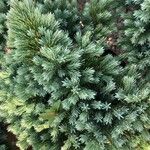
Juniperus squamata
Flaky Juniper · Himalayan juniper · Nepalese juniper · Scaly-leaf Nepal juniper · Single-seed juniper
Description
Source: leafsnapJuniperus squamata, commonly known as the Flaky Juniper, is a slow-growing evergreen shrub belonging to the Cupressaceae family. Native to the Himalayas and western China, it can grow up to 3 meters tall. The plant has a dense, bushy habit with blue-green foliage arranged in overlapping scales. Its needle-like leaves have sharp tips. The Flaky Juniper produces small cones that begin green and turn brown as they mature. These cones contain seeds that can be used for propagation. This plant prefers well-drained soil and full sun but can tolerate partial shade. While it is drought-tolerant once established, it requires regular watering during its initial growth period. In landscaping, the Flaky Juniper serves multiple purposes. Its low-growing habit makes it an excellent ornamental shrub or ground cover. It is also well-suited for rock gardens or slopes due to its ability to thrive in poor soil conditions. Overall, Juniperus squamata is an attractive evergreen shrub with distinctive blue-green foliage that adds interest and texture to any landscape design. It requires minimal maintenance once established.
Care Guide
💧 Water Every 7 days
The flaky juniper, known for its drought tolerance, thrives in arid conditions with minimal watering—about every two weeks suffices. As an evergreen, it maintains its foliage throughout the year, making it an excellent choice for rock gardens or dry landscapes. This resilience reflects the juniper's adaptability to high-altitude regions.
How should I water my Flaky juniper tree to keep it healthy?
Watering your Flaky juniper is a straightforward task. To water this tree, you can use your garden hose to slowly soak the soil. This is especially effective for mature Flaky juniper trees that require a high volume of water. For smaller trees, using a watering can or smaller tool is sufficient. It's important to avoid overhead watering as it can lead to disease, especially for young trees.
What should I do if I give my Flaky juniper plant too much water or too little water?
Overwatering can be caused by poor soils, specifically if the soil does not drain well. If this happens, you can either improve the soil drainage or move the plant to a better location. If your Flaky juniper is in a pot, you may need to repot it with looser soils in a container that drains well. Overwatered plants may also develop diseases, which should be treated promptly. On the other hand, underwatered Flaky junipers can be revived by watering them more frequently. To determine if your plant is overwatered, examine the foliage, particularly the new growth. Discolored or easily breakable new growth indicates excessive moisture. Observing standing water or slow drainage in the plant's growing area is another indication of overly moist soil. Underwatered Flaky junipers will have sparse, brown leaves. If you notice these symptoms, consider recent heavy rainfall or consistently high temperatures as possible causes.
How many times should I water my Flaky juniper?
A mature Flaky juniper is highly drought tolerant and typically only needs rainfall to survive. During the hottest months, you may need to water it once a week, but in other seasons, watering may not be necessary. However, if you have just planted a Flaky juniper, regular watering is important to establish strong roots. Remember that this species does not like standing water, so it's better to under-water than over-water.
How much water does my Flaky juniper tree need?
During the height of summer, it is important to water your Flaky juniper because it typically requires about one inch of water per week. However, if it has rained one inch or more during that week, you can skip watering. Additionally, newly planted Flaky junipers need more water during the establishment period, usually once every one to two weeks for the first few growing seasons.
How should I water my Flaky juniper at different times of the year?
The Flaky juniper tree has varying water needs throughout the year. During summer, when it's hottest, it requires the most water. In the absence of rainfall, you should water it about once a week. However, during other seasons, it can often survive without any water. In spring and fall, you might need to provide some water if the weather is exceptionally hot, but this is rare. Unlike many other plants, the Flaky juniper does not go into full dormancy in winter and continues growing. However, due to cool temperatures, its water needs during winter remain low as the soil doesn't dry out quickly.
☀️ Light Full sun
Flaky juniper performs best with plenty of sunlight, which is essential for healthy growth. Native to sun-rich settings, it favors bright conditions at every stage of development. However, excessive sunlight can be harmful, causing stress and potential damage. Conversely, insufficient sun exposure restricts growth and results in stunted development and poor health.
What are the sunlight requirements for Flaky Juniper?
Flaky Juniper requires full sun, meaning it thrives in conditions with more than 6 hours of sunlight daily, but it also does well in partial sun, which is about 3-6 hours of sunlight. It's important to observe your garden's light patterns to find the best balance of light and shade for your plants, as this ensures their health and happiness.
Why is sunlight important for Flaky Juniper and what are the risks of too much or too little sun?
Sunlight is crucial for the healthy development of Flaky Juniper, a plant native to sunny environments. Adequate sun promotes optimal growth at all stages. However, excessive sunlight can lead to stress and potential damage, while insufficient sun exposure may result in stunted growth and a decline in health. In less sunny locations or during winter, artificial lighting can be used to supplement natural sunlight, ensuring the plant continues to grow healthily.
How can artificial lighting be used for Flaky Juniper indoors?
For indoor Flaky Junipers or in areas with inadequate natural sunlight, artificial lighting offers a viable solution. LED lights, customizable to provide necessary wavelengths, are recommended. The intensity of the light should suit the plant's requirements, with full sun plants needing 30-50W per square foot, partial sun plants 20-30W per square foot, and shade plants 10-20W per square foot. The light should be positioned 12-36 inches above the plant and turned on for 8-12 hours daily to mimic natural sunlight conditions.
What are common symptoms of improper sunlight exposure in Flaky Juniper?
Symptoms of inadequate sunlight in Flaky Juniper include smaller new leaves, leggy or sparse growth, premature leaf drop, halted or slow new growth, and lighter-colored or yellowing leaves. Too much sunlight, on the other hand, can lead to chlorosis, sunscald, leaf curling, wilting, and leaf scorching. These symptoms highlight the plant's need for adjusting to the right amount of sunlight for optimal health.
What steps should be taken if a Flaky Juniper is not receiving adequate sunlight?
For Flaky Junipers lacking sunlight, gradually moving them to sunnier spots can help, aiming for at least 6 hours of direct sunlight daily. Indoors, consider use of artificial lights for at least 8 hours a day. Outdoors, adjust plant locations to avoid sudden light intensity changes. If the plant is shadowed by obstructions, prune or transplant to sunnier locations. Remember, while damaged parts may not recover, new growth should be healthy with appropriate light adjustments.
🌡️ Temperature 5–32.2°C
Found in temperate zones, flaky juniper favors a temperature range of 41 to 89.6 °F (5 to 32 ℃). When subjected to drastic temperature changes, gradual acclimation is recommended to avoid stress.
What is the ideal temperature range for Flaky Juniper?
Flaky Juniper, botanically known as Juniperus squamata, thrives best in temperate regions. It prefers a temperature range between 41 to 89.6 °F (5 to 32 °C). To prevent stress during extreme temperature shifts, a gradual acclimatization process is advised. This species is highly cold-tolerant and does not require additional frost protection measures. However, to help prevent water scarcity during winter and early spring, it's recommended to water the plant generously before the first freeze of autumn to ensure the soil remains moist and enters a frozen state.
How does Flaky Juniper react to low temperatures?
Flaky Juniper is extremely cold-tolerant, capable of enduring winter temperatures above -30°C without immediate noticeable impact. However, if temperatures drop below this threshold, while there may not be visible changes during winter, come spring, the branches might become brittle and dry, and the plant may fail to produce new shoots. To address this, it's suggested to prune away any dead branches that failed to generate new leaves in the spring.
What should be done if Flaky Juniper is exposed to high temperatures?
Flaky Juniper struggles with high temperatures, especially when the thermometer reading exceeds 32°C. Under such circumstances, the plant may suffer significant leaf drop, and in severe cases, it may wither and die entirely. To counteract damage from high temperatures, it's recommended to trim away any sunburned and dried parts of the plant. Additionally, moving the plant to a shaded location, or using a shade cloth, can protect it from the midday and afternoon sun. Ensuring the soil remains moist by watering the plant in the morning and evening is also crucial.
💨 Humidity
🪴 Soil 5-7
🌱 Fertilizer
Flaky juniper has specific nutrient needs and does not require heavy fertilization. Fertilizing in spring is best for achieving optimal growth. Supplying nutrients enhances its health, strengthens its resistance to pests and diseases, and helps sustain a long lifespan.
Why should I put fertilizer on my Flaky juniper plant?
To support the healthy growth of Flaky juniper, it is recommended to fertilize it in the spring. This plant has a long lifespan and requires extra care. Adding nutrients to the soil not only improves its overall health but also helps it resist common pests and diseases that can hinder growth or shorten its lifespan.
When should I fertilize my Flaky juniper?
Flaky juniper is unique compared to typical garden plants, as it doesn't need excessive nutrients and can grow well without them. However, sometimes the growing medium alone may not provide sufficient nourishment. To ensure optimal growth, it is recommended to fertilize Flaky juniper during spring before new growth emerges.
When is the best time to not fertilize my Flaky juniper?
While many plants benefit from frequent fertilization, Flaky juniper is an exception. This type of plant doesn't require a high amount of additional nutrients. In fact, using too much fertilizer can actually harm it and cause it to die back. To maintain its health, only apply fertilizer during the spring season and avoid doing so during summer, fall, and winter. Additionally, refrain from adding any organic matter to the soil during these seasons.
What kind of fertilizer should I use for my Flaky juniper?
The age of your plant affects the fertilizer it needs. Keep in mind that Flaky juniper doesn't need a lot of extra nutrients. Look for a balanced plant food that promotes healthy root development and growth, but avoid fertilizers with high nitrogen contents.
How do I give nutrients to my Flaky juniper plant?
When fertilizing Flaky juniper, it is important to consider both how and when you add the extra nutrients. In the spring, apply the fertilizer at the base of the plant, being careful not to get any on the trunk. If using granulated fertilizer, cover the pellets with a thin layer of soil to help the fertilizer absorb properly into the soil.
🪴 Pot & Repot Every 12 months
✂️ Pruning
To keep flaky juniper healthy and well-shaped, regular pruning is important. The main techniques include thinning out dense areas, removing dead branches, and trimming any overgrown shoots. Pruning should be done from early to late winter, which helps invigorate the plant, reduce pests, and improve its visual appeal, setting the stage for better growth in the spring.
🌿 Propagating
🐛 Diseases & pets
☠️ Toxicity
The berries, stems, and needles of blue star junipers are poisonous to people and pets. The shrub has minor toxic effects, causing vomiting or diarrhea if ingested.
Characteristics
- Plant Type
- Shrub
- Life Cycle
- Perennial
- Genus
- Juniperus
- Family
- Cupressaceae
- Hardiness Zone
- 4-7
- Mature Height
- 46 cm
- Mature Spread
- 91 cm
- Leaf Color
- Green, Blue, Yellow, Silver
- Leaf Type
- Evergreen
- Bloom Time
- Mid spring, Late spring
- Planting Time
- Spring, Autumn
- Harvest Time
- Mid summer, Late summer, Early fall
- Native Area
- Nepal, Afghanistan, India, Myanmar, Bhutan, Pakistan, China