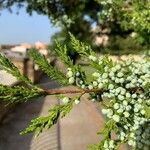
Juniperus virginiana
Eastern Red Cedar · Virginia juniper · Red Cedar · Eastern Juniper · Red juniper
Description
Source: leafsnapJuniperus virginiana, commonly known as Eastern Red Cedar, is an evergreen coniferous tree belonging to the cypress family. It is native to eastern North America, ranging from southeastern Canada to the Gulf of Mexico. This tree typically grows to a height of 20-40 feet and features a conical shape with dense foliage, exhibiting colors from blue-green to dark green. Eastern Red Cedar is highly valued for various uses. Its attractive appearance and tolerance for different soil types make it a popular choice for ornamental landscaping. The tree's wood is prized for its durability and resistance to decay, making it ideal for outdoor furniture, fence posts, and even pencils. The tree produces small, blue-black cones with a waxy coating, which are consumed by various wildlife species, such as birds. These animals play a crucial role in dispersing the tree's seeds throughout their habitats. Despite its name, Eastern Red Cedar is not a true cedar but belongs to the juniper family, distinguished by its berry-like cones rather than the cones of true cedars. This tree also holds medicinal properties. Native Americans have used it to treat respiratory ailments like coughs and colds and applied it topically to wounds and skin irritations for its antibacterial properties. Ecologically, Juniperus virginiana is significant for providing wildlife habitat and has economic value through wood production. It is, therefore, an important species within North America's ecosystem.
🌳 Valued for its pyramidal shape and hardiness, the eastern red cedar is deeply rooted in the cultural heritage of the Ozarks in Arkansas, Missouri, and Oklahoma. It features prominently as a Christmas tree during the festive season. This evergreen is chosen not only for its appearance but for practical reasons as well: its dense foliage, pleasant scent, and ability to retain moisture—preventing needle drop—make it a preferred selection for the holidays.
🎭 Security, Theft prevention, Affection, Holiness, Cleansing
Care Guide
💧 Water Every 7 days
The eastern red cedar is well-suited to varying moisture levels, displaying a moderate tolerance to drought, but it prefers environments with consistent humidity. To avoid over-watering, it is best to water the plant every 1-2 weeks. Usually grown outdoors, the eastern red cedar flourishes when both the temperature and soil drainage are adjusted to meet its moisture retention requirements.
When Should I Water My Eastern Red Cedar?
Watering your Eastern Red Cedar (Juniperus virginiana) is vital to its health and growth, considering various signs and conditions. If the top 1 inch of soil feels dry, it's an indicator the cedar needs water. Regularly checking soil dryness, especially under dry conditions, helps determine watering needs. The cedar's foliage provides clues to its hydration; dull or slightly brownish needles suggest dehydration. A noticeable reduction in resin production can also signal the need for water. During hot, dry summers, the cedar may require extra water, although it's drought-tolerant and can withstand periods of limited water. However, watering should be adjusted to avoid root diseases due to overwatering and stress or reduced vitality due to under-watering. Observing the cedar's specific signs will guide you to water it optimally, promoting its health.
How Should I Water My Eastern Red Cedar?
Proper watering techniques are crucial for the Eastern Red Cedar's health. Employing a deep watering method encourages the roots to grow deeper, making the plant more drought-resistant. When using a watering can, opt for one with a long spout to water directly at the base, avoiding the foliage to reduce disease risk. Utilizing a moisture meter helps accurately determine when to water, preventing over or under-watering. Additionally, while bottom-watering by placing the pot in a tray of water encourages deep root hydration, it's essential to avoid getting the foliage wet to minimize fungal diseases. These methods collectively ensure the Eastern Red Cedar receives adequate hydration without the complications of over or under-watering.
How Much Water Does Eastern Red Cedar Really Need?
The Eastern Red Cedar (Juniperus virginiana), native to North America, has a deep root system requiring thorough watering. The amount of water needed varies based on factors like pot size, root depth, and plant size. Generally, a mature cedar in a large pot may need around 2 to 3 liters per watering session. Proper hydration is indicated by lush, green foliage and a firm texture. Under-watering may lead to yellowing leaves and wilting, while over-watering can cause root rot and attract pests. Eastern Red Cedars are drought-tolerant once established but need regular watering, especially during hot, dry periods. Letting the soil dry slightly between waterings promotes healthy root development.
What Kind of Water is Best for Eastern Red Cedar?
Eastern Red Cedar prefers pure water with minimal contaminants. Distilled water is ideal due to its purity. Rainwater, which has a balanced pH, is also beneficial. While tap water is acceptable, its potential contaminants should be considered. Filtered water can be a suitable alternative if it removes harmful chemicals. The cedar has moderate sensitivity to chlorine and fluoride, which may cause leaf burn or stress. Letting tap water sit out for 24 hours or using a filtration system can mitigate these effects. Eastern Red Cedar prefers water at a moderate temperature of about 68-72°F (20-22°C), as extreme temperatures can shock the plant.
How Do Eastern Red Cedar's Watering Needs Change with the Seasons?
The Eastern Red Cedar's watering needs vary by season. In spring, increased sunlight and warmer temperatures necessitate more frequent watering to maintain soil moisture as the plant enters its active growth period. Summer brings higher temperatures that accelerate soil evaporation, requiring deep, infrequent watering. As growth slows in autumn in preparation for dormancy, so do the plant's watering needs due to cooler temperatures and reduced evaporation. Winter dormancy greatly reduces the need for water. The soil retains moisture longer under cold conditions, so only water when the soil is completely dry and avoid watering when frost is expected. Adjusting water supply according to seasonal conditions supports the cedar's health through its growth cycle.
☀️ Light Full sun
Eastern red cedar does best with plentiful sunlight, similar to conditions in its native range. Continuous, all-day sun improves its growth and vigor. Although it can survive in spots that receive sun only part of the day, it will not flourish as well. Too little or too much sun can both limit its ability to thrive.
What are the sunlight requirements for Eastern red cedar?
Eastern red cedar thrives best with abundant exposure to sunlight, preferring locations that offer either full sun, which constitutes above 6 hours of sunlight daily, or partial sun, amounting to about 3-6 hours of sunlight daily. Its growth and overall health significantly benefit from continual, full-day exposure to the sun. Although Eastern red cedar can survive in areas that receive sunlight for only part of the day, its flourishing potential might be compromised by both lack and excess of sunlight. It's important to observe the sunlight movement through your garden carefully, choosing spots that provide an ideal balance between light and shade to ensure the plants' well-being.
How to supplement indoor Eastern red cedar with artificial lighting?
For indoor Eastern red cedar or other plants where natural sunlight is insufficient, especially during winter or in less sunny spaces, artificial lighting can be a vital solution. To optimally grow with artificial lights, select the correct type of light, such as LED lights, which can be customized for plant needs. Full sun plants need 30-50W per square foot, partial sun plants require 20-30W per square foot, and full shade plants should have 10-20W per square foot. Position the light source 12-36 inches above the plant to mimic natural sunlight conditions, and ensure it receives 8-12 hours of light per day to simulate the natural daylight length for most plant species.
What are the symptoms of insufficient or excessive sunlight in Eastern red cedar?
Eastern red cedar, when subjected to poor lighting conditions or excessive sunlight, may exhibit symptoms such as slower or halted growth due to entering a survival mode that stops leaf production. Other signs include leggy or sparse growth, indicating stretched appearances due to elongated spaces between leaves or stems; chlorosis, where leaves lose their green hue and turn yellow from the breakdown of chlorophyll; sunscald, marked by pale, bleached, or necrotic spots on the plant tissue; leaf curling as a defense against excessive sunlight exposure; wilting, which results from increased water loss; and leaf scorching, showing brown, dry, crispy leaf edges. These symptoms highlight the necessity of balancing sunlight exposure for optimal plant health.
What are the solutions for Eastern red cedar facing light-related issues indoors and outdoors?
To address light-related issues in Eastern red cedar, both indoor and outdoor solutions are available. Indoor plants can benefit from gradually being moved to sunnier locations each week, aiming for at least 6 hours of direct sunlight daily or utilizing artificial light sources for ample illumination. Outdoor plants should also be transitioned gradually to sunlit spots to adapt without risk of sunburn. It’s crucial to tackle obstructions by pruning or removing barriers that shade the plants and, if necessary, transplanting smaller plants during their dormant period to sunnier areas with good drainage. These steps will encourage healthy new growth and help existing plants recover from light deficiencies.
🌡️ Temperature 0–35°C
Eastern red cedar is native to the eastern United States and does best in a moderately warm environment. It can tolerate temperatures as low as 0 °F (-18 °C) but in winter prefers 20 to 35 °F (-7 to 2 °C). In summer it can withstand higher temperatures up to 100 °F (38 °C).
What is the native environment of the Eastern red cedar?
The Eastern red cedar is native to the eastern United States and thrives in moderately warm environments. It has a strong cold resistance, capable of tolerating low temperatures down to 0°F (-18°C), but it generally prefers winter temperatures ranging from 20 to 35°F (-7 to 2°C). During summer, it can handle higher temperatures, up to 100°F (38°C). Special frost protection measures are not typically necessary, but in extremely cold conditions expected to drop below its cold tolerance limit, providing additional cold protection by wrapping the trunk and branches might be required. Before the first freeze in autumn, it's advisable to water the plant abundantly to ensure the soil remains moist and freezes, which helps prevent drought and water scarcity during winter and early spring.
What are the symptoms and solutions for Eastern red cedar in low temperatures?
The Eastern red cedar exhibits strong cold tolerance and thrives best when temperatures are above its minimum suitable growth temperature. However, during winter, it should never drop below its tolerable growing temperature minimum. If temperatures fall below its growth limit, the cedar may not show immediate changes during winter but could have brittle and dry branches in spring, with no new shoots emerging. The solution is to prune away any dead branches that fail to produce new leaves in spring, helping the tree maintain its health and vigor.
How does high temperature affect Eastern red cedar and what are the solutions?
During the summer, it’s important to keep the Eastern red cedar below its maximum suitable growth temperature. Exceeding its tolerable growing temperature maximum can cause the leaves to lighten in color, tips to become dry and withered, and increase susceptibility to sunburn. To mitigate these issues, trim away sunburned and dried-up parts of the plant. Moving the plant to a shaded location or using a shade cloth can protect it from midday and afternoon sun. Additionally, watering the plant in the morning and evening will help keep the soil moist and support the health of the plant.
💨 Humidity normal (40-60%)
This plant will thrive in moderate humidity, which is probably the level in your home. However, misting it a few times a week can be very beneficial. Make sure the room has good ventilation.
🪴 Soil 6-7
🌱 Fertilizer
Eastern red cedar has specific nutrient needs and does not require heavy fertilization. Spring is the best time to apply fertilizer for optimal growth. Supplying nutrients enhances its health, increases its resistance to pests and diseases, and helps preserve its long lifespan.
Why should I put fertilizer on my Eastern red cedar tree?
To promote healthy growth in Eastern red cedar, it is recommended to fertilize in the spring. This plant has a long lifespan and requires support. By enriching the soil with nutrients, the overall health of the plant can be improved. This, in turn, strengthens its ability to defend against pests and diseases that can hinder growth or reduce its lifespan.
When should I put fertilizer on my Eastern red cedar?
When it comes to growing plants, the medium they are planted in may not always provide enough nutrients for healthy growth. However, Eastern red cedar differs from typical garden plants in that it doesn't require a lot of additional nutrients. If you want to fertilize an Eastern red cedar, the best time to do so is in the spring before new growth starts.
When is it not a good idea to put fertilizer on my Eastern red cedar?
While some plants benefit from regular fertilization on a monthly or weekly basis, the Eastern red cedar is an exception. It does not have high nutrient requirements, so excessive fertilizer can actually harm it by causing it to decline. To avoid any issues, it is recommended to only apply fertilizer in the spring and refrain from doing so during the other seasons - summer, fall, and winter. Additionally, it is advised to refrain from adding any fertilizer or organic matter to the soil during these seasons as well.
Which fertilizer should I use for my Eastern red cedar?
The age of your plant is important when choosing fertilizer. Keep in mind that Eastern red cedar doesn't need a lot of extra nutrients. Look for a balanced plant food that promotes healthy root development and growth, but avoid fertilizers with high nitrogen levels.
How can I add plant food to my Eastern red cedar to help it grow better?
When fertilizing Eastern red cedar, it is important to consider both the method and timing. In the spring, apply the fertilizer at the plant's base while avoiding contact with the trunk. If using granulated fertilizer, cover the pellets with a thin layer of soil to aid absorption into the soil.
🪴 Pot & Repot 2-3 years
When repotting Eastern red cedar, select a pot 1-2 inches (2.5–5.1 cm) larger with ample drainage. Use a well-draining potting mix. Repot in spring or fall, making sure the root ball is slightly lower than the rim of the flower pot. Water thoroughly after repotting and place it in a warm spot with indirect sunlight.
✂️ Pruning
The Eastern red cedar is a resilient evergreen tree known for its fragrant foliage and conical shape. To keep your tree healthy, prune it in winter to remove any dead growth and improve air circulation. Be careful not to cut into old wood, as this can hinder the tree's ability to regenerate. Regular pruning helps maintain the tree's shape, prevents pest infestations, and promotes overall vigor. For the best results, consult reputable sources on proper pruning techniques.
🌿 Propagating
🐛 Diseases & pets
☠️ Toxicity
Characteristics
- Plant Type
- Tree
- Life Cycle
- Perennial
- Genus
- Juniperus
- Family
- Cupressaceae
- Hardiness Zone
- 3-9
- Mature Height
- 4.88 m to 29.87 m
- Mature Spread
- 7.92 m
- Leaf Color
- Green, Gray
- Leaf Type
- Evergreen
- Flower Color
- Yellow, Green
- Flower Size
- 2.54 cm
- Bloom Time
- Early spring, Mid spring
- Planting Time
- Spring, Autumn
- Harvest Time
- Early spring, Mid summer, Late summer, Fall, Winter
- Native Area
- Eastern North America