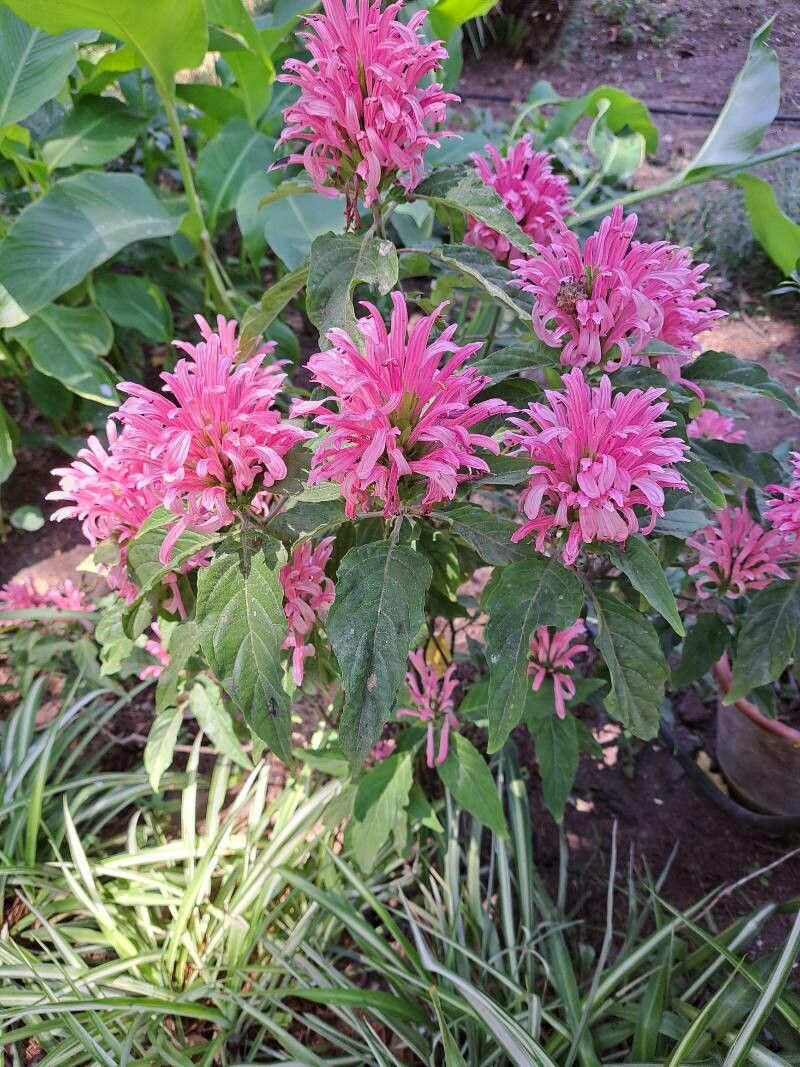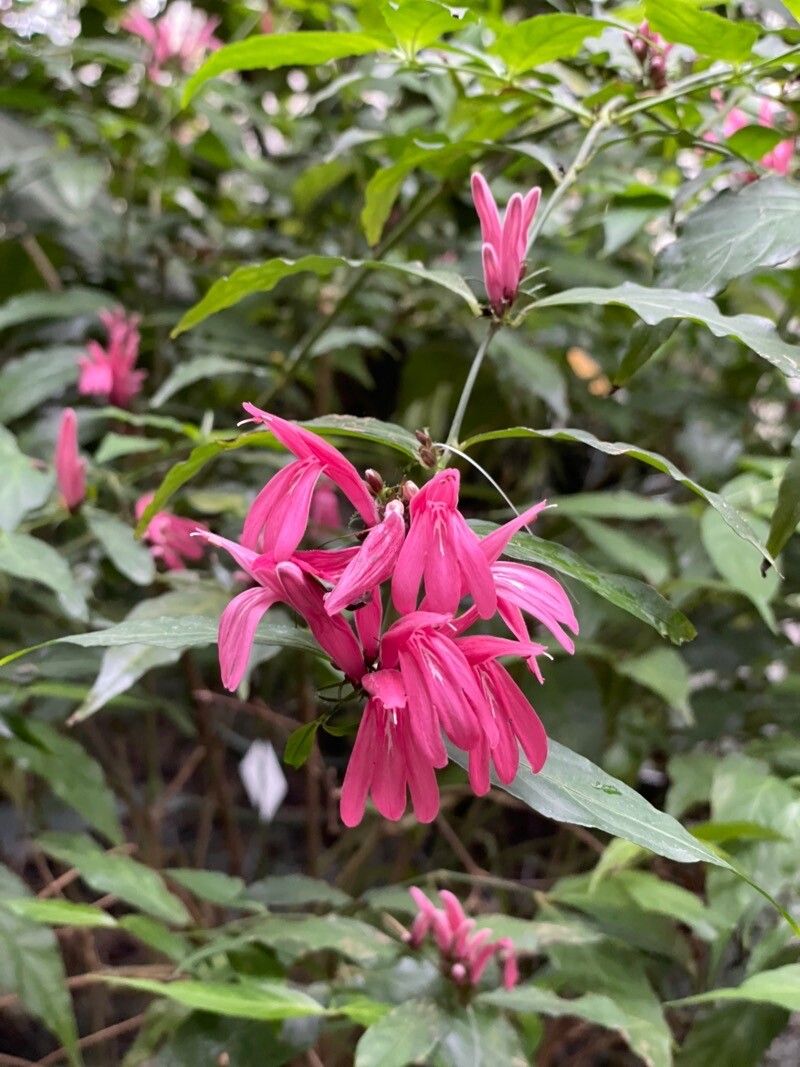
The Brazilian shrimp plant has strong resistance to disease and is generally not susceptible to illnesses. In terms of care, this plant is fairly low-maintenance. When grown outdoors, it needs only minimal watering, and larger plants typically do not require pruning. However, smaller plants should be pruned after they finish blooming. The Brazilian shrimp plant is suitable for anyone with outdoor space, such as a garden or a deck, and does not demand extensive gardening experience.
How to keep Justicia Brasiliana.
Light
The Brazilian shrimp plant is indigenous to habitats like forest understories or rocky sites, where it receives natural shade. It prefers partial sun but can adapt to full sun or full shade, demonstrating its versatile and hardy nature.
Water
The Brazilian shrimp plant thrives in conditions of moderate moisture, as it originates from humid environments. You should water it every 2-3 weeks, ensuring the soil dries out slightly between waterings. While the plant can tolerate short periods of drought, it grows best in consistently humid conditions. During its active growing season, misting the plant helps simulate the moist climate of its natural tropical habitat, which enhances its growth.
Temperature
The Brazilian shrimp plant comes from tropical areas, where the climate is generally warm and humid. Consequently, it is adapted to high temperatures and humidity. It does not tolerate abrupt temperature changes and prefers a stable thermal environment, so avoiding indoor temperature fluctuations is important. It typically does not endure cold and needs higher temperatures for growth. If the surrounding temperature falls too low, the plant may stop growing or even die.
Fertilizer
The best time to fertilize a Brazilian shrimp plant is in early spring, when it is coming out of dormancy. This encourages overall growth and flower development. Fertilizing improves the foliage, stems, and branches, and supports the production of large, vibrant, long-lasting flowers. It also helps transfer nutrients from the roots to the blooms and enhances the plant’s health and resistance to disease.
Pruning
To improve the health and appearance of the Brazilian shrimp plant, it benefits from pruning in early spring. This involves removing dead branches, trimming leggy growth, and thinning out dense areas to enhance air circulation. These practices help the plant produce vigorous blooms and maintain its health while keeping its size in check and encouraging continuous flowering throughout the growing season.
Botanical profile.
- Plant Type
- Shrub
- Life Cycle
- Perennial
- Genus
- Justicia
- Family
- Acanthaceae
- Hardiness Zone
- 9-11
- Mature Height
- 76 cm
- Mature Spread
- 91 cm
- Leaf Color
- Green, Dark Green
- Leaf Type
- Evergreen
- Flower Color
- Red, Pink
- Flower Size
- 5.08 cm to 7.62 cm
- Bloom Time
- All year round
- Planting Time
- Spring, Summer, Autumn
- Harvest Time
- All year round
- Native Area
- Uruguay, Paraguay, Argentina, Myanmar, Brazil
Reader questions.
What are the sunlight requirements for the Brazilian shrimp plant?
The Brazilian shrimp plant thrives in partial sun, requiring about 3-6 hours of sunlight daily. It's crucial to observe how sunlight moves through your garden, selecting spots that offer a balance of light and shade. This plant is adept at growing in conditions similar to its native forest understories or rocky areas, thus it can also tolerate full shade. Being a versatile perennial herbaceous plant, it adapts well to varying light conditions.
What is the botanical name of the Brazilian shrimp plant?
The botanical name of the Brazilian shrimp plant is Justicia brasiliana.
How can artificial lighting benefit indoor Brazilian shrimp plants?
For indoor Brazilian shrimp plants not receiving enough natural sunlight, especially during winter or in less sunny spaces, artificial lighting can be crucial. LED lights, favored for indoor plant lighting, can be customized to provide the specific wavelengths of light your plant needs. Depending on the plant's sunlight needs, you may require 10-20W/sq ft for full shade plants, 20-30W/sq ft for partial sun plants, and 30-50W/sq ft for full sun plants. Proper placement involves situating the light source 12-36 inches above the plant and ensuring it receives 8-12 hours of light per day to mimic natural daylight conditions.
What are the symptoms of light deficiency in Brazilian shrimp plants?
When grown indoors under insufficient light, Brazilian shrimp plants may exhibit symptoms such as smaller new leaves, leggy or sparse growth, faster leaf drop, slowed or halted growth, paler new leaves, and chlorosis, which is the loss of green color. Other issues that can arise with incorrect light conditions include sunscald, leaf curling, wilting, and leaf scorching. These symptoms point to the plant's struggle with inadequate exposure to light, affecting its overall health.
How can I address light deficiency issues in Brazilian shrimp plants?
To optimize growth and address light deficiencies in Brazilian shrimp plants, gradually shift them to sunnier spots each week to receive 3-6 hours of sunlight daily, allowing for adaptation to changing light conditions. For large or immobile indoor plants, consider using a desk or ceiling lamp for at least 8 hours daily, or invest in professional plant grow lights. Additionally, minimize sunlight obstructions by pruning nearby trees for outdoor plants or moving smaller plants to sunnier locations. Notably, while affected parts may not recover, new growth post light exposure adjustment should emerge healthy.