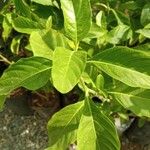
Justicia spicigera
Mexican-indigo · Mohintli
Description
Source: leafsnapJusticia spicigera, commonly known as Mexican honeysuckle or the orange plume flower, is a flowering plant native to Mexico and Central America. This member of the Acanthaceae family is popular as an ornamental plant, thanks to its attractive orange-red tubular flowers that bloom in clusters from late summer through fall. Its dark green, lance-shaped leaves with serrated edges can grow up to 10 cm long. The plant itself can reach a height of up to 2 meters when grown in full sun or partial shade with well-drained soil. Aside from its decorative appeal, Justicia spicigera is also known for its medicinal properties. It contains compounds with anti-inflammatory and analgesic effects. Additionally, the plant attracts hummingbirds, butterflies, and bees, making it an excellent choice for pollinator gardens or wildlife habitats.
🌳 Mexican honeysuckle isn't widely recognized for practical uses but is ecologically notable for its capacity to attract a range of pollinators. Its bright orange-to-red, trumpet-shaped flowers are rich in nectar and serve as an important food source for hummingbirds, butterflies, and bees. Additionally, Mexican honeysuckle can be grown as an ornamental plant because of its attractive appearance and low maintenance, making a colorful addition to gardens that also supports local biodiversity.
🎭 Benevolence
Care Guide
💧 Water Every 7 days
Mexican honeysuckle, which originates from tropical understories, is moderately drought-tolerant but thrives best with consistent moisture. Water it every 1-2 weeks, allowing the soil to dry slightly between waterings. This plant prefers warmer climates and benefits from seasonal rains that mimic its native habitat, making it well-suited to such regions.
How should I water my Mexican honeysuckle plant in the best way?
To properly water the Mexican honeysuckle, it is important to use filtered water at room temperature. Tap water may have harmful particles, so filtered water is recommended. The Mexican honeysuckle is accustomed to warm environments, so using cold water can be a shock to the plant. Additionally, it is advisable to avoid overhead watering as it can cause problems with the foliage. Instead, it is best to apply the filtered room temperature water directly to the soil until it is completely soaked. This helps to moisturize the roots and promote the spread and nutrient absorption.
What do I do if I give my Mexican honeysuckle too much water or too little water?
Overwatering and underwatering can harm your Mexican honeysuckle plant, but overwatering is more commonly encountered. Too much water can cause the stems and leaves to wilt, turning them yellow. Prolonged overwatering can also lead to root rot, mold, and mildew, which can be fatal for the plant. Underwatering is less likely to occur with the Mexican honeysuckle plant due to its drought tolerance. However, it is still possible, and in such cases, the leaves may become brittle and brown. It is important to recognize the signs of overwatering early on to prevent irreversible damage. Reduce your watering schedule immediately if you notice these signs and consider replacing poorly draining soil with a loose, well-draining potting mix. If signs of underwatering are present, simply water more regularly until the symptoms improve.
How often do I need to water my Mexican honeysuckle?
If your Mexican honeysuckle is in a pot, the most precise way to determine if it needs water is by checking the soil with your finger. If the top two to three inches of soil are dry, it's time to water. If you have your Mexican honeysuckle planted in the ground outdoors, you can use a similar method to test the soil. When the top few inches of soil have dried out, it's time to water. During spring and early fall, this usually means watering about once a week. In very hot weather, you may need to water twice a week or even more frequently. However, it is important to note that mature, well-established Mexican honeysuckle plants have a remarkable ability to withstand drought.
How much water does my Mexican honeysuckle plant need?
When it's time to water your Mexican honeysuckle, don't hold back on the amount of water you give. Make sure the top two to three inches of soil are dry, and then give it a good, thorough watering. The soil should be completely soaked, and you should see excess water flowing out of the drainage holes at the bottom of the pot. If you don't see any water draining, you probably haven't given enough water or the soil isn't draining properly. Avoid letting water accumulate in the soil, as it can harm the plant. If the plant is outside, one inch of rain per week should be enough.
How do I water my Mexican honeysuckle as it grows?
The water needs of the Mexican honeysuckle can vary depending on its growth stages. In the first few years or after transplanting, extra watering is necessary because the plant is developing new roots to support future growth. These new roots require more moisture for optimal performance. As the plant matures, it will require less water. Additionally, during the bloom period, the development of flowers requires a significant amount of moisture, so it may be necessary to increase watering at this time.
☀️ Light Full sun
Mexican honeysuckle does best when it gets a substantial amount of sun during the day. It can tolerate stretches of lower-intensity light, like dappled sun, but abundant light supports proper growth. The plant's native habitats were generally sunny. Insufficient sunlight can cause slow growth, while too much exposure can threaten the plant's health.
What are the sun requirements for Mexican Honeysuckle?
Mexican Honeysuckle, or Justicia spicigera, thrives best in conditions where it can bask in the sun for a good portion of the day. The plant is adaptable to both full sun, which implies over 6 hours of direct sunlight, and partial sun, indicative of about 3 to 6 hours of sunlight. Originating from habitats that are generally rich in sunlight, adequate exposure is crucial for its optimal growth, encouraging lush and healthy development. However, it's also important to observe the way sunlight moves through your garden, finding the ideal balance to prevent under or overexposure, as both can have detrimental effects on the plant's health.
How can artificial lighting be used for indoor Mexican Honeysuckle plants?
When natural sunlight is insufficient, especially during winter or in less sunny spaces, artificial lighting can be a crucial supplement for indoor Mexican Honeysuckle plants. Optimal growth is achieved with adequate lighting, and LED lights are often recommended due to their customizable spectrum to meet the specific light wavelength needs of plants. Full sun plants typically require 30-50W per square foot of artificial light. Positioning the light source 12-36 inches above the plant can mimic natural sunlight conditions. Most plants, including Mexican Honeysuckle, benefit from 8-12 hours of light per day to mimic the natural length of daylight.
What are common symptoms of inadequate lighting for Mexican Honeysuckle?
Mexican Honeysuckle exhibits several symptoms when subjected to inadequate lighting. These include smaller new leaves, leggy or sparse growth, premature leaf drop, halted or slowed new growth, lighter-colored new leaves, and even symptoms from excessive sunlight such as chlorosis, sunscald, leaf curling, wilting, and leaf scorching. These signs indicate either a lack or excess of light, leading to poor health and development of the plant.
How can I address and prevent lighting issues for my Mexican Honeysuckle, both indoors and outdoors?
To ensure your Mexican Honeysuckle receives the right amount of light, gradually acclimate the plant to its ideal lighting condition. Indoors, move the plant closer to a south-facing window to increase natural sunlight exposure or use artificial grow lights for at least 8 hours a day. Outdoors, similarly, move the plant to progressively sunnier spots each week to avoid shock. Removing obstructions or transplanting to a sunnier location can also help. It's important to note that parts of the plant damaged by previous light conditions may not recover, but adapting the light exposure can promote new, healthy growth.
🌡️ Temperature 20–37.8°C
Mexican honeysuckle thrives in warm to hot conditions and originates from areas where temperatures range from 68 to 100 ℉ (20 to 38 ℃). In summer it needs sufficient watering and should be shielded from direct sunlight if temperatures rise above its preferred range.
What are the ideal growing conditions for Mexican honeysuckle?
Mexican honeysuckle, known botanically as Justicia spicigera, thrives in warm to hot temperatures, specifically in regions where temperatures range between 68 to 100°F (20 to 38°C). It is extremely heat-loving and originates from areas within this temperature range. During the summer, it's crucial to ensure the plant receives adequate watering and is protected from direct sunlight if temperatures soar above its preferred conditions. In terms of its winter care, Mexican honeysuckle should be brought indoors to avoid cold damage, placed near a bright window for sufficient light but kept away from direct heat sources to maintain a stable temperature above 20°C. Ensuring the temperature does not drop near 5°C is key to its survival during colder months.
How do you care for Mexican honeysuckle in low temperatures?
Mexican honeysuckle prefers warm conditions and does not tolerate low temperatures well. It's essential to keep the plant in temperatures above 20°C, especially during winter, ensuring it stays above 5°C to avoid cold damage. Should the temperature fall below 1°C, you might notice the leaves lightening in color, which is an early sign of frost damage. Following frost exposure, the plant's leaves can turn brown or black, and symptoms such as wilting and drooping may occur. To care for a plant affected by low temperatures, you should trim off the frost-damaged parts and move the plant to a warmer indoor environment immediately. Placing it near a south-facing window is ideal to ensure it receives ample sunlight, but make sure to keep it away from heaters or air conditioning vents to avoid creating excessively dry air conditions around the plant.
How do you manage high temperatures for Mexican honeysuckle?
During the hotter summer months, it's crucial to manage the temperature around Mexican honeysuckle to prevent heat stress and sunburn. The plant should ideally be kept in conditions below 38°C. If temperatures exceed 43°C, the leaves may lighten, indicating the start of heat stress, and the risk of sunburn increases. To manage these conditions, sunburned and dry parts of the plant should be trimmed away, and the plant should be moved to a spot where it can receive shade during the intense midday and afternoon sun. Furthermore, watering the plant in the morning and evening can help keep the soil moist and aid in cooling the plant, mitigating the effects of high temperatures.
💨 Humidity
🪴 Soil 6-7
🌱 Fertilizer
Mexican honeysuckle needs the most fertilizer during its active growing season, which is mainly in spring, summer, and early fall. Fertilizing is needed to supply vital nutrients that the soil may lack, encouraging healthy root and stem growth as well as the attractive foliage that is a prominent characteristic of this plant.
Why should I put plant food on my Mexican honeysuckle?
All plants, including the Mexican honeysuckle, need soil nutrients to grow. However, there is no guarantee that the soil where your plants grow will have all the necessary nutrients. To ensure proper growth, you can use fertilization and soil amendments. These will not only provide the basic nutrients all plants need but also the specific nutrients that are necessary for the Mexican honeysuckle. Fertilization is particularly important for this plant as it helps develop healthy roots and stems throughout the growing season. Additionally, fertilization will enhance the appearance of the Mexican honeysuckle's foliage, which is its main decorative feature.
What time should I fertilize my Mexican honeysuckle?
To provide optimal care for the Mexican honeysuckle, it is important to adjust the fertilization schedule according to its growth phases. The active growth phase occurs during most of the spring, summer, and early fall months. During this time, the plant requires the highest amount of fertilizer. Once winter ends, the frequency of fertilization should be adjusted to once every two to four weeks. This feeding rate should be maintained until fall approaches. As fall arrives, you can gradually decrease the amount of fertilizer given, eventually stopping feedings completely in preparation for the winter months when the Mexican honeysuckle experiences less active growth.
When is it not a good idea to fertilize my Mexican honeysuckle?
For most of the year, including spring, summer, and most of fall, it is recommended to regularly feed your Mexican honeysuckle. However, if you notice that your plant has received too much fertilizer or if you have fertilized it incorrectly, causing fertilizer burn or other issues, you should address these problems before resuming regular feeding. The only time you should refrain from fertilizing the Mexican honeysuckle is during winter. If you are growing this plant indoors in a cold winter climate, it will become dormant during this time. Fertilizing the plant during its dormant phase is unnecessary, unhelpful, and likely to cause fertilizer burn.
What kind of fertilizer does my Mexican honeysuckle require?
When fertilizing a Mexican honeysuckle, it is important to use a specific blend of nutrients in relatively low amounts. An ideal fertilizer will have an N-P-K ratio of 3-1-2, but in some cases, a general-purpose fertilizer with an even blend of nutrients can work well. Regardless of the type of fertilizer you use, the ratio representing the volume of each nutrient should be at 10 or lower. You can choose between granular or liquid-based fertilizer, but if you opt for the liquid form, it is best to dilute its strength by half. While granular fertilizer has few drawbacks, using liquid fertilizer is often more practical, especially when watering your Mexican honeysuckle.
How can I add fertilizer to my Mexican honeysuckle?
When purchasing fertilizer for your Mexican honeysuckle, it's important to follow the application instructions provided. In general, it's best to fertilize just before or while watering the soil to avoid burning the plant's roots. If using a slow-release granular fertilizer, sprinkle it on the soil and water immediately after. For liquid-based fertilizers, dilute them with water, apply to the soil, and then provide additional water. It's especially important to dilute the fertilizer by at least half during the spring and fall, when the plant's growth is increasing or slowing down.
🪴 Pot & Repot 2-3 years
When repotting Mexican honeysuckle, select a pot 1-2 inches (2.5–5.0 cm) larger with ample drainage. Use a well-draining potting mix. Repot in spring or fall, making sure the root ball sits slightly below the rim of the pot. Water thoroughly after repotting and keep it in a warm spot with indirect sunlight.
✂️ Pruning
Mexican honeysuckle is a resilient perennial shrub known for its vibrant orange flowers. To encourage growth and maintain its shape, prune the plant in early to late spring by removing dead branches and lightly trimming the tips. Performing annual thinning helps improve air circulation, prevent pests, and promote more blooms, resulting in a healthier plant.
🌿 Propagating
🐛 Diseases & pets
☠️ Toxicity
Characteristics
- Plant Type
- Herb
- Life Cycle
- Perennial
- Genus
- Justicia
- Family
- Acanthaceae
- Hardiness Zone
- 10-12
- Mature Height
- 1.83 m
- Mature Spread
- 1.22 m
- Leaf Color
- Green
- Leaf Type
- Evergreen
- Flower Color
- Orange
- Flower Size
- 2.54 cm to 5.08 cm
- Bloom Time
- All year round
- Planting Time
- Spring
- Harvest Time
- All year round
- Native Area
- Colombia, Bahamas, Belize, Honduras, Mexico, Haiti, Guatemala, El Salvador, Nicaragua, Dominican Republic, Costa Rica