Kalanchoe luciae
Millot kalanchoe · Paddle plant · Flap Jacks
Description
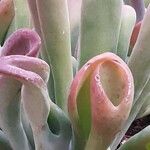
Source: leafsnapBecause of the paddle or clam-like shape of its leaves that develop in rosette clusters, the Flapjack Succulent (Kalanchoe luciae) is also known as a Paddle Plant. It's a beautiful house plant that doesn't take much care. This drought-resistant plant can also be cultivated outside under the correct conditions. Flapjacks grow in large clusters quickly and are ideal for xeriscape landscapes or rock gardens in drought-prone areas. In the spring, these plants can produce yellow-tinged flowers, and in the winter, the wide, thick, meaty leaves can take on a stunning crimson hue around the margins.
Care Guide
💧 Water Every 3 weeks
The Paddle Plant thrives in arid conditions due to its exceptional drought tolerance. It efficiently conserves water and only needs to be watered once every three weeks to avoid soil saturation. This evergreen plant, often grown outdoors, retains water well and demonstrates resilience even under intense sunlight.
☀️ Light Full sun
Native to dry regions, the Paddle Plant prefers full sun, as its natural habitat features intense light and very little shade. It will also tolerate partial sun, providing some flexibility in how it grows.
🌡️ Temperature 20–37.8°C
Although Paddle Plant tolerates some heat, it mainly prospers and grows in the cooler months and becomes dormant in summer. In very hot summer weather, provide shade to prevent leaf scorching from strong sunlight. Watering should be reduced or paused during the hottest part of the year to avoid root rot. Paddle Plant grows most vigorously in winter and spring. If temperatures do not fall too low, it will continue to grow steadily.
💨 Humidity normal (40-60%)
This plant will thrive in moderate humidity, which is probably the level in your home. However, misting it a few times a week can be very beneficial. Make sure the room has good ventilation.
🪴 Soil 6-7
🌱 Fertilizer
Paddle Plant needs only light amounts of fertilizer once or twice a year during the growing season. Do not fertilize in winter or during the summer when it is dormant. Reduce feeding for plants that have been repotted and wait a couple of months after repotting before you resume fertilizing. Fertilizing helps maintain healthy growth and promotes blooms.
🪴 Pot & Repot Every 2 years
When repotting Paddle Plant, choose a pot slightly larger than the current one that has good drainage. Use a gritty, well-draining succulent or cactus mix. Carefully lift the plant from its old pot, brush off excess soil, and place it at the same depth in the new pot. Wait a few days before watering to allow any root damage to heal. Repot during spring or fall and place it in a brightly lit area.
✂️ Pruning
To maintain the shape of a paddle plant, prune any excess or dense branches in the spring and autumn. For propagation, cut thick stems that have 5 to 6 leaves. Apply sulfur powder to the cut surfaces, and plant them after the wounds have healed. Keep the soil of the cuttings slightly moist by using a watering can.
🌿 Propagating
🐛 Diseases & pets
☠️ Toxicity
Humans, cats, and dogs are all poisoned by all portions of the flapjack. This contains the blooms, as well as the leaves and roots. If your Kalanchoe thyrsiflora blooms, exercise additional caution around small children and dogs. The most dangerous portion of the plant is the blooms.
Characteristics
- Plant Type
- Succulent
- Life Cycle
- Perennial
- Genus
- Kalanchoe
- Family
- Crassulaceae
- Hardiness Zone
- 9-11
- Mature Height
- 49 cm
- Mature Spread
- 49 cm
- Leaf Color
- Green, Red
- Leaf Type
- Evergreen
- Flower Color
- Pink, White
- Flower Size
- 1.02 cm to 2.03 cm
- Bloom Time
- Late winter, Early spring, Mid spring
- Planting Time
- Spring, Summer, Autumn
- Harvest Time
- Late spring, Early summer
- Native Area
- South Africa