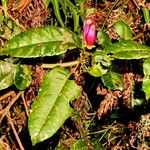
Kalanchoe porphyrocalyx
Description
Source: leafsnapThe Kalanchoe porphyrocalyx or 'Pearl Bells' is a bushy, succulent perennial that grows as an epiphyte in rainforests, and is native to central and northeastern Madagascar. It is widely known for its low-maintenance and interesting leaves. In its bloom period from early spring to late winter, the plant can be easily identified by its open bell-shaped flowers, having pendant-like petals that spread its soft-pink colors at the tips of the entire calyx green plant. It generally attains a height and wideness of 6-18inches, and each leaf is slender, serrated, and about 2 - 4cm in size. The succulent perennial is known to serve its functions as a succulent garden plant or a potted house plant.
Care Guide
💧 Water Every 1-2 weeks
☀️ Light Partial sun
Pearl bells is native to habitats with dappled light, such as forest understories or rocky sites that provide natural shade. It prefers partial sun but can tolerate full sun.
🌡️ Temperature 20–37.8°C
Although Pearl bells has some heat tolerance, it mainly thrives and grows in cooler seasons and becomes dormant in summer. In hot summer conditions, provide shade to prevent scorching from intense sunlight. Watering should be reduced or stopped during the hottest part of the year to avoid root rot. Pearl bells experiences vigorous growth in winter and spring. Provided the temperature does not fall too low, it will continue to grow steadily.
💨 Humidity
🪴 Soil 6-7
🌱 Fertilizer
Pearl bells need only light doses of fertilizer once or twice a year during the growing season. Avoid fertilizing in winter or in summer when they are dormant. Reduce fertilizer for repotted plants and wait a couple of months after repotting before applying any. Fertilizing supports healthy growth and encourages blooms.
🪴 Pot & Repot Every 2 years
When repotting Pearl bells, choose a pot a little larger than the current one that provides good drainage. Use a gritty, well-draining succulent or cactus mix. Gently remove the plant from its old pot, brush off excess soil, and plant it at the same depth. Wait several days before watering to let any root injury heal. Repot in spring or fall and place it in a brightly lit spot.
✂️ Pruning
Peach bells have low-maintenance and thus, little or no pruning is required. However, pruning is necessary to remove all its dead flowers, and should be done immediately after flowering. To prune, you will need to pinch the dead flowers out and nip the stems of the plant with a sharp pruner.
🌿 Propagating
🐛 Diseases & pets
☠️ Toxicity
The leaves, roots and flowers of Peach Bells are extremely toxic to dogs, cats and some other household pets. It contains a chemical called bufadienolide which causes vomiting, diarrhea, and a change in heart rate when ingested. Keep these plants out of reach from your pets and children, and contact your veterinarian if you suspect that anyone in your household has consumed it.
Characteristics
- Plant Type
- Succulent
- Life Cycle
- Perennial
- Genus
- Kalanchoe
- Family
- Crassulaceae
- Hardiness Zone
- 10-12
- Mature Height
- 20 cm to 40 cm
- Mature Spread
- 15 cm to 30 cm
- Leaf Color
- Green, Dark Green
- Leaf Type
- Evergreen
- Flower Color
- Lavender
- Flower Size
- 2.03 cm to 3.05 cm
- Bloom Time
- Winter
- Planting Time
- Spring, Summer, Autumn
- Harvest Time
- Late winter, Early spring, Mid spring
- Native Area
- Madagascar