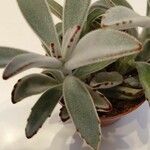
Kalanchoe tomentosa
لب کرکی · Panda plant · Chocolate Soldier · Cat Ears · Panda Ears
Description
Source: leafsnapKalanchoe tomentosa, commonly known as the Panda Plant or Velvet Leaf Kalanchoe, is a succulent native to Madagascar. It is a favored houseplant due to its unique appearance and low maintenance needs. The plant features leaves covered in soft, velvety hairs, giving it a fuzzy texture and silvery-green coloration. Additionally, the edges of the leaves are lined with small teeth, contributing to its jagged look. With proper care, the Panda Plant can grow up to 2 feet tall and wide. It thrives in bright but indirect sunlight and requires well-draining soil that is allowed to dry out between waterings. Overwatering can lead to root rot, so it's crucial to avoid letting the soil remain too wet. Beyond its aesthetic appeal, Kalanchoe tomentosa has been used in traditional medicine for its anti-inflammatory properties and as an herbal remedy for various ailments, including coughs and sore throats. Overall, Kalanchoe tomentosa is an attractive succulent that requires minimal care while adding beauty to indoor spaces or outdoor gardens in warmer climates.
💡 The leaves of the chocolate soldier plant are grayish-white and have a fluffy texture, resembling the ears of a rabbit. When placed in a sunny environment, brown spots appear near the tips of its leaves, enhancing its ornamental appeal as a succulent plant.
🌳 The panda plant is mainly valued for ornamental purposes because of its soft, velvety leaves and panda-like appearance, providing visual appeal in both indoor and outdoor gardens. It is not commonly employed for other uses, though its physical traits evoke resilience and modest charm, making it a favorite among plant enthusiasts. The tactile quality of its leaves could hint at an unexplored potential for textile inspiration, but such applications have not been documented.
🎭 Give it your all
Care Guide
💧 Water Every 7 days
The Chocolate Soldier, a plant native to the arid regions of Madagascar, is highly drought-tolerant and requires minimal moisture to thrive. It makes an excellent indoor plant due to its velvety foliage. To care for it, water the plant every three weeks and ensure it's planted in well-draining soil to prevent root rot.
How should I water my Chocolate soldier plant?
To properly water the Chocolate soldier plant, follow these steps at the appropriate time. Wait until spring when new leaves begin to grow. Then, when the soil inside the pot is completely dry, you can add water. Use either tap or distilled water, but avoid watering from overhead. Instead, water at the base of the plant, applying the water slowly and evenly across the entire soil surface. This method ensures consistent soil moisture without wetting the above-ground parts of the plant. Keep adding water until you see a light stream of excess water draining from the pot's hole.
What should I do if I give my Chocolate soldier plant too much or too little water?
Overwatering the Chocolate soldier is more common than underwatering it, and overwatering can be very harmful, often leading to the plant's death. To avoid overwatering, it is best to let the soil completely dry before watering, especially during dormancy. However, many people make the mistake of watering incorrectly during this period. In this case, we will focus on how to deal with overwatering. When your Chocolate soldier displays signs of overwatering, the best course of action is to remove it from its current pot. Examine the roots for any signs of rot or moisture-related disease, and remove those affected. Some roots may recover with a simple cleaning. Then, repot the plant in well-draining soil to prevent future overwatering. Although rare, underwatering can also occur. In this situation, you simply need to water the plant slightly more frequently, being careful not to overcompensate and cause overwatering.
How frequently do I need to water my Chocolate soldier plant?
The Chocolate soldier, being a succulent plant from a hot and dry region, has low water needs compared to other plants. To properly care for this species, you should let the soil completely dry out between waterings. This usually takes about two weeks to a month. Watering frequency depends on the season. In spring and summer, when the plant is actively growing, it may take 2-3 weeks for the soil to dry out completely, so you can water it accordingly. During summer, the soil may dry out faster. However, when the temperature drops below 60 degrees or rises above 85 degrees Fahrenheit, the plant goes into dormancy or semi-dormancy and doesn't require additional watering. Instead, reduce or stop watering to keep the soil dry until the temperature is suitable for growth, and then start watering again.
How much water does my Chocolate soldier plant need?
Chocolate soldier does not require frequent watering due to its ability to tolerate periods of dryness. However, when it is time to water the plant, it is important to provide a significant amount of water. There is no exact measurement for how much water to give, but it is crucial to continue watering until the soil is completely moist. To ensure this, if the plant is in a pot, water it until you see water flowing out of the drainage holes. Another way to check if you have watered enough is by inserting a pencil or similar object deep into the soil and removing it. If the pencil comes out moist, then you have adequately watered the plant.
How can I know if I'm giving my Chocolate soldier enough water?
Overwatering is a more significant issue than underwatering. When overwatering happens, you'll notice it immediately as the leaves become mushy, lose their shape, and change colors. This is different from healthy living stone leaves, which are strong and maintain their shape. Chocolate soldier plants rarely suffer from underwatering since they can survive without water. But if underwatering does occur, you'll usually notice dryness and discoloration of the leaves.
☀️ Light Full sun
The panda plant prefers intense sun exposure for feeding and growth, though it can tolerate moderate sunlight as well. Native to habitats with constant sunlight, the panda plant thrives in those conditions. Conversely, insufficient sun can hinder its growth, while too much exposure may cause its leaves to scorch.
What are the sunlight requirements for a Chocolate Soldier plant?
The Chocolate Soldier plant thrives in intense sun exposure, being native to environments where constant sunlight is prevalent. This plant requires above 6 hours of sunlight daily to flourish (full sun), but it can also tolerate moderate levels of sunlight, about 3-6 hours (partial sun). However, insufficient sun exposure can stunt its growth, while excessive sun can cause leaf scorching. It's important to monitor the sunlight that graces your garden and find the ideal balance of light and shade that ensures your plants' well-being.
How can artificial lighting benefit indoor Chocolate Soldier plants?
Indoor Chocolate Soldier plants benefit significantly from adequate lighting, especially when natural sunlight is lacking, such as during winter or in less sunny spaces. Artificial lights, like LEDs which can be adjusted to provide specific light wavelengths, are crucial for promoting healthy growth. For plants requiring full sun, 30-50W/sq ft of artificial light is needed, 20-30W/sq ft for partial sun plants, and 10-20W/sq ft for full shade plants. The artificial light source should be placed 12-36 inches above the plant, simulating natural sunlight, and provided for 8-12 hours per day to mimic natural daylight hours. This ensures optimal growth and health of the Chocolate Soldier plant indoors.
What are the symptoms of insufficient light in Chocolate Soldier plants?
When a Chocolate Soldier plant is kept in suboptimal lighting conditions, it may exhibit several symptoms indicating light deficiency. These include lighter-colored new leaves due to a lack of chlorophyll and essential nutrients, leggy or sparse growth with stretched-out appearance, slower or halted new growth as the plant goes into survival mode, small leaves compared to previous ones, and chlorosis or yellowing of leaves indicating a breakdown of chlorophyll. Other signs of extreme light conditions include sunscald, leaf curling as a defense against excessive sunlight, wilting due to increased water loss, and leaf scorching with brown, crispy edges on leaves caused by overexposure to sunlight.
What solutions can address light deficiency in Chocolate Soldier plants?
To combat light deficiency in Chocolate Soldier plants, consider gradually moving your plants to sunnier locations, ensuring they receive at least 6 hours of direct sunlight daily. For indoor settings, use south-facing windows or artificial lights such as desk lamps or professional plant grow lights for at least 8 hours daily. If moving the plant outdoors, do so gradually to prevent sunburn and choose spots with optimal sunlight exposure. Additionally, removing obstructions that block sunlight, such as pruning trees or relocating your plant to sunnier locations with good drainage, can significantly improve light access. Remember, while affected plant parts may not revive, new growth will be healthy with improved light conditions.
🌡️ Temperature 20–37.8°C
The panda plant plant originates from Madagascar's arid areas, where mean temperatures lie between 20 and 38 ℃ (68 and 100 ℉). It prefers a warm environment and moderate to bright light. In winter, it will enter dormancy if temperatures fall below 13 ℃ (55 ℉). In summer, it benefits from some air circulation to remain comfortable.
What is the native habitat and preferred climate of the Chocolate soldier plant?
The Chocolate soldier plant (Kalanchoe tomentosa) is native to the arid regions of Madagascar, thriving in environments where the average temperatures range from 20 to 38°C (68 to 100°F). These plants prefer a warm climate coupled with moderate to bright light. During winter, they enter a dormant state if temperatures fall below 13°C (55°F), indicating their preference for warmer conditions. To sustain optimal growth, especially in its growing season during the winter, maintaining temperatures above 20°C is crucial. Furthermore, providing a bit of air circulation during the hotter months helps keep the plant comfortable.
How should I care for my Chocolate soldier plant during cooler temperatures?
In managing the Chocolate soldier plant during cooler temperatures, it's essential to keep the environment above 5°C as the plant is not tolerant of extreme cold. Winter presents the growing season for this plant, and optimal growth requires maintaining temperatures above 20°C. Should outdoor temperatures fall below 5°C, moving the plant indoors to a well-lit area becomes advisable. Additionally, adjusting watering practices according to the temperature—increasing it when higher and decreasing as temperatures approach 5°C—is beneficial. In instances where overwintering outdoors is preferred, positioning the plant in a sheltered spot with sufficient sunlight and considering temporary greenhouse protection against consistently low temperatures are effective strategies. Keeping the plant adequately moist during this period is also crucial.
What symptoms indicate temperature stress in Chocolate soldier plants, and how can they be addressed?
Temperature stress in Chocolate soldier plants manifests through specific symptoms related to either low or high temperatures. For low temperatures, the plant struggles with extreme cold, thriving best between 20°C and 38°C. Exposure to temperatures below 1°C can lead to water-soaked necrosis, wilting, and eventual leaf drop, particularly after mild frost damage which may initially show no symptoms. Addressing this involves trimming frostbitten areas, moving the plant to a warmer indoor location or a makeshift greenhouse with proper ventilation to prevent decay. For high temperature stress, when the mercury climbs above 38°C, especially beyond 43°C, the plant may enter dormancy and become prone to rot amid high humidity. Remediation includes removing any dry or rotten parts, relocating the plant to a partially shaded area away from direct midday and afternoon sun, and halting watering until cooler weather resumes.
💨 Humidity normal (40-60%)
This plant will thrive in moderate humidity, which is probably the level in your home. However, misting it a few times a week can be very beneficial. Make sure the room has good ventilation.
🪴 Soil 6-7
🌱 Fertilizer
For the Panda plant, small amounts of fertilizer applied 1-2 times a year during the growing season are enough. Avoid fertilizing in winter and summer when the plant is dormant. Cut back on fertilizer for repotted plants and wait a couple of months after repotting before applying feed. Fertilizing helps maintain healthy growth and encourages blooming.
Why should I put fertilizer on my Chocolate soldier plant?
Fertilizing the Chocolate soldier plant provides essential nutrients to support healthy growth. While it naturally stores water and nutrients, applying plant food during the growing season further enhances its development. Additionally, fertilizing can stimulate blooming in mature plants during this period.
When should I fertilize my Chocolate soldier plant?
Chocolate soldier plants benefit from additional nutrients, but they only require a small amount of fertilizer during the growing season. It is recommended to fertilize them 1-2 times a year, specifically in the spring and autumn. Avoid fertilizing in the winter and summer when the plant is dormant. If you have recently repotted your plant, be cautious with the amount of fertilizer you use. It is best to wait a couple of months after repotting before applying any fertilizer.
When is the best time to not fertilize my Chocolate soldier plant?
During its dormancy period, the Chocolate soldier plant, like many other plants, does not grow and therefore, you should refrain from fertilizing it. This dormancy period occurs in both the summer and winter. Additionally, it is recommended to avoid fertilizing the plant for the first few months after repotting it in the spring.
What kind of fertilizer does my Chocolate soldier plant need?
To fertilize Chocolate soldier effectively, use a liquid plant food made for succulents and cacti. Make sure to dilute the fertilizer with water to half its strength. This will prevent the buildup of excess fertilizer in the soil. Apply the fertilizer at the base of the plant and make sure to water thoroughly. It's important to allow any excess moisture to drain from the container or seep into the ground.
How should I fertilize my Chocolate soldier plant?
There are two options for fertilizing Chocolate soldier: liquid plant food or granules. If you choose liquid plant food, dilute it to half-strength as directed on the packaging. No matter which option you use, apply the fertilizer to the soil. For granules, cover them with a thin layer of soil and water.
🪴 Pot & Repot Every 2 years
When repotting a Panda plant, choose a pot slightly larger than the current one that provides good drainage. Use a gritty, well-draining cactus or succulent mix. Gently remove the plant from its old container, brush off excess soil, and set it at the same depth. Wait a few days before watering to allow any root damage to heal. Repot during spring or fall and place it in a brightly lit location.
✂️ Pruning
To keep your Chocolate Soldier plant in good shape, regular pruning is important. Focus on removing dense or extra branches, especially in the spring and autumn. For propagation, cut stems that have 5-6 leaves. Treat the cut ends with sulfur powder and let them heal before planting. Make sure the soil stays slightly moist during the planting process.
🌿 Propagating
🐛 Diseases & pets
☠️ Toxicity
Characteristics
- Plant Type
- Succulent, Herb
- Life Cycle
- Perennial
- Genus
- Kalanchoe
- Family
- Crassulaceae
- Hardiness Zone
- 10-12
- Mature Height
- 30 cm to 91 cm
- Mature Spread
- 61 cm to 91 cm
- Leaf Color
- Green, Silver, Brown
- Leaf Type
- Evergreen
- Flower Color
- Pink, Yellow
- Flower Size
- 1.02 cm to 1.52 cm
- Bloom Time
- Late spring, Early summer, Mid summer
- Planting Time
- Spring, Autumn
- Harvest Time
- Mid summer
- Native Area
- Madagascar