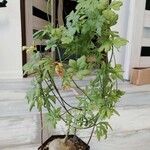
Kedrostis africana
Baboons Cucumber
Description
Source: leafsnapKedrostis africana (or baboon's cucumber) is a species of flowering plant in the family Cucurbitaceae. It is native to Namibia and South Africa. It has gained the Royal Horticultural Society's Award of Garden Merit as an ornamental.
🌳 The Baboon's cucumber is primarily cultivated for its remarkable foliage, vibrant flowers, and unique fruits, in addition to its distinctive growth pattern, where vines cascade from a large, aboveground tuber. It is commonly grown in a large pot with a trellis or support structure for the vines. However, it can also be planted directly in the ground if the climate is warm and the soil is well-draining. In such cases, it is typically used as a specimen plant or to cover walls and trellises.
Care Guide
💧 Water Every 3 weeks
What do I do if I give my Baboon's cucumber too much or too little water?
Baboon's cucumber and other succulents are usually quite resilient to lack of water, but if you forget to water your Baboon's cucumber for a month or more, it will start to show signs of dehydration and leaf damage. Signs of underwatering include shriveled, dry, and flat leaves, some of which may turn brown, crispy, and fall off. The soil will also be completely dried out. To address underwatering, submerge the pot in water for about 5-10 minutes until the soil feels moist on the surface. Remove any dried out leaves to make room for new growth. On the other hand, overwatering can be very harmful to Baboon's cucumber. It can lead to root rot, where the roots are unable to absorb water and nutrients due to excessive moisture. Symptoms of overwatering include yellow, swollen, and translucent leaves, which may eventually turn brown or black and fall off easily. The first step to address overwatering is to check the soil and roots of the plant. If the roots are rotten, it may be impossible to save the plant. If only a portion of the roots are affected, it may still be salvageable. Remove the plant from its pot, gently remove wet soil and rinse the roots in room-temperature water. If root rot is present, the roots will be dark brown or black, soft, mushy, or slimy. If the majority of roots are affected, it's best to propagate a new plant from healthy leaves. If only some roots are affected, remove the unhealthy roots, dip the remaining healthy roots in fungicide, and repot the plant in fresh, well-draining soil. In most cases, the plant can recover and show new growth in the next growing season.
How often should I water my Baboon's cucumber?
To determine how often to water Baboon's cucumber, the best approach is to check the soil and only water when it is completely dry. You can check the soil moisture by sticking your finger or a moisture meter into the pot. If the soil feels even slightly moist, wait a few days and check again. In summer, most people will need to water the cucumber about every two weeks, while in winter, once a month should suffice. However, there are factors that can influence the watering frequency, which are listed below.
What should I keep in mind when watering my Baboon's cucumber?
To properly water your Baboon's cucumber, you need to consider various environmental factors. These include the size of the container, type of soil, temperature, and humidity. Firstly, the container and soil determine how often and how much water should be used. Ensure the container has drainage holes so that excess water can escape. Smaller containers hold less moisture and require more frequent watering, while larger pots retain more water and need less frequent watering. Avoid using oversized pots as this can result in overwatering. When repotting, move to a container just one size larger than the current one. Shallow containers are better suited for Baboon's cucumber, as it has shallow root systems. In terms of watering frequency, Baboon's cucumber requires less water in winter and more water during the active growing seasons of spring and autumn. In winter, growth slows down and the plant doesn't use as much energy or water. Cooler temperatures also lead to less evaporation, meaning the soil remains wet for longer. Your local climate also influences watering needs. In humid areas with frequent rainfall, watering can be less frequent compared to dry and arid regions. Keep in mind that even within the same geographic location, conditions can vary with the season and the use of indoor heating and air conditioning. If you plant Baboon's cucumber in the ground, it usually doesn't need additional watering once the roots are established, relying on precipitation and dew. However, during extended dry periods, occasional watering may be necessary. In areas where it can only be grown in containers, the plant can be moved outside during suitable spring and summer temperatures and brought indoors as temperatures drop. Container-grown Baboon's cucumber typically requires more water due to increased sun exposure, even if it is placed on a shaded porch.
How do I water Baboon's cucumber?
To water your Baboon's cucumber effectively, soak it thoroughly and then allow it to dry out before watering again. This plant can tolerate some drought, so it's okay to let it get quite dry before watering. It's always best to err on the side of giving too little water rather than too much. When you do water, make sure to thoroughly soak the soil throughout the entire pot. Avoid pouring the water in just one spot; instead, go around the whole rim of the planter to ensure all sides of the plant are wet. The amount of water needed depends on the size of your container and how quickly your soil absorbs it. Give your Baboon's cucumber enough water that it drains out from the drainage holes. Ideally, leave the drained water in the saucer for about 20-30 minutes to allow it to be absorbed into dry areas of the soil. After that, discard any excess water still in the saucer to prevent waterlogging the soil. Bottom-watering is also an excellent method for the Baboon's cucumber, as it ensures thorough moistening of the soil. This involves placing the pot in a saucer of water and allowing the soil to absorb moisture through the drainage holes. You'll know the soil has absorbed enough water when the top layer is moist. Bottom-watering takes a bit more time than top-watering, but it guarantees even distribution of water throughout the pot. In its natural habitat, Baboon's cucumber experiences relatively dry conditions with infrequent rain, but when it does rain, the soil gets thoroughly moistened. To mimic this, bottom-water your plant when the soil is completely dry. Deep soil bathing is more beneficial than frequent light watering for the Baboon's cucumber.
☀️ Light Full sun
Baboon's cucumber does best when given ample light exposure that mimics its native habitat. When kept under high-intensity light it grows optimally, though it can also tolerate moderate light levels. Too much or too little light can impair its healthy growth.
How much sun does the cucumber that the baboon eats need to grow?
To ensure the healthy growth of the Baboon's cucumber, it needs a minimum of 6 hours of sunlight every day, although more is preferable. The exact number might vary due to factors like sunlight intensity and the environment, but it's unlikely for the plant to receive excessive sunlight. In fact, it can thrive with up to 14 hours of sun per day.
What kind of sunlight does the cucumber that baboons eat need?
Baboon's cucumber requires abundant sunlight to flourish. These plants do well in direct light or bright indirect sun as they prefer full-sun conditions. While certain varieties can tolerate partial sun, they generally thrive with more sunlight.
Should I keep Baboon's cucumber out of the sun?
The Baboon's cucumber is typically found in scorching and sunny areas around the world, making it well-suited to such environments. As a result, it doesn't require protection from the sun. However, if you plan on moving your Baboon's cucumber to a more sunny location, it's important to proceed with caution. Plants need time to adjust to new conditions, so it's advisable to begin by gradually exposing the plant to a few hours of sunlight each day. Gradually increase the duration of sun exposure until the plant has fully adapted. Once acclimated, most varieties of Baboon's cucumber can thrive in direct sunlight without requiring any additional protection.
What will happen if the cucumber that Baboon eats doesn't get enough sunlight?
Baboon's cucumber needs sufficient sunlight to grow well. When there isn't enough sunlight, it can result in pale coloring, wilting leaves, and leaf drop. This lack of sunlight can also cause a condition called etiolation or legginess, where the plant stretches towards the light source, making it look sparse and causing its stems to become weak.
What happens if the Baboon's cucumber gets too much sunlight?
Baboon's cucumber can develop red, pink, or orange colors as a protective response to excessive sunlight. During summer, some people intentionally expose these plants to mild sun stress, which is harmless. However, if Baboon's cucumber is placed too suddenly in direct sun, it can get sunburned, indicated by white or brown spots on the exposed upper leaves. In such cases, the plant should be relocated to a shadier area and watered if necessary. Any sun-damaged leaves can be pruned, and new growth should eventually take their place. As light levels decrease from autumn to spring, the plant will return to its normal coloring.
🌡️ Temperature 20–37.8°C
Baboon's cucumber naturally grows in temperate conditions and requires temperatures between 20 and 38 ℃ (68 to 100.4 ℉) for optimal development. In winter the plant can tolerate cooler temperatures, but it is advisable to maintain temperatures above 10 ℃ (50 ℉) to avoid damage.
What temperature is the best for your Baboon's cucumber?
To keep the Baboon's cucumber in good condition, it is best to maintain temperatures between 75-90℉ (25-32℃). During the early winter season, it should not be exposed to temperatures below 75℉ (25℃), and moving it indoors is recommended for extra protection. Although the Baboon's cucumber can tolerate some extreme temperatures, it is not ideal for it to experience lows like 50℉ (15℃). If winter conditions are expected, bringing it inside is advisable.
How should I change the temperature for my Baboon's cucumber at different times when it is growing?
The growth of Baboon's cucumber can be divided into different phases. Firstly, the dormant seed starts growing and becomes a seedling. However, for the seeds to germinate, they require specific conditions in their surroundings, such as a temperature range of 75-90℉ (25-32℃). In order to ensure vigorous growth, the best time to cultivate Baboon's cucumber is during summer, when the temperature is around 85℉(30℃). During this period, it is advisable to place the plant in a location where it can receive ample sunlight, such as moving it from indoors to an area with direct sunlight.
How can I make sure my Baboon's cucumber stays warm when it's cold outside?
To protect your Baboon's cucumber from harsh winter conditions, it's recommended to bring them indoors. Some people purchase grow lights to ensure the plant gets enough sunlight. However, if your home is not very dark, these lights may not be necessary. Instead, position your plants in the area with the most sunlight available. This should provide sufficient light for the Baboon's cucumber to thrive in winter. If you have multiple plants, it's helpful to rotate them so they all receive adequate sunlight. If you live in northern areas with frigid weather, be cautious about placing your Baboon's cucumber too close to the window. The extreme cold can cause damage to the plants.
What happens to my Baboon's cucumber if it gets too hot or too cold?
To optimize the growth of your Baboon's cucumber, it is recommended to cultivate it during the summer and in warm temperatures of around 90℉(32℃). However, it is important to shield the plant from extreme temperatures during hot climates. Conversely, during winter, it is preferable to keep the plant dry. Baboon's cucumbers thrive in temperate climates with temperatures ranging from 75-90℉ (25-32℃). It is crucial to note that subjecting the plant to extreme temperatures can cause stress. While maintaining high temperatures between 90℉ and 95℉(32-35℃) can enhance the vibrant hues of the cucumbers, caution must be exercised when experimenting with such conditions. During the scorching summer months, excessively high temperatures can scorch the plant, potentially damaging its stem and root system. As a precaution, consider relocating the plant to a shaded area or protecting it with a shade cloth during the hottest part of the day when temperatures become excessively high.
How should I change the temperature for my Baboon's cucumber during different seasons?
During the summer, the high temperatures slow down the growth of Baboon's cucumber to help it survive in the heat. However, when cooler periods and rainfall occur, the Baboon's cucumber starts growing again. If you live in an area with hot summers, warm winters, and regular rainfall, you don't need to make any changes. But if you live in a place with cold winters, you should allow your Baboon's cucumber to grow more in the summer and rest in the winter because there isn't enough sunlight for growth during winter. To help your Baboon's cucumber go into dormancy in cold temperatures, you can lower the temperature to 50℉ to 75℉ (15℃ to 25℃).
💨 Humidity
🪴 Soil 6-7
🌱 Fertilizer
For Baboon's cucumber, apply small amounts of fertilizer once or twice a year during the growing season. Do not fertilize in winter or in summer while the plant is dormant. Cut back on feeding for plants that have been repotted, and wait a couple of months after repotting before you start fertilizing. Feeding helps maintain healthy growth and promotes flowering.
Why should I put plant food on my Baboon's cucumber plant?
Fertilizing Baboon's cucumber is beneficial because it adds nutrients to the growing medium. Applying plant food during the growing season helps support healthy growth, despite the fact that the cucumber already stores water and nutrients. Additionally, fertilizing can encourage mature specimens to produce blooms in the growing season.
When should I fertilize my Baboon's cucumber?
Baboon's cucumber requires only a small amount of fertilizer during the growing season, about 1-2 times a year. To get the best results, it is recommended to fertilize your plant in the spring and autumn. However, avoid fertilizing during the winter and summer when the plant is dormant. If you have recently repotted your plant, be cautious with the amount of fertilizer you use. It's a good practice to wait a couple of months after repotting before applying any fertilizer.
When is the best time to not feed fertilizer to my Baboon's cucumber?
Baboon's cucumber, like other plants, goes through a dormancy period. During this time, it is best to halt the application of fertilizer. The plant stops growing in the summer and winter, so you should also stop fertilizing during these seasons. Additionally, it is advisable to wait a couple of months after repotting in the spring before resuming fertilizer application.
What fertilizer does my Baboon's cucumber need?
To best fertilize Baboon's cucumber, use a liquid plant food made for succulents and cacti. Dilute the fertilizer with water to half-strength to avoid it accumulating in the soil. Apply the fertilizer at the base of the plant, ensuring proper drainage by watering thoroughly.
How can I feed my Baboon's cucumber plant properly?
When fertilizing Baboon's cucumber, using liquid plant food is easier, although using granules is also an option. Make sure to follow the instructions on the packaging and dilute liquid fertilizers to half-strength. Regardless of whether you choose granules or liquid plant food, always apply it to the soil. After applying granules, cover them with a thin layer of soil and water the plant.
🪴 Pot & Repot Every 2 years
When repotting Baboon's cucumber, pick a pot a little larger than the current one that has good drainage. Use a gritty, well-draining succulent or cactus mix. Gently remove the plant from its old pot, brush off excess soil, and plant it at the same depth. Wait a few days before watering to allow any root damage to heal. Repot in spring or fall and place it in a brightly lit spot.
✂️ Pruning
🌿 Propagating
🐛 Diseases & pets
☠️ Toxicity
Characteristics
- Plant Type
- Succulent, Vine, Herb
- Life Cycle
- Perennial
- Genus
- Kedrostis
- Family
- Cucurbitaceae
- Hardiness Zone
- 10-11
- Mature Height
- 6.1 m
- Mature Spread
- 49 cm
- Leaf Color
- Green
- Leaf Type
- Deciduous
- Flower Color
- Yellow
- Flower Size
- 7.62 cm
- Bloom Time
- Late spring, Summer
- Planting Time
- Spring, Summer, Autumn, Winter
- Harvest Time
- Late summer, Fall
- Native Area
- South Africa, Namibia