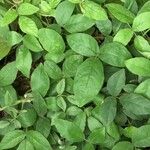
Kennedia prostrata
Running-postman · Scarlet coral-pea · Scarlet-runner
Description
Source: leafsnapKennedia prostrata, commonly known as Running Postman or Scarlet Runner, is a low-growing evergreen plant that belongs to the Fabaceae family. Native to Australia, it thrives in various habitats including heathlands, woodlands, and forests. The plant exhibits a trailing habit, with stems that can extend up to 2 meters. Its leaves are dark green and consist of three leaflets. The flowers of Kennedia prostrata are bright red or scarlet, adorned with yellow markings on the inside. They bloom from spring through summer, attracting bees and other pollinators. The fruit is a pod containing several seeds. Kennedia prostrata is an excellent ground cover for sunny areas with well-drained soil. It is also suitable for slopes or erosion control due to its trailing habit. The plant requires minimal maintenance once established, though occasional pruning can help maintain its shape. Besides its ornamental value, Kennedia prostrata has traditional medicinal uses among Indigenous Australians. It has been used to treat various ailments such as coughs, colds, fever, and skin infections due to its antibacterial properties. Overall, Kennedia prostrata is an attractive, low-growing ground cover that offers both aesthetic appeal and traditional medicinal benefits, making it a superb addition to any garden or landscape project in Australia!
Care Guide
💧 Water Every 7 days
The running postman thrives in well-drained soil and prefers environments with moderate moisture and good air circulation. Once established, it is drought-tolerant, but still requires weekly watering to maintain its health. During its active growth season, make sure it receives sufficient moisture, particularly during dry spells, while also taking advantage of natural rainfall when grown outdoors.
☀️ Light Full sun
The Running postman requires a moderate amount of sunlight for healthy growth but does not need intense, glaring rays. Native to areas where surrounding vegetation softens the sun, it can tolerate shadier conditions. Too much or too little light can harm the plant and disrupt its growth.
What are the sunlight requirements for Running Postman?
Running Postman (Kennedia prostrata) requires about 3-6 hours of sunlight daily, thriving in partial sun conditions. It's adapted to environments with moderated sunlight, protected by other flora, allowing it to endure shaded areas as well. Despite its adaptability, both an oversupply and a deficiency of light can harm the plant. Observing how sunlight moves through your garden to find spots with a good balance of light and shade is beneficial for the plant's health and happiness.
How can artificial lighting be used for indoor Running Postman plants?
When natural sunlight is insufficient for indoor Running Postman plants, especially during winter or in less sunny spaces, artificial lighting can be a significant aid. LED lights are a popular choice since they can provide specific wavelengths needed for optimal growth. For full sun plants, aim for 30-50W per square foot, 20-30W for partial sun plants, and 10-20W for full shade plants. The artificial light source should be placed 12-36 inches above the plant to mimic natural sunlight, with most plants benefiting from 8-12 hours of light per day.
What are some common symptoms of insufficient light for Running Postman?
Running Postman may exhibit several symptoms when exposed to insufficient light, including smaller new leaves, leggy or sparse growth, faster leaf drop, slower or stopped growth, lighter-colored new leaves, chlorosis or yellowing, sunscald, leaf curling, wilting, and leaf scorching. These symptoms indicate the plant's struggle with inappropriate light levels, whether too little or too much, affecting its development and health.
What solutions can address light-related issues for Running Postman?
To optimize growth and address light-related issues in Running Postman, gradually adapting the plant to changing light conditions is key. For indoor plants, shifting them to progressively sunnier spots or using artificial light for at least 8 hours daily can help. Outdoor plants should be moved gradually to avoid sunburn. Pruning obstructive foliage or transplanting to sunnier locations can also benefit plants experiencing light deficiencies. It's important to note that while parts of the plant damaged by light issues may not recover, new growth should be healthy following these adjustments.
🌡️ Temperature 20–37.8°C
The running postman shows strong adaptability to a range of climate conditions, from blazing summers to freezing winters. That said, it does have a preferred temperature range for healthy growth. If temperatures rise too high, the plant can suffer from heat and humidity stress, which may kill it. In areas where temperatures near the lower end of its cold tolerance, taking insulating measures to protect the plant is important.
💨 Humidity
🪴 Soil 6-7
🌱 Fertilizer
The timing of fertilizing Running postman is important. Feed it in early spring and continue every month up to early summer. Fertilizer encourages attractive blooms and supplies energy during both dormant and active growth periods.
🪴 Pot & Repot 2-3 years
Repot the running postman every 2-3 years in the spring for optimal growth. Use a wide and shallow container, and place it in a location with bright, indirect light. Ensure moderate watering. Be patient after transplanting, as this will support the plant's recovery, promote robust health, and encourage natural spreading.
✂️ Pruning
The ground-covering plant known as the running postman features bright red or orange flowers and thrives with regular pruning. Prune it in early spring to boost blooming, manage its spread, and improve airflow. Proper pruning keeps the running postman healthy and visually appealing, making it a valuable addition to any garden.
🌿 Propagating
🐛 Diseases & pets
☠️ Toxicity
Characteristics
- Plant Type
- Vine
- Life Cycle
- Perennial
- Genus
- Kennedia
- Family
- Fabaceae
- Hardiness Zone
- 9-11
- Mature Height
- 1.52 m
- Mature Spread
- 3.05 m
- Leaf Color
- Green
- Leaf Type
- Evergreen
- Flower Color
- Red
- Flower Size
- 2.03 cm to 3.05 cm
- Bloom Time
- Fall
- Planting Time
- Spring, Summer, Autumn
- Harvest Time
- Winter