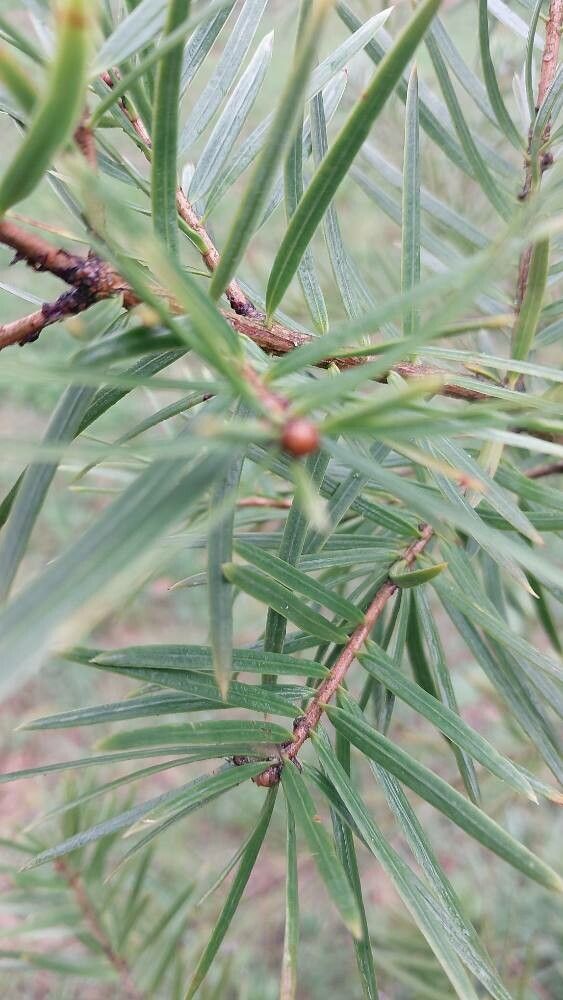
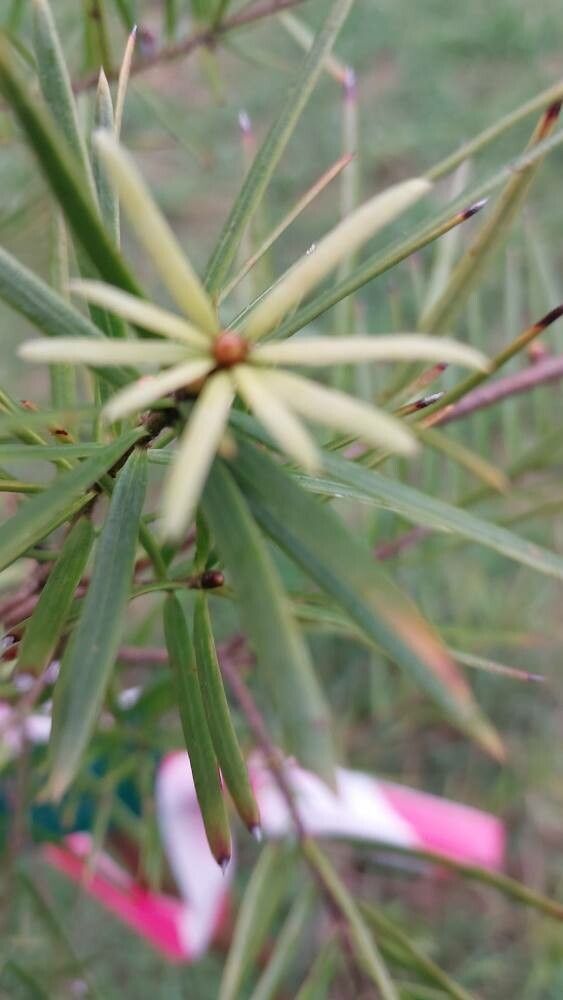
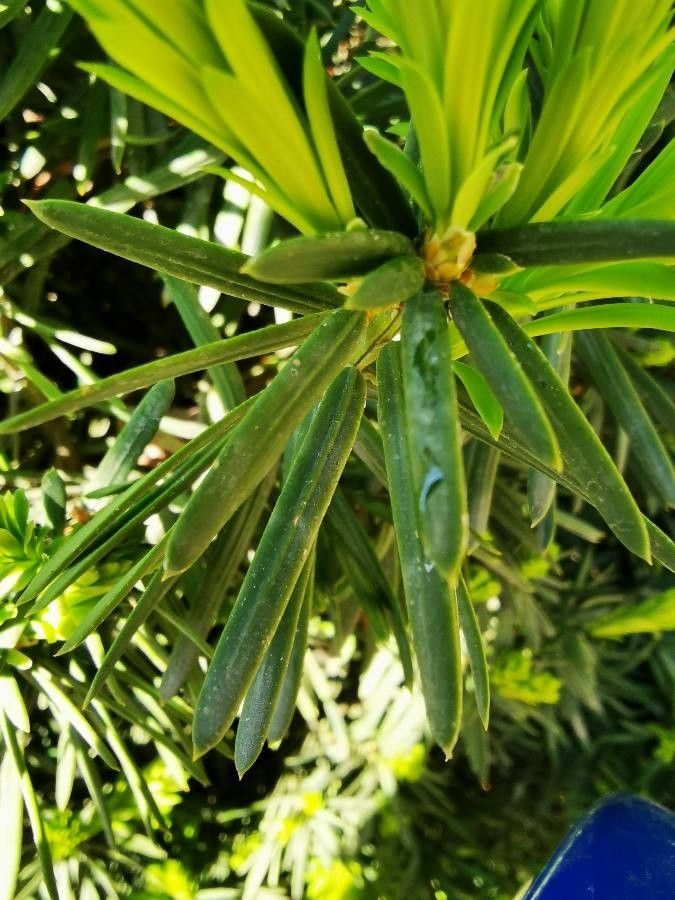
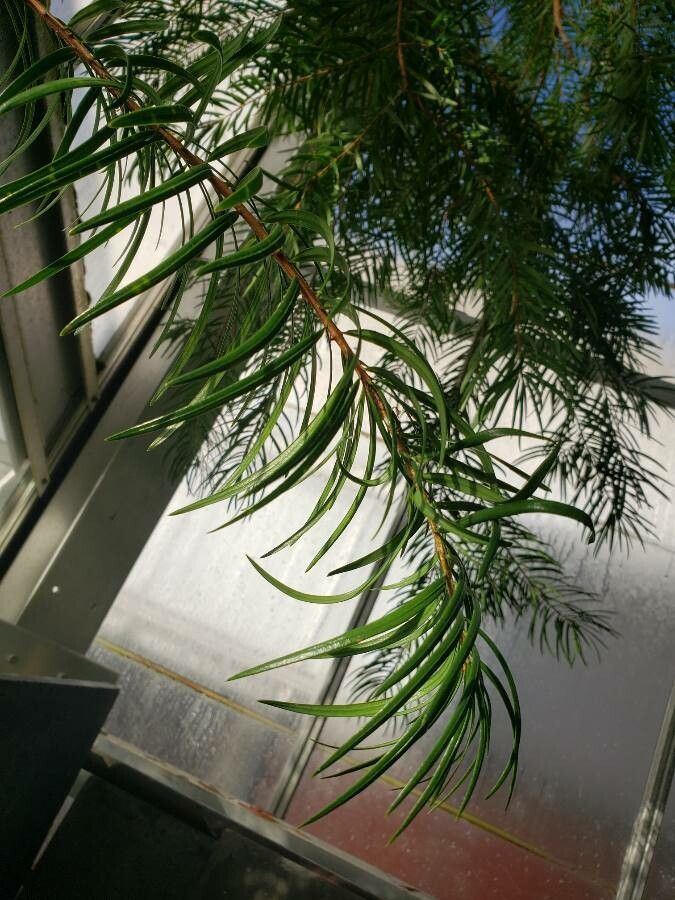
Keteleeria fortunei is a coniferous evergreen tree. Originated in China, K. fortunei is an ancient relict species and a second-class national key protected plant, "mainly distributed in south subtropical to the middle subtropical edge". It is found in the provinces of Fujian, Guangdong, Guangxi, Guizhou, Hunan, Jiangxi, Yunnan, and Zhejiang. The tree grows in hills, mountains, and broadleaf forests at elevations of 200–1400 m. The lifespan of K. fortunei can reach more than a thousand years, and the height of a thousand-year-old tree can reach more than 40 meters. "Economically, K. fortunei is a treasure, and its comprehensive development and uses has broad prospects". The species is named after Scottish botanist Robert Fortune, who discovered the tree in 1844. K. fortunei has also been reported from Vietnam but this is attributed to misidentification of immature specimens of Pseudotsuga sinensis.
Fortune's keteleeria is disease-resistant and typically not susceptible to illnesses. In terms of care, the plant is fairly low-maintenance. Outdoors it needs only light watering, and larger specimens usually do not require pruning. Smaller plants, however, should be pruned after they finish blooming. Fortune's keteleeria is suitable for anyone with outdoor space, such as a garden or a deck, and does not need a lot of gardening experience.
How to keep Keteleeria Fortunei.
Light
Fortune's keteleeria originates in the understory of tropical forests, where it receives dappled sunlight. It thrives in partial sun but can also tolerate full sun, adapting well to a range of light levels.
Water
Originally from subtropical regions, Fortune's keteleeria is a plant that thrives in moderate moisture conditions, demonstrating good resistance to drought and tolerance to humidity. It should be watered every one to two weeks and prefers well-draining soil. Typically grown outdoors, this evergreen plant manages to stay hydrated while avoiding waterlogging.
Temperature
Fortune's keteleeria is native to temperate regions and performs best at temperatures of 68 to 95 °F (20 to 35 °C). Its growth can slow in cooler climates, so it is recommended to maintain this temperature range year-round, making adjustments as the seasons change.
Fertilizer
Fortune's keteleeria has particular nutrient needs and does not require heavy fertilization. Spring is the best time to apply fertilizer for optimal growth. Providing nutrients enhances its health, increases its resistance to pests and diseases, and helps support a long lifespan.
Pruning
Fortune's keteleeria is an evergreen conifer known for its tall stature and deep green foliage. To maintain its health and appearance, prune the tree from early to late winter. This is the best time to shape the tree and remove any dead branches, which promotes new growth. When pruning, focus on thinning the branches to improve air circulation, but avoid heavy pruning to preserve the tree's natural form. Regular pruning not only enhances the tree's appearance but also prevents overcrowding of the branches.
Botanical profile.
- Plant Type
- Tree
- Life Cycle
- Perennial
- Genus
- Keteleeria
- Family
- Pinaceae
- Hardiness Zone
- 9
- Mature Height
- 24.99 m to 29.87 m
- Mature Spread
- 10.06 m to 14.94 m
- Leaf Color
- Dark Green
- Leaf Type
- Evergreen
- Flower Color
- Yellow, Green
- Bloom Time
- Mid spring, Late spring
- Planting Time
- Spring, Summer
- Harvest Time
- Late summer, Early fall, Mid fall
- Native Area
- Vietnam, China
Other names.