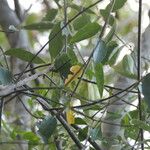
Kiggelaria africana
Pink-wood · Wild peach
Description
Source: leafsnapKiggelaria africana, commonly known as the wild peach or umkhipi in Zulu, is a medium-sized evergreen tree native to southern Africa. Growing up to 20 meters tall, it features a dense, spreading crown adorned with dark green, glossy, and leathery leaves. In the spring, the tree blooms with small yellow-green flowers, followed by round, non-edible fruits resembling peaches. Traditionally, the bark of Kiggelaria africana has been utilized by indigenous people for its medicinal properties, treating ailments such as stomach problems, skin infections, and respiratory issues. The wood of this tree is also valuable for crafting furniture and various household items. This tree thrives in well-drained soils and can grow in either full sun or partial shade. Once established, it can tolerate drought conditions. Its fruit attracts birds, providing them with a natural food source. Overall, Kiggelaria africana is an appealing evergreen tree with significant medicinal properties, making it a vital part of southern Africa's traditional medicine practices.
💡 The wood of Kiggelaria africana is exceptionally hard, making it ideal for use in construction and furniture. Early settlers in southern Africa used this wood to craft the spokes of their wagon wheels. Its slightly pink hue can also be used to produce a pink dye.
🎭 Bravery, self-assurance and self-esteem
Care Guide
💧 Water Every 7 days
Natal mahogany flourishes in humid subtropical climates, favoring environments with consistent moisture but capable of enduring intermittent dry periods. Water the plant every 2 to 3 weeks, ensuring the soil has a chance to dry out slightly between waterings. Being an evergreen, the plant requires adequate hydration to preserve its foliage, particularly during dry seasons or in areas with low humidity.
☀️ Light Full sun
As an outdoor plant, Natal mahogany requires substantial daily sun exposure for optimal growth. Originating from sunny habitats, it can cope with reduced light to some extent, but prolonged periods of low light will cause slow growth and leaf loss.
What are the sunlight requirements for Natal Mahogany?
Natal Mahogany requires substantial daily exposure to sunlight for optimum growth, ideally thriving in full sunlight but capable of tolerating partial shade. Full sun exposure means the plant should receive above 6 hours of sunlight, whereas partial sun refers to about 3-6 hours of sunlight. It's important to observe how sunlight moves through your garden, selecting spots that provide an ideal balance of light and shade for your plants. Insufficient sunlight can lead to slow growth and leaf loss, making it vital to ensure your plant receives enough light whether it is situated indoors or outdoors.
How can artificial lighting be used for Natal Mahogany indoors?
When natural sunlight is insufficient, especially in less sunny spaces or during winter, artificial lighting becomes crucial for Natal Mahogany's growth indoors. Optimal growth requires choosing the right type of artificial light, with LED lights being a popular and effective option because they can offer specific wavelengths of light needed by plants. Full sun plants require 30-50W/sq ft, partial sun plants need 20-30W/sq ft, and full shade plants 10-20W/sq ft of artificial light. The light source should be placed 12-36 inches above the plant to mimic natural sunlight, ensuring the plant receives 8-12 hours of light per day.
What are the symptoms of light deficiency in Natal Mahogany?
Symptoms of light deficiency in Natal Mahogany include smaller new leaves, leggy or sparse growth, faster leaf drop, slower or no new growth, and lighter-colored new leaves. These signs indicate the plant is not receiving adequate sunlight, impacting its growth and overall health negatively. Additionally, symptoms like chlorosis, sunscald, leaf curling, wilting, and leaf scorching can occur due to either insufficient or excessive sunlight, highlighting the importance of finding the right balance of light for your plant.
What are some solutions for increasing Natal Mahogany's sunlight exposure?
To increase Natal Mahogany's sunlight exposure and address symptoms of light deficiency, consider the following solutions: For indoor plants, gradually move them to sunnier locations, aiming for at least 6 hours of direct sunlight daily, and use artificial lighting if needed. For outdoor plants, move them gradually to avoid sunburn. Pruning branches and leaves that obstruct sunlight can help outdoor plants, and transplanting smaller plants to sunnier locations may be beneficial. Remember, parts of the plant that have suffered from insufficient sunlight may not recover, but new growth should be healthy with increased light exposure.
🌡️ Temperature 20–37.8°C
Natal mahogany is native to warm regions and does best in temperatures from 68 to 100 °F (20 to 38 °C). It favors moderate warmth and is strongly adaptable to seasonal changes. The plant should not be exposed to temperatures below 20 °C, and a slight temperature adjustment may be required in extreme seasons.
What is the native environment of Natal mahogany?
Natal mahogany, scientifically known as Kiggelaria africana, is native to warm regions. It thrives best in temperatures ranging from 68 to 100 °F (20 to 38 °C). This plant loves moderate warmth and has a strong adaptability to seasonal changes, making it crucial not to expose it to temperatures below 20 °C. During extreme seasons, a slight temperature adjustment might be necessary to ensure the plant's well-being. Natal mahogany is extremely heat-loving, and exposure to cold temperatures can harm it. Therefore, it's advised to bring outdoor-grown Natal mahogany plants indoors in autumn, placing them near a bright window but at a safe distance from heaters to avoid damage.
How does low temperature affect Natal mahogany, and what are the solutions?
Natal mahogany prefers warm temperatures and does not tolerate low temperatures well. It's vital for the plant to be kept in conditions where the temperature remains above 20°C, especially during winter, to prevent damage. Temperatures below 5°C can be detrimental, and exposure to temperatures below 1°C may cause the leaves to lighten in color. Signs of frost damage include the gradual discoloration of leaves to brown or black, accompanied by wilting and drooping. To address such issues, trim off the frost-damaged parts and promptly move the plant to a warmer environment indoors. Placing it near a south-facing window is optimal for recovery, ensuring it receives ample sunlight. It's also important to avoid placing the plant near heaters or air conditioning vents, as these can cause excessive dryness in the air.
What should be done when Natal mahogany is exposed to high temperatures?
During the summer, it's crucial to ensure that the temperature around Natal mahogany doesn't exceed 38°C. Exposure to temperatures above 43°C can lighten the color of the leaves and make the plant more susceptible to sunburn. If this occurs, the sunburned and dried-up parts of the plant should be trimmed away. It's advisable to move the plant to a shadier location to protect it from the harsh midday and afternoon sun. Additionally, watering the plant both in the morning and evening can help keep the soil moist, which is vital for its health in high temperatures.
💨 Humidity
🪴 Soil 5-7
🌱 Fertilizer
The best time to fertilize a Natal mahogany is in early spring, as it comes out of dormancy. This encourages overall growth and supports flower development. Fertilization improves the foliage, stems, and branches, while encouraging large, vibrant, and long-lasting blooms. It helps move nutrients from the roots to the flowers and enhances the plant’s health and its resistance to disease.
🪴 Pot & Repot
✂️ Pruning
The Natal mahogany is known for its broad leaves and attractive growth habit. To maintain its shape and strength, prune the tree from early to late winter, taking care not to remove too much at once. Focus on thinning the branches to enhance air circulation and promote healthy growth. Always ensure your tools are clean and sharp for precise cuts, which will help prevent damage to the plant.
🌿 Propagating
🐛 Diseases & pets
☠️ Toxicity
Characteristics
- Plant Type
- Tree
- Life Cycle
- Perennial
- Genus
- Kiggelaria
- Family
- Achariaceae
- Hardiness Zone
- 10-12
- Mature Height
- 3.05 m to 20.12 m
- Mature Spread
- 4.88 m to 13.11 m
- Leaf Color
- Green
- Leaf Type
- Evergreen
- Flower Color
- White
- Flower Size
- 0.76 cm to 1.02 cm
- Bloom Time
- Early fall, Mid fall
- Planting Time
- Spring, Autumn
- Harvest Time
- Winter
- Native Area
- Malawi, Lesotho, Mozambique, South Africa, Zambia, Eswatini, Namibia, Ethiopia, Tanzania, Zimbabwe