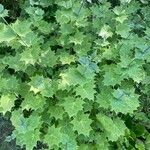
Kirengeshoma palmata
Yellow wax bells
Description
Source: leafsnapKirengeshoma palmata, commonly known as yellow waxbells, is a herbaceous perennial plant native to Japan and Korea. Belonging to the family Hydrangeaceae, this plant can reach up to 1.5 meters in height with a spread of approximately 1 meter. It features large, dark green, lobed leaves that can grow up to 20 cm in length. In late summer or early fall, Kirengeshoma palmata produces beautiful yellow, bell-shaped flowers that are about 3 cm long. These flowers hang in clusters of up to ten blooms from the stems. This plant thrives in partial shade or filtered sunlight and prefers moist, well-drained soil that is not too dry. It is hardy in USDA zones 5-8, although it may need protection from harsh winter conditions. Kirengeshoma palmata is valued not only for its ornamental appeal, with its attractive foliage and stunning blooms but also for its medicinal properties. It has been used to treat inflammation, fever, coughs, and sore throats. Overall, Kirengeshoma palmata makes an excellent addition to any garden. Its unique appearance adds interest throughout the growing season, while its medicinal benefits provide added value for those in need of natural remedies.
Care Guide
💧 Water Every 7 days
Yellow waxbells thrive in consistently moist soil and high humidity, though they can tolerate moderate drought. It's best to water them every two weeks to keep the soil sufficiently moist. As an herbaceous perennial, using mulch is advantageous for retaining moisture and stabilizing temperature during their active growth period.
How should I water Yellow waxbells?
Soaker hoses are a great way to keep leaves and flowers moist without getting the entire plant wet. Simply lay the hose around the plant and leave it on for 30 to 45 minutes until the soil is moist. You can also connect your regular hose, cover it with mulch, or use drip feeders to retain moisture throughout the day. If you have Yellow waxbells planted in pots, it's best to use a watering can. Water the plants until you see the water dripping out from the bottom of the pots. Using a watering can allows you to reach the soil and deeply penetrate the roots for better growth.
What should I do if I give Yellow waxbells too much water or not enough water?
If you notice that you have overwatered your Yellow waxbells, it's important to take a step back and prevent any further damage. Luckily, Yellow waxbells is a hardy plant, so there is a good chance it will survive. It's crucial to allow the plant to dry out by stopping watering. These plants don't tolerate having their roots sitting in water for too long, so aerating the soil can be helpful. There are a few symptoms to look out for if your plant has been overwatered. Premature yellow leaf falling, fewer flowers, and misshapen buds are all signs of overwatering. In more severe cases, you may notice wilted and brown leaves, which can indicate root rot. It's essential to address the overwatering issue promptly. Symptoms of underwatering can sometimes appear similar to overwatering. If your Yellow waxbells is wilting, it could be a sign of underwatering. Check the soil by sticking your finger into it. If the soil feels too dry, this is a clear sign of dehydration. If you suspect your plant is not getting enough water, consider adding some in the evening. Always make sure to check the soil for dryness and follow a regular watering schedule, preferably in the morning.
How often do I need to water Yellow waxbells?
To ensure the health of the Yellow waxbells, it is recommended to water deeply two to three times a week. If you live in a hot climate, it may be necessary to increase the frequency of watering. The plant requires average water levels and prefers moist but well-drained soil. A useful guideline is to check the soil moisture level by feeling it. If the soil is dry to a depth of about 2-4 inches, it is likely time to water. When the plant is placed outdoors, watering 1-2 times a week is usually sufficient, considering it receives additional moisture from rainwater.
How much water does my Yellow waxbells plant need?
The amount of water needed can vary depending on various factors like weather, shade, and species. Yellow waxbells that have been recently planted require more water compared to established ones. For these, watering them with a can of water each week is usually sufficient, especially during the growing season or if they are in pots. When they are outdoors, you can measure the amount of rain they receive using moisture meters. If the soil is dry, make sure to water them thoroughly with a sprinkler. It's better to water less frequently but ensure they receive enough moisture to meet their needs.
Why do I need to water my Yellow waxbells?
It's important to understand the watering needs of various types of plants for successful growth. Yellow waxbells, for example, require a lot of water to thrive, but too much moisture can also cause wilting and root rot. It's important to provide moist soil while ensuring proper drainage to avoid overwatering or underwatering, both of which can lead to issues such as slow flower production and stunted growth.
☀️ Light Partial sun
Yellow waxbells prefers locations with a moderate amount of sunlight, although it can tolerate less sunny, shadier conditions. Originating from habitats with dense tree canopies, it is adapted to grow well in suboptimal light. Excessive light can stress the plant, while too little exposure may prevent it from achieving full bloom.
What are the sunlight requirements for Yellow Waxbells?
Yellow Waxbells (Kirengeshoma palmata) thrives in partial sun, requiring about 3-6 hours of sunlight daily, but it can also grow in full shade, where it gets less than 3 hours of sunlight. This plant's natural habitat includes areas with moderate sunlight, under the canopies of trees, allowing it to adapt to less than optimal light conditions. Although it can tolerate lower light levels, optimal flowering and growth might be compromised with too little sunlight. Carefully observe the movement of sunlight in your garden to find a spot that provides a good balance of light and shade, ensuring the plant's health and happiness.
How does artificial lighting affect Yellow Waxbells indoors?
Artificial lighting can significantly benefit Yellow Waxbells when natural sunlight is insufficient, especially in winter or less sunny indoor spaces. Adequate lighting is crucial for optimal growth. LED lights are recommended due to their ability to mimic natural sunlight by providing specific wavelengths needed by plants. For full sun plants, 30-50W per square foot is ideal; partial sun plants require 20-30W, and full shade plants need 10-20W. The light source should be placed 12-36 inches above the plant, and exposure should last between 8-12 hours per day to simulate natural daylight lengths.
What are the signs of insufficient light in Yellow Waxbells?
When Yellow Waxbells receives inadequate light, several indicators may become apparent. New leaves might grow smaller, and the plant can develop a leggy or sparse appearance due to elongated spaces between leaves or stems. Early leaf drop is another sign, as plants shed older leaves to conserve resources, leading to delayed growth or complete cessation of new growth. Additionally, new leaves may appear lighter in color or exhibit patterns of chlorosis—a condition where leaves turn yellow due to a breakdown of chlorophyll. Excessive sunlight, on the other hand, can lead to symptoms like sunscald, leaf curling, wilting, leaf scorching, and chlorosis, indicating the importance of balanced light exposure.
How can I address light deficiency issues for Yellow Waxbells?
To optimize Yellow Waxbells' growth and address light deficiency, gradual adaptation to sunlight is key. For indoor plants, consider moving them to sunnier spots weekly until they receive 3-6 hours of direct sunlight per day. If moving the plant isn't feasible, using artificial lighting like desk lamps or professional grow lights for at least 8 hours daily can provide the necessary light. For outdoor plants, similarly, transition them to sunnier locations gradually to prevent sunburn. If sunlight is blocked by trees or other obstructions, consider pruning or transplanting smaller plants to a brighter spot during their dormant period, aiming for a location with ample sunlight and good drainage. Note that parts of the plant affected by past insufficient sunlight might not recover, but new growth should be healthy with improved lighting.
🌡️ Temperature 5–25°C
Yellow waxbells are adapted to native temperate environments and prefer a temperature range of 41 to 77°F (5 to 25℃). Adjusting temperatures across seasons to mimic these conditions can help ensure the healthy growth of yellow waxbells.
What temperature range is ideal for growing Yellow Waxbells?
Yellow waxbells, botanically known as Kirengeshoma palmata, thrives best in its native temperate environments, favoring a temperature range of 41 to 77°F (5 to 25°C). To ensure healthy growth, it is beneficial to adjust temperatures to mirror these conditions across different seasons. This plant is highly cold-tolerant and does not necessitate additional frost protection measures during winter. Nonetheless, it is advised to water the plant abundantly before the first freeze in autumn to keep the soil moist and prevent drought and water scarcity during winter and early spring.
How should I care for Yellow Waxbells in low temperatures?
Yellow waxbells exhibits remarkable cold tolerance, yet it's crucial to ensure winter temperatures stay above -30°C. Falling below this threshold might not visibly affect the plant during winter, but could lead to diminished sprouting or complete absence of it come spring. To manage this, it's advisable to remove any parts that fail to sprout once spring arrives, aiding in the plant's recovery and continued growth.
How does Yellow Waxbells react to high temperatures?
Yellow waxbells shows a notable intolerance to high temperatures. Growth ceases and susceptibility to rot increases when temperatures surpass 25°C. To mitigate heat stress, trim away any sunburned or dried-up parts and move the plant to a shaded location, especially away from midday and afternoon sun. Employing a shade cloth can also be effective. Additionally, watering the plant in the morning and evening helps maintain soil moisture and supports plant health during warmer periods.
💨 Humidity
🪴 Soil 5-6
🌱 Fertilizer
For Yellow waxbells, the primary time to fertilize is in early spring when the flowers are starting to form. The proper fertilizer promotes better blooms and helps Yellow waxbells produce attractive flowers. Applying fertilizer in early spring ensures excellent flowering during the season and supplies energy for dormant growth phases.
Why do I need to add plant food to my Yellow waxbells?
Fertilization is important for the Yellow waxbells and other plants because it provides essential nutrients for growth. While Yellow waxbells have relatively low fertilization needs and can sometimes survive without it, annual fertilization can greatly benefit the plant. It helps to maintain the plant's health and may also improve the longevity and quality of its flowers. Therefore, those who want their Yellow waxbells to thrive should regularly fertilize it.
When should I give my Yellow waxbells fertilizer?
The best time to fertilize a Yellow waxbells is in late winter to early spring when it is coming out of dormancy and starting to grow. Fertilizing during this time promotes healthy growth and sets the plant up for a successful season. Although fertilizing in early spring is most beneficial, it is also acceptable to fertilize in the fall. However, it is not recommended to fertilize during summer or winter.
When shouldn't I put fertilizer on my Yellow waxbells?
To ensure the proper growth of Yellow waxbells, it is recommended to fertilize them only in late winter and early spring. This plant has low fertilization needs, so a single annual feeding is enough. Overfertilizing during spring, summer, and fall can lead to complications, except if you missed fertilizing in spring, then fall fertilization is permissible. Furthermore, there is no need to fertilize during winter as the Yellow waxbells are in a dormant phase and do not produce new growth. It is not advisable to fertilize during most of the winter.
What kind of plant food should I use for my Yellow waxbells?
For Yellow waxbells, almost any general-purpose fertilizer with a balanced amount of the main plant nutrients will work well. However, there are specific nutrient blends that can be even more beneficial. Many gardeners believe that higher levels of phosphorus result in stronger roots and better flowers. Since Yellow waxbells is a flowering plant, using a phosphorus-rich fertilizer may be the best approach. You can choose either granular or liquid fertilizer as long as it contains enough nutrients. Besides manufactured fertilizers, organic options like compost and manure can greatly improve the soil for Yellow waxbells. Using these materials will help create a healthy growing medium for your plants.
How should I fertilize my Yellow waxbells?
To fertilize a Yellow waxbells, the most common method is to use granular or pellet fertilizer applied to the soil around the plant. Timing is important, so it's best to fertilize when the plant is transitioning from its dormant phase to active growth. In early spring, wait for shoots to emerge from the soil before applying fertilizer. Alternatively, some people prefer liquid fertilizer, which should be diluted with water before applying. Regardless of the type of fertilizer used, it's a good idea to moisten the soil before, during, and after application.
🪴 Pot & Repot
✂️ Pruning
To care for yellow waxbells, begin by pruning them from early to late spring. Remove any dead or damaged stems to encourage healthy growth and improve air circulation. Light pruning helps maintain the plant's shape, encourages blooming, and reduces the risk of disease. For the best results in terms of both health and appearance, use sanitized tools.
🌿 Propagating
🐛 Diseases & pets
☠️ Toxicity
Characteristics
- Plant Type
- Herb
- Life Cycle
- Perennial
- Genus
- Kirengeshoma
- Family
- Hydrangeaceae
- Hardiness Zone
- 4-5
- Mature Height
- 0.91 m to 1.22 m
- Mature Spread
- 91 cm
- Leaf Color
- Green
- Leaf Type
- Deciduous
- Flower Color
- Yellow
- Flower Size
- 4.06 cm to 5.08 cm
- Bloom Time
- Late summer, Early fall
- Planting Time
- Spring, Winter
- Harvest Time
- Mid fall, Late fall
- Native Area
- South Korea, Japan, China