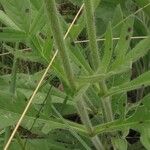
Knautia arvensis
Field-scabious · Gypsy's-rose · Bluebuttons · Field scabiosa · Bluecaps
Description
Source: leafsnapKnautia arvensis, commonly known as field scabious, is a herbaceous perennial plant that belongs to the Caprifoliaceae family. Native to Europe and Asia, it thrives in meadows, grasslands, and open woodlands. The plant can grow up to 60 cm tall, featuring a basal rosette of deeply lobed leaves with toothed edges. Its slender, branched stem boasts small blue-violet flowers that bloom from June to September. These flowers form dense clusters at the top of each stem, attracting bees, butterflies, and other pollinators. Field scabious has been used for centuries for its medicinal properties, particularly its anti-inflammatory effects. Additionally, its vibrant blue-violet color has made it a popular natural dye for textiles. Beyond its medicinal and aesthetic uses, field scabious plays a crucial role in supporting biodiversity. It provides vital food sources for pollinators such as bees and butterflies and serves as an important food source for grazing animals like sheep. Overall, Knautia arvensis is a beautiful wildflower that not only adds vibrant color to the landscape but also supports biodiversity, making it an essential component of our natural ecosystem.
💡 Field scabious plays a crucial ecological role. It serves as a food source for many pollinators and is a host plant for certain butterfly species, particularly their caterpillars. Notably, the rare narrow-bordered bee hawk-moth (Hemaris tityus) relies on it, and it can occasionally support the Marsh fritillary (Euphydryas aurinia) when its primary food plants are unavailable.
🌳 Although unassuming, field scabious once had an unexpected role in the textile industry, supplying a blue dye. Not as renowned as indigo, the plant's capacity to produce a blue pigment was especially prized in certain local craft traditions. The emergence of synthetic dyes caused its use to decline, but renewed interest in natural dyes is restoring its potential within sustainable fashion circles.
Care Guide
💧 Water Every 3 days
Field scabious, native to temperate meadows, thrives with moderate hydration and prefers consistent moisture without being waterlogged. Watering it weekly helps mimic its natural environment. As an herbaceous perennial, field scabious goes dormant during colder months, requiring less water as it prepares for the next growing season.
How should I water my Field scabious plant to keep it healthy?
To properly water the Field scabious, it is recommended to use filtered water that is at room temperature. Tap water may contain harmful particles, so filtered water is the better choice. The water should be at room temperature or slightly warmer because the Field scabious is accustomed to a warm environment and cold water can be a shock to its system. It is advisable to avoid overhead watering as it can cause foliage complications. Instead, it is best to gently apply the filtered room temperature water directly to the soil until it is completely soaked. This method benefits the plant by moisturizing the roots and allowing them to spread and absorb the necessary nutrients from the soil.
What do I need to do if I give my Field scabious plant too much or too little water?
Both overwatering and underwatering can harm the health of your Field scabious, but overwatering is more common. Too much water can cause the stems and leaves to wilt and turn yellow, and it can also lead to diseases like root rot, mold, and mildew that can kill the plant. Underwatering is less likely, as the plant tolerates drought well, but it can still happen. In this case, the leaves may become brittle and brown. It's important to recognize signs of overwatering early to prevent irreversible damage. If you notice these signs, reduce your watering schedule and consider the soil's drainage. Replace poorly draining soil with a loose, well-draining potting mix. If your Field scabious lacks water, simply increase your watering frequency until the signs improve.
How frequently should I give water to my Field scabious plant?
If your Field scabious is in a pot, a precise way to determine if it needs water is by checking the soil with your finger. If the top two to three inches of soil are dry, it's time to water it. The same method can be used if you have planted your Field scabious in the ground outdoors. Once the first few inches of soil have dried out, it's time to water. This method typically requires watering once a week during spring and early fall. In extremely hot weather, you may need to water it twice or more per week. However, mature and well-established Field scabious plants have a remarkable ability to survive drought.
How much water does my Field scabious plant require?
To properly water your Field scabious, don't hold back on the amount of water you give. Wait until the first two to three inches of soil are dry, then give it a thorough watering. Make sure to water enough so that the soil is completely soaked, and excess water flows through the drainage holes at the bottom of the pot. If you don't see any excess water draining out, it means you haven't given enough water. Be careful not to let water accumulate in the soil, as this can harm the plant. On the other hand, if water doesn't drain properly, it could mean that the soil is not draining well, which is not good for the plant's health. If the plant is outside, 1 inch of rain per week should be enough.
How can I water my Field scabious at different stages of growth?
The water needs of the Field scabious depend on its growth stages. When the plant is young or recently transplanted, it requires more water due to the energy spent on developing new roots. These roots need extra moisture for optimal growth. As the Field scabious matures, it will require less water. Another growth stage that may require more water is the blooming period, as the flowers utilize a significant amount of moisture.
☀️ Light Full sun
Field scabious prefers abundant sunlight to thrive and performs worse in much less sunny locations. Native to areas with plenty of sun, it can tolerate lower light but may suffer growth problems, such as paler flowers and puckered foliage, when it doesn't receive enough sun.
What are the sunlight requirements for Field Scabious (Knautia arvensis)?
Field Scabious (Knautia arvensis) thrives in conditions where it can bask in the full glory of the sun, requiring more than 6 hours of sunlight daily to flourish optimally. It can also manage in partial sun, with about 3-6 hours of sunlight, but its growth and bloom quality might be compromised. Observing how sunlight maneuvers through your garden will help in selecting spots that offer an ideal mix of light and shade, ensuring the plants' well-being.
What essentials should be considered for the optimal growth of Field Scabious?
To ensure the optimal growth of Field Scabious, ample sunlight is paramount. Native to sunny regions, these plants perform best when exposed to abundant sunlight. In less sunny spots, they may survive but could experience growth issues, such as paler flowers and less robust foliage. Inadequate sunlight might diminish their vibrancy and health. For indoor plants, artificial lighting can be a savior, especially during winter or in naturally low-light areas. Options like LED lights, which can be tailored to specific plant needs, provide an excellent alternative. When using artificial light, full sun plants require 30-50W/sq ft, partial sun plants 20-30W/sq ft, and full shade plants 10-20W/sq ft. Properly situating the light source and adjusting its duration to mimic natural daylight hours can significantly benefit plant growth.
What symptoms indicate insufficient sunlight for Field Scabious?
When Field Scabious does not receive adequate sunlight, several symptoms might manifest, including the growth of smaller leaves than previously, leggy or sparse growth, premature leaf drop, and halted or slowed new growth. New leaves might appear paler, indicating a deficiency in chlorophyll and essential nutrients. Additionally, chlorosis, or the yellowing of leaves, can result from excessive sunlight, impairing photosynthesis. Sunscald, leaf curling, wilting, and leaf scorching are other symptoms that can arise from both insufficient and excessive sun exposure, affecting overall plant health and vitality.
How can I address sunlight-related issues for Field Scabious?
To address sunlight deficiencies for Field Scabious, gradually acclimatize plants to receive at least 6 hours of direct sunlight daily by moving them closer to a sunlit spot week by week. Indoors, use south-facing windows for natural light and consider artificial grow lights to supplement sunlight, keeping them on for about 8-12 hours daily. For outdoor plants, also move them gradually to sunnier locations to prevent sunburn. If obstructions shadow your plants, prune obstructive branches or relocate smaller plants to sunnier spots, ensuring they have good drainage. Note that parts of the plant that have already been damaged by insufficient light may not recover, but new growth will be healthy with improved sunlight conditions.
🌡️ Temperature 10–35°C
Field scabious comes from temperate regions and does best in temperatures of 68 to 95 °F (20 to 35 ℃). It favors warmer conditions and may need measures like supplemental heating and extra sunlight during colder seasons.
What is the native environment of Field scabious?
Field scabious, botanically known as Knautia arvensis, is native to temperate environments. It thrives in temperatures ranging between 68 to 95 °F (20 to 35 °C), preferring warmer conditions to grow optimally. Therefore, it may need additional heating and sunlight during colder seasons to flourish.
Does Field scabious need frost protection in winter?
Field scabious exhibits strong cold resistance and usually does not require special frost protection measures during winter. Nonetheless, if winter temperatures are anticipated to drop below -25°C, it is crucial to provide cold protection. This can involve covering the plant with insulation materials like soil or straw. It's also advisable to water the plant abundantly before the first freeze in autumn to maintain moist soil, which helps in preventing drought and water scarcity for the plant during winter and early spring.
How does low temperature affect Field scabious, and what are the solutions?
Field scabious is cold-tolerant and prefers temperatures above 20°C. During winter, ensuring the temperature remains above 0°C is beneficial. However, if the temperature falls below -25°C, the plant might not show immediate adverse effects during winter, but it could lead to a decrease in sprouting or potentially no sprouting at all come springtime. The recommended solution for this is to remove any parts of the plant that have failed to sprout in spring.
What happens if Field scabious is exposed to high temperatures, and how can this be addressed?
When exposed to high temperatures, particularly above 35°C, Field scabious may show signs of stress. This includes lightening of the leaves, curling, susceptibility to sunburn, and in extreme cases, wilting and drying of the entire plant. To mitigate these issues, sunburned and dried-up parts of the plant should be trimmed away. It's also advisable to move the plant to a shaded location, particularly from the midday and afternoon sun, or to use a shade cloth. Additionally, watering the plant in the morning and evening can help keep the soil moist and reduce temperature stress.
💨 Humidity
🪴 Soil 5-7
🌱 Fertilizer
A single fertilizer application in spring is typically adequate for Field scabious, although multiple feedings can maximize growth. Apply fertilizer once every month to a month and a half. Fertilization improves leaf appearance and function, encouraging even color and a healthy texture. It also promotes root growth and nutrient uptake for long-term plant health.
When should I fertilize my Field scabious?
If you grow Field scabious outdoors every year, you will notice new growth in early spring. This signals that it is time to start fertilizing. Typically, one application of fertilizer is sufficient for Field scabious in the spring. However, if you want to promote maximum growth, you can fertilize multiple times from spring to early summer. In this case, you can feed the Field scabious approximately once a month or every month and a half.
When is it not a good idea to add fertilizer to my Field scabious plant?
During the late fall and winter, your Field scabious will go into a dormant phase and stop growing. So, it's best not to fertilize it during this time. In the spring and summer, if you choose to fertilize, reduce the amount as summer approaches because the growth rate of your Field scabious will also slow down. It's important to remember that you should never fertilize when the weather is extremely hot or the soil is very dry, as this can stress and damage your Field scabious, causing it to die prematurely.
How can I make my Field scabious plant healthier?
In early spring, wait until your Field scabious has just barely emerged from the soil's surface. Once you see this, apply a granular slow-release fertilizer with a balanced formula to the soil around the base of your Field scabious. You can repeat this process later in the season if desired. When reapplying fertilizer, make sure to apply it to the soil at the base of the plant, not directly on the plant itself. This may involve moving some leaves to access the soil above the roots. It is also recommended to water your Field scabious before and after fertilizing.
Why is it important to add fertilizer to my Field scabious plant?
The main structure of the Field scabious is composed of its leaves. Fertilization is crucial for ensuring that these leaves not only look great but also function effectively. Proper fertilization promotes consistent color and a healthy texture in the leaves. Moreover, it also benefits the plant below the soil's surface by stimulating the growth of new roots and maintaining the existing root system. This not only maintains the plant's current health but also enhances its ability to absorb soil nutrients in the future.
What kind of fertilizer does my Field scabious plant require?
Choosing the best fertilizer for a Field scabious is actually quite simple. These plants will thrive on a general-purpose garden fertilizer that contains equal amounts of nitrogen, phosphorus, and potassium. A fertilizer with a ratio of 10-10-10 or something similar will work effectively. It's important to avoid fertilizers with excessive nitrogen if you're uncertain. The majority of suitable fertilizers for Field scabious come in granular form, and they should be slow-release for ease of application. Additionally, using organic soil amendments like compost can be beneficial when feeding your Field scabious.
🪴 Pot & Repot Every 12 months
✂️ Pruning
Field scabious is a perennial herb characterized by its pincushion-like flowers. To promote healthier growth and more abundant blooms, regular pruning is beneficial. The best time to prune is from early to late spring, which encourages bushier growth and stronger flowers. Throughout the growing season, be sure to deadhead spent flowers to keep the plant looking its best. In autumn, cut back the plant to improve air circulation and prepare it for the next growth cycle.
🌿 Propagating
🐛 Diseases & pets
☠️ Toxicity
You can take Knautia Arvensis for treating cough and sore threat. Also you can treat different skin conditions like eczema, rashes, anus, cracked skin and anal itching.
Characteristics
- Plant Type
- Herb
- Life Cycle
- Perennial, Annual
- Genus
- Knautia
- Family
- Caprifoliaceae
- Hardiness Zone
- 6-9
- Mature Height
- 25 cm to 91 cm
- Mature Spread
- 40 cm
- Leaf Color
- Green
- Leaf Type
- Deciduous
- Flower Color
- Purple, Lavender
- Flower Size
- 2.03 cm to 3.05 cm
- Bloom Time
- Early summer, Mid summer
- Planting Time
- Spring
- Harvest Time
- Mid summer, Late summer
- Native Area
- Central Europe