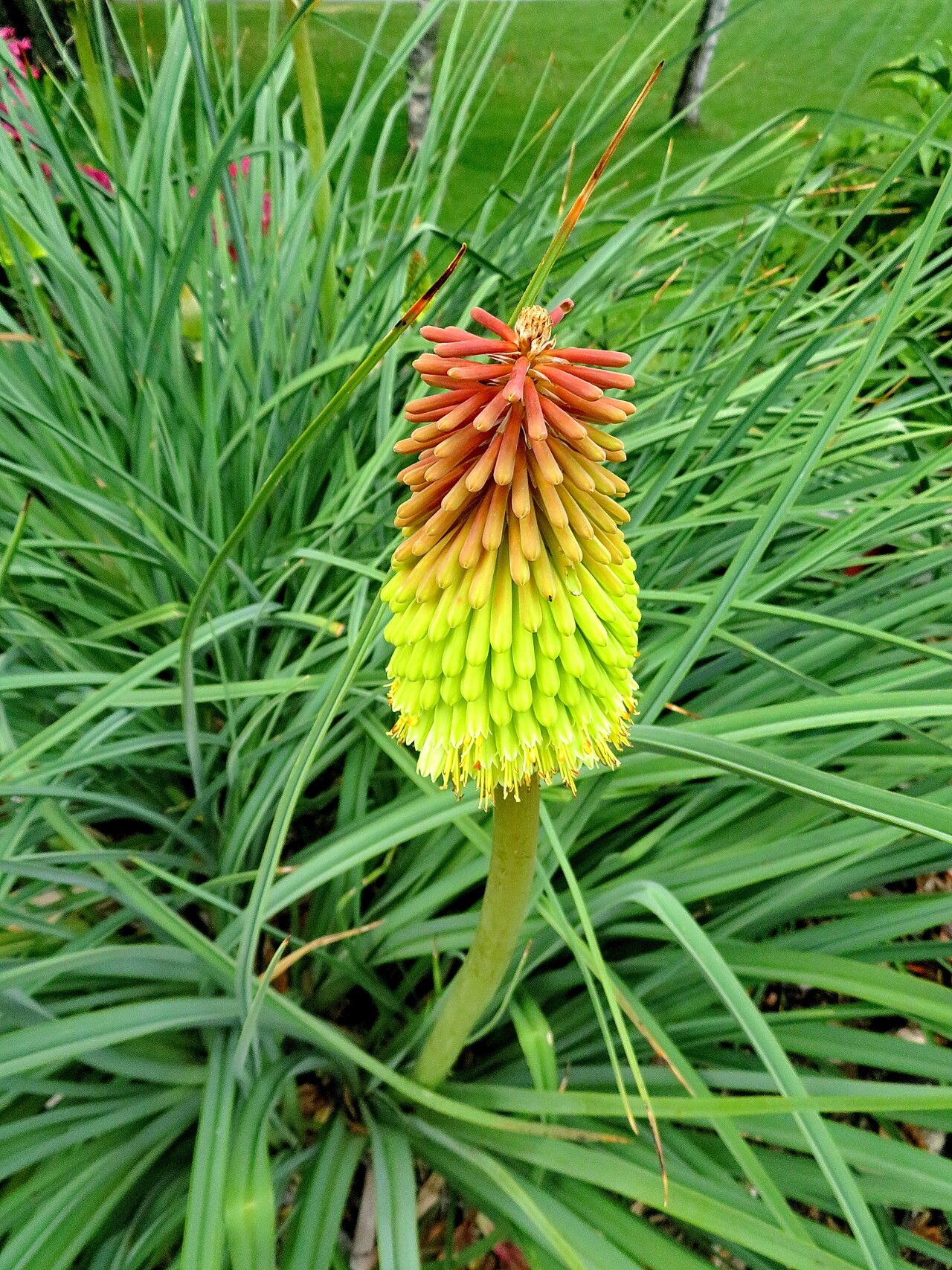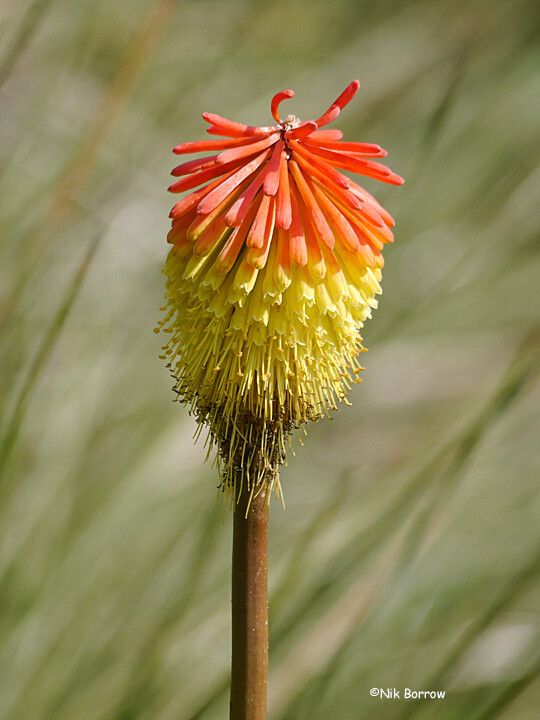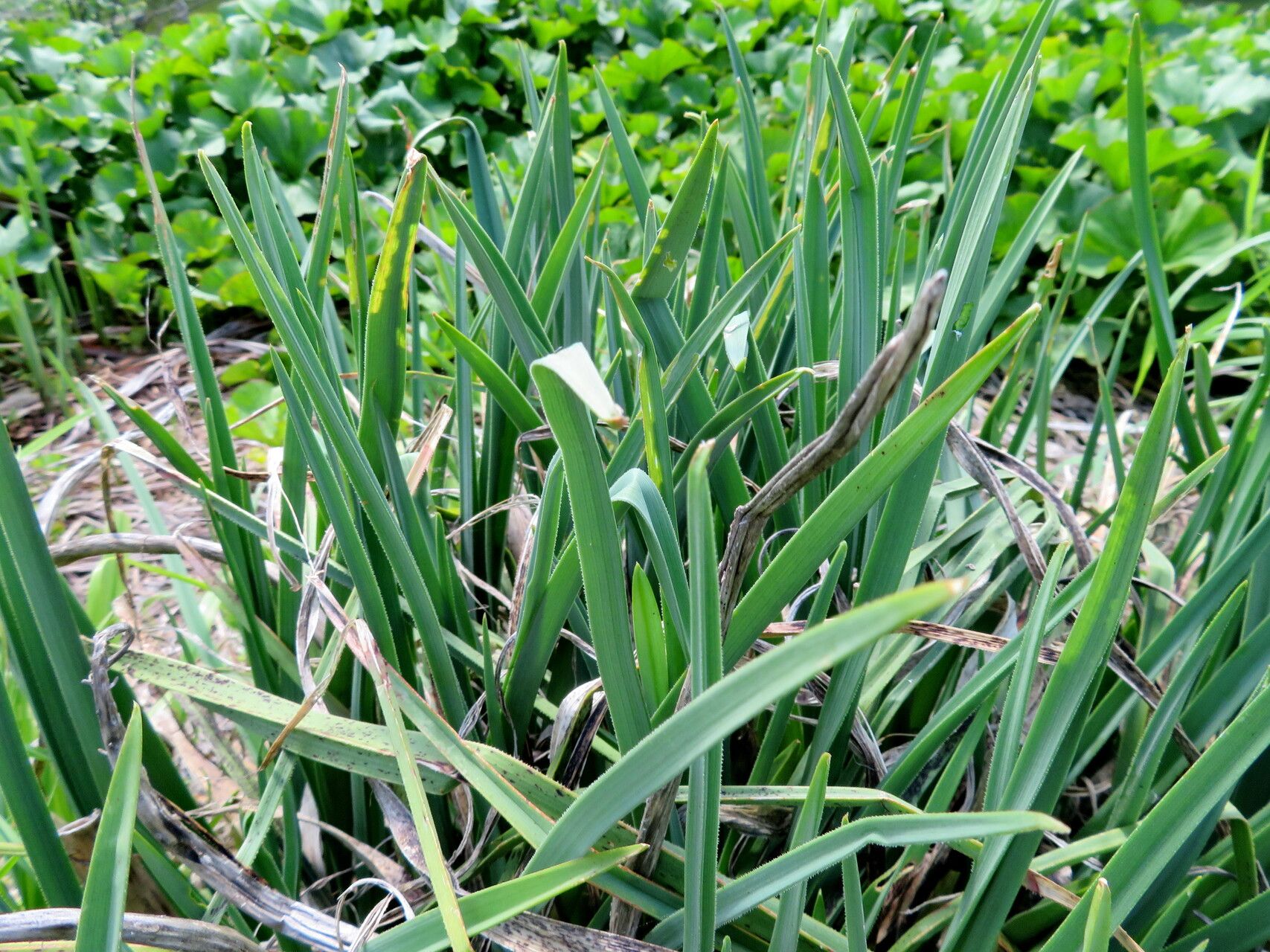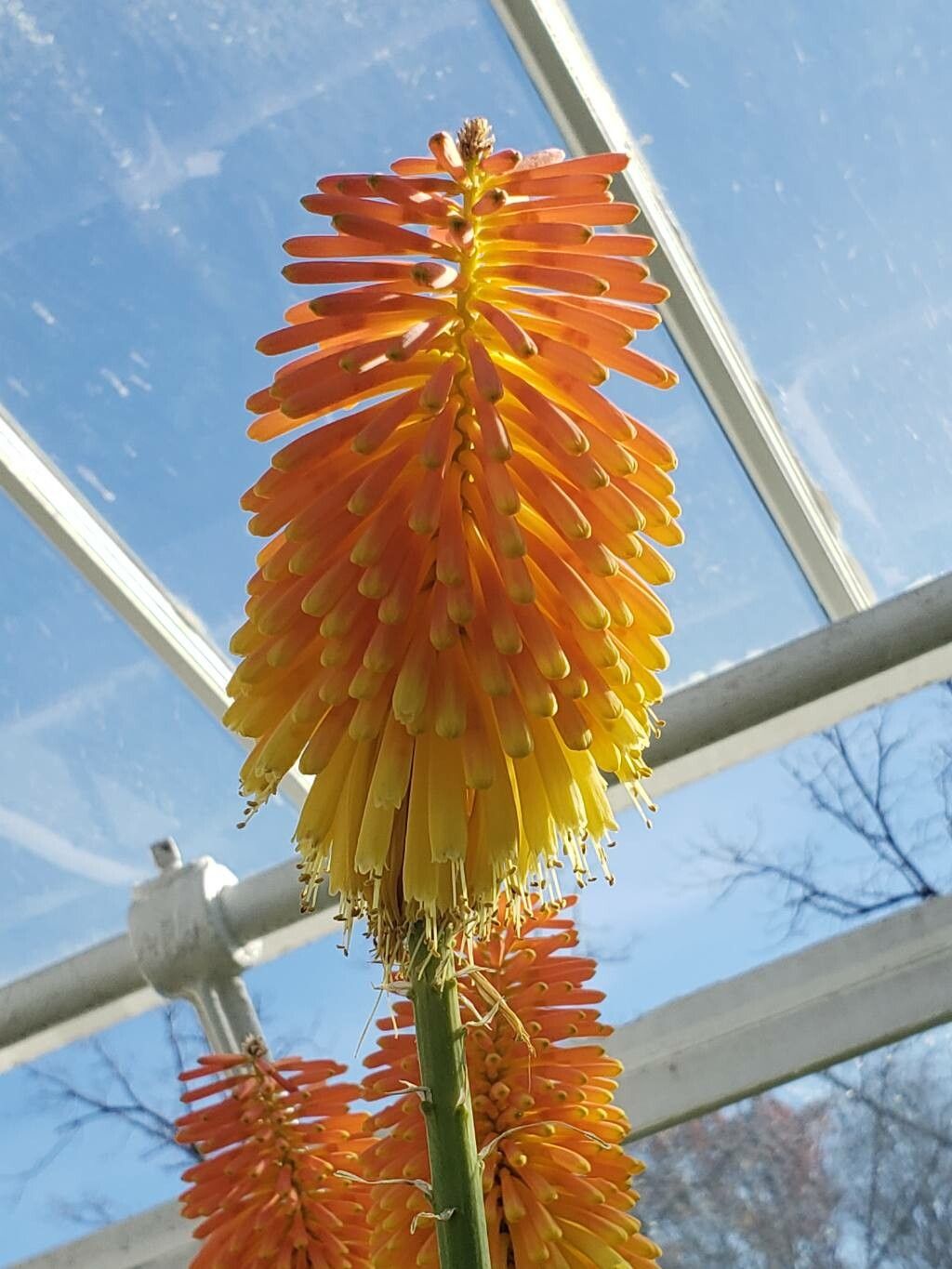
Kniphofia rooperi, Rooper's red-hot poker, is a species of flowering plant in the family Asphodelaceae, native to the Eastern Cape of South Africa. Growing to 1.2 m (3.9 ft) tall, it is a robust evergreen perennial with strap-shaped leaves produced at an angle from the main stem. In autumn the stout central stems bear flattened oval flowerheads consisting of many tubular florets packed closely together. Green in bud, the flowers open to bright red and fade from the base to yellow and brown, thus giving the appearance of a red-hot poker.
Winter Poker is fairly disease-resistant and generally not prone to illnesses. Still, it can be vulnerable to pests and diseases found in its immediate environment. Such infections are generally mild. Regarding care, the plant needs moderate maintenance. It requires regular pruning to keep an attractive appearance and promote healthy growth. Fertilizing can also encourage flowering. Winter Poker is appropriate for anyone with outdoor space, such as a garden or patio, and does not demand much care experience. It may need more attention when grown indoors.
How to keep Kniphofia Rooperi.
Light
Winter Poker is a sun-loving, perennial herbaceous plant native to open habitats, often flourishing in meadows and grasslands. It prefers full sun but can also tolerate partial sun.
Water
Kniphofia rooperi, a plant native to South Africa's Eastern Cape, thrives in subtropical environments. It prefers consistent moisture but can withstand short dry spells. To prevent root rot, it requires weekly watering and well-draining soil. The plant flourishes outdoors when it receives adequate rainfall or irrigation during the growing season.
Temperature
Winter Poker can adapt to a broad range of temperatures, yet its distribution may still be constrained by specific combinations of moisture and heat. It does best in warm summer climates with sufficient rainfall or watering. Extended stretches of cloudy, rainy weather, as well as prolonged high temperatures, raise the likelihood of Winter Poker dying. In winter, proper protection from cold can enhance the plant's survival rate.
Fertilizer
The best time to fertilize a Winter Poker is in early spring, as it emerges from dormancy and starts active growth. Fertilizer supplies essential nutrients for healthy development. Although Winter Poker has modest fertilization requirements, feeding it yearly can improve its survival and encourage fuller, longer-lasting blooms.
Pruning
Kniphofia rooperi is known for its striking flower spikes and evergreen leaves. To keep the plant healthy, prune it in early spring to remove any damaged foliage and encourage new growth. After the flowers have bloomed, cut back the flower stalks to maintain a tidy appearance. Always use clean tools to prevent the spread of disease. Regular pruning not only improves airflow but also reduces pests and enhances the plant's overall health.
Pot & Repot
To thrive, Kniphofia rooperi needs pots with excellent drainage. This allows excess water to escape and helps prevent root rot. Ensuring proper drainage is essential for maintaining healthy moisture levels and overall plant health.
Botanical profile.
- Plant Type
- Herb
- Life Cycle
- Perennial
- Genus
- Kniphofia
- Family
- Asphodelaceae
- Hardiness Zone
- 6-9
- Mature Height
- 1.22 m
- Mature Spread
- 91 cm
- Leaf Color
- Green
- Leaf Type
- Deciduous
- Flower Color
- Red, Orange
- Flower Size
- 5.08 cm to 7.62 cm
- Bloom Time
- Late summer, Early fall, Mid fall
- Planting Time
- Spring, Summer
- Harvest Time
- Late fall, Early winter
- Native Area
- South Africa