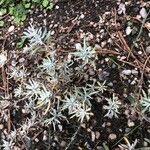
Krascheninnikovia ceratoides
Pamirian winterfat
Description
Source: leafsnapKrascheninnikovia ceratoides, commonly known as winterfat or white sagebrush, is a small shrub native to the western United States and Canada. It typically grows to a height of 1 to 3 feet and features small, silver-gray leaves that are covered in fine hairs. During the summer months, the plant produces inconspicuous flowers that are followed by small fruits, each containing a single seed. Winterfat is vital for wildlife, providing food and shelter for various animals, including pronghorn antelope, mule deer, sage grouse, and various rodents. Additionally, it has medicinal properties and has been used by Native American tribes for centuries to treat ailments such as coughs and colds. The plant is well-adapted to harsh desert environments, thanks to its deep root system, which allows it to survive prolonged periods of drought. Winterfat also plays an essential role in preventing soil erosion by stabilizing soil with its roots. Overall, Krascheninnikovia ceratoides is an ecologically and culturally significant species in the western United States.
Care Guide
💧 Water Every 7 days
Pamirian winterfat, a plant native to dry regions, is exceptionally drought-tolerant and requires very little water. It only needs to be watered every 2-3 weeks. Its ability to store water efficiently makes it perfect for xeriscaping, as it can withstand harsh climates and prolonged dry periods.
What's the best way to water my Pamirian winterfat plant?
For promoting excellent root development, consider placing a garden hose at the base of the plant. It's important to avoid spraying the leaves directly, especially if they are outdoors and exposed to direct sunlight. To ensure the roots are well-moistened, try using bubblers or soaker hoses for individual plants or the entire garden/bed. When adding or removing plants, using soaker hoses will help the roots penetrate deeply. After watering, remember to drain any excess water and allow the soil to dry before watering again. For disease prevention, water at ground level instead of spraying the leaves. On a sunny day, it can be beneficial to spray the entire bush with water. Whether your plant is potted or in-ground, keep in mind that Pamirian winterfat prefers deep watering rather than light sprinkling.
What should I do if I give too much or too little water to Pamirian winterfat?
If you overwater your Pamirian winterfat, the leaves may turn yellow, drop off, and wilt. The plant may also appear dull and unhealthy, with mushy stems. In this case, it's best to adjust your watering schedule. On the other hand, wilting can also be a sign of under watering. If the leaves become crispy and dry, it indicates under watering, whereas overwatered leaves will be soft and wilted. If the soil is dry and simply watering is not enough, give the plant a thorough watering. However, even with enough water, the Pamirian winterfat may continue to have dry yellow leaves for a few days due to damage to its root system. Once the plant returns to normal, the yellowing of leaves will cease. When keeping the Pamirian winterfat indoors, always check the moisture levels and avoid overwatering. Look out for signs of black spots, and if present, allow the soil to dry in the pot for a few days. Overwatering can lead to root rot, and if you observe discolored and slimy roots, consider transferring the plant to a different pot. Preventing root rot is crucial, so don't let the soil become too soggy. When planting the Pamirian winterfat outdoors, make sure to dig a little deeper. If the soil feels too dry when checked with your fingers, it might indicate underwatering. In this case, adequate watering is necessary to help the plant recover.
How often do I need to water my Pamirian winterfat?
The Pamirian winterfat prefers deep and infrequent watering, especially when planted in pots. Due to limited water storage in pots, the soil tends to dry out quickly, requiring watering every 3 to 5 days in cold regions. It is best to water the plant early in the morning when the soil is dry, both indoors and outdoors. To determine if watering is necessary, check the soil - if the top 2-3 inches are dry, it's time to water. On hot days, monitor the soil moisture daily, as heat can quickly dry out the pot. If you have a garden, irrigation of the soil is also necessary. In hot climates, watering once a week is recommended when the top 2-3 inches of soil are dry. Be mindful of existing rainfall before adding water to prevent root rot. Pamirian winterfat typically grows in spring and fall. For outdoor plants, adding 3 to 4 inches of mulch helps conserve water. Sandy soil requires more frequent watering since it drains faster, while clay soils can go 2-3 days without watering to prevent root rot. Keeping track of watering dates and monitoring drooping leaves can help ensure timely watering.
How much water does my Pamirian winterfat plant need?
The Pamirian winterfat usually needs around a gallon of water on a regular basis. For potted plants, water them deeply until you see water dripping from the bottom of the pot, then wait for the soil to dry before watering again. To determine how much water you've given your plant in a week, you can use a water calculator or a moisture meter. During the flowering period, provide plenty of water but allow the moisture to evaporate afterwards to prevent root rot. If the Pamirian winterfat is planted outdoors with sufficient rainfall, it may not need extra watering. When it is young or newly planted, make sure it receives 1-2 inches of rain per week. As it grows, it can survive solely on rainfall. Only when the weather is extremely hot or there is no rainfall for 2-3 weeks should you consider giving it a thorough watering during the cooler part of the day to avoid heat damage. Additional watering is necessary during prolonged dry spells.
Should I change how often I water my Pamirian winterfat depending on the time of year or the weather conditions?
There are several important watering considerations for the Pamirian winterfat plant. During the spring and fall growing seasons, it's important to keep the soil consistently moist but not overly saturated. The plant thrives when the soil alternates between dry and moist conditions. In the summer, hot weather can cause water to evaporate quickly, so additional watering may be necessary, especially if there is a lack of rainfall. However, during the winter when the plant goes dormant, it generally requires less water. To aid in moisture evaporation, it can be placed in a well-draining soil mixture, such as terracotta. Once the plant starts leafing out and going dormant in the spring, watering can be skipped, relying on fall and winter rains to sustain it. Good drainage is crucial for the Pamirian winterfat, particularly during the winter, as it doesn't tolerate ponding or drought. When planting it in a pot, root growth is limited, so regular watering is important, especially in the summer. Deep soaking the entire root system once or twice a week, depending on the weather, is preferable to shallow sprinkles that may encourage fungal growth and only reach the surface roots. Even during dormancy in the fall and winter, it's best to avoid completely drying out the plant. However, excessive water should also be avoided as the plant is sensitive to sitting in water for extended periods, which can lead to death during winter. Applying mulch can help reduce stress, conserve water, and promote healthy blooms.
☀️ Light Full sun
Pamirian winterfat comes from open habitats like sunny meadows and forest edges, which provide plenty of light. It does best in Full Sun but will also tolerate Partial Sun, adjusting well to different sunlight conditions.
How many hours of sunlight does Pamirian winterfat need per day to grow well?
To promote healthy growth, ensure that Pamirian winterfat gets a minimum of 3-6 hours of daily sunlight. Most plants that tolerate partial sun can also flourish in full sun. However, because they need less light for photosynthesis, they are more adaptable compared to plants that necessitate either full sun or partial shade.
What kind of sunlight does Pamirian winterfat need?
Pamirian winterfat thrives when exposed to full or part sun. It performs best when given direct morning light, but during summer, it requires protection from the intense afternoon sun. In temperate environments, excessive exposure to hot afternoon sun can result in leaf burns, negatively impacting the plant's health and appearance.
Can the sunlight harm Pamirian winterfat? How can we shield Pamirian winterfat from the damage caused by the sun and heat?
Pamirian winterfat, when planted indoors and then moved outdoors, can easily be damaged by direct sunlight. To prevent sunburn from overexposure, it is best to gradually move the pots from a shaded area to a brighter spot. However, even plants acclimated to summer sun can still be harmed by extreme heat. During a heatwave, it is important to keep the soil consistently moist to help the plants deal with excessive heat levels. Protecting sensitive Pamirian winterfat during extreme weather events can be accomplished by moving container plants to areas with afternoon shade or by erecting a shade cloth over them.
Should I keep Pamirian winterfat out of the sun?
Pamirian winterfat benefits from bright morning sun and some full sun exposure, but the harsh, hot midday sun of summer can be overwhelming for it. If you plant it in the ground, it will gradually adjust to the increasing intensity of the summer sun. However, potted plants that have been kept indoors or in a protected area can be harmed if suddenly exposed to direct summer sun in the hottest part of the day. To safeguard the plant from the intense afternoon summer sun, it's best to plant or place it in a shaded area during midday. This can be achieved by positioning it under taller trees and plants, a building, or a landscape feature.
What will happen if Pamirian winterfat does not get enough sunlight?
If Pamirian winterfat doesn't get enough sunlight, it may turn pale green or have drooping, yellow leaves. While some leaf dropping is natural, if leaves are falling off without any new ones growing in their place, it means something is amiss. If the plant does manage to grow in low light, the new growth is usually weak, pale, and susceptible to bugs. By paying attention to these signals and adjusting the lighting conditions, the plant will greatly benefit.
🌡️ Temperature 5–35°C
Pamirian winterfat is highly adaptable to a broad range of climates, from blazing summers to cold winters. It does have a preferred temperature window for growth. If temperatures become too high, the plant can experience heat and humidity stress that may kill it. In areas where temperatures approach the lower limit of its cold tolerance, providing insulation to protect the plant is important.
💨 Humidity
🪴 Soil 6-8
🌱 Fertilizer
Fertilize your Pamirian winterfat in early spring to encourage healthy growth. Regular feeding boosts overall health, producing vigorous growth, increased tolerance of harsh conditions, and stronger resistance to pests and diseases. Follow a consistent fertilization routine for your Pamirian winterfat to maintain foliage that is vibrant, deeply colored, and lush.
🪴 Pot & Repot
✂️ Pruning
Pamirian winterfat is a hardy, drought-tolerant shrub that benefits greatly from early spring pruning. Pruning during this time encourages new growth and helps maintain the shrub's shape. Regular pruning also enhances air circulation, which reduces the risk of disease. It's important to use clean tools for pruning to prevent contamination. Overall, this practice improves the shrub's health and resilience.
🌿 Propagating
🐛 Diseases & pets
☠️ Toxicity
Characteristics
- Plant Type
- Shrub
- Life Cycle
- Perennial
- Genus
- Krascheninnikovia
- Family
- Amaranthaceae
- Hardiness Zone
- 4-9
- Mature Height
- 91 cm
- Mature Spread
- 30 cm to 76 cm
- Leaf Color
- Silver, Gray
- Leaf Type
- Semi-evergreen
- Flower Color
- Yellow, Green
- Flower Size
- 0.20 cm
- Bloom Time
- Late summer, Early fall
- Planting Time
- Spring
- Harvest Time
- Mid fall, Late fall
- Native Area
- Nepal, Egypt, Turkey, Austria, Pakistan, Morocco, Ukraine, China, Uzbekistan, Russia, Afghanistan, Hungary, Iraq, Kazakhstan, Spain, Mongolia, Iran, Romania, Turkmenistan