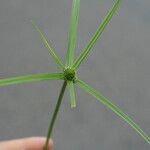
Kyllinga polyphylla
Navua sedge · Greater kyllinga
Care Guide
💧 Water
☀️ Light Partial sun
Navua sedge occurs naturally in habitats like forest understories and rocky areas, where it is exposed to natural shade. It prefers partial sun but can also tolerate full sun or full shade, demonstrating its versatile, hardy nature.
🌡️ Temperature 15–37.8°C
Navua sedge comes from tropical areas where the climate is usually warm and humid. Consequently, it is adapted to high heat and moisture. It does not tolerate sudden temperature changes and prefers a steady temperature, so indoor temperature fluctuations should be avoided. It typically cannot endure cold and requires warmer conditions for growth. If the ambient temperature drops too low, the plant may stop growing or even die.
💨 Humidity
🪴 Soil 6-7
🌱 Fertilizer
Navua sedge needs extra nutrients to encourage healthy new growth. In spring, applying compost around the plant’s base will effectively supply the nutrients it requires. Fertilizing supports vigorous growth and helps the plant withstand diseases and pests.
🪴 Pot & Repot
✂️ Pruning
🌿 Propagating
🐛 Diseases & pets
☠️ Toxicity
Characteristics
- Plant Type
- Grass
- Life Cycle
- Perennial
- Genus
- Kyllinga
- Family
- Cyperaceae
- Hardiness Zone
- 8-11
- Mature Height
- 0.61 m to 1.22 m
- Mature Spread
- 30 cm to 61 cm
- Leaf Color
- Dark Green
- Leaf Type
- Evergreen
- Flower Size
- 0.20 cm to 0.25 cm
- Bloom Time
- Summer, Early fall, Mid fall
- Planting Time
- Spring, Summer, Autumn, Winter
- Harvest Time
- Late summer, Fall, Early winter
- Native Area
- Malawi, Somalia, Angola, South Africa, Sudan, Madagascar, Nigeria, Congo, Kenya, Uganda, Tanzania, Cameroon, Burundi, Togo, Congo (DRC), Botswana, Central African Republic