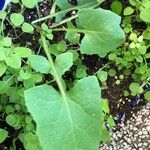
Lactuca muralis
Wall lettuce · Ivy-leaved lettuce
Description
Source: leafsnapLactuca muralis, commonly known as wall lettuce, is a species of flowering plant in the Asteraceae family. Native to Europe and western Asia, it has also been introduced to North America. This plant typically thrives in rocky or gravelly areas, along walls or roadsides, and in disturbed habitats such as waste sites. Wall lettuce features a rosette of deeply lobed leaves with toothed edges. The leaves are green with a slightly hairy texture and can grow up to 20 cm long. From June to August, the plant produces small yellow flowers. Historically, the leaves of wall lettuce have been used for medicinal purposes due to their high content of lactucarium, a compound with sedative properties similar to opium, but without the addictive qualities. Traditionally, it was used as a remedy for insomnia and anxiety. Wall lettuce is also edible and can be used in salads or cooked like spinach. However, it should be consumed in moderation due to its bitter taste, which is attributed to the lactucarium content. Overall, Lactuca muralis is an interesting plant with both medicinal properties and culinary uses. It can be found growing along walls or in rocky areas throughout Europe and western Asia.
🎭 Purity, Safeguarding, Affection
Care Guide
💧 Water Every 7 days
Wall lettuce thrives in environments with high humidity and regular rainfall, needing weekly watering to maintain its lush foliage. It's important to note that it is neither drought-tolerant nor does it flourish in overly wet conditions. As a herbaceous outdoor plant, wall lettuce benefits from rainwater during the growing season.
How should I water my Wall lettuce?
To ensure the health of your Wall lettuce, it is recommended to use filtered water at room temperature or slightly warmer. Tap water may contain harmful particles that can affect the plant. The Wall lettuce is accustomed to warm environments, so cold water can be a shock. Additionally, it is best to avoid overhead watering, as it can lead to issues with the foliage. Instead, focus on thoroughly saturating the soil with filtered water, as this helps moisten the roots and aids in nutrient absorption.
What do I do if I give my Wall lettuce too much or too little water?
Overwatering is a common issue for Wall lettuce and can cause wilting and yellowing of its stems and leaves. It can also lead to diseases like root rot, mold, and mildew, which can be fatal for the plant. Underwatering is less common but can result in brittle and brown leaves. It's important to recognize the signs of overwatering early on to prevent irreversible damage. If you notice these signs, reduce your watering schedule and check the soil drainage. Poorly draining soil should be replaced with a well-draining potting mix. If you suspect underwatering, simply increase your watering frequency until the signs improve.
How often do I need to water my Wall lettuce?
If your Wall lettuce is in a pot, the best way to know if it needs water is to stick your finger into the soil. If the top two to three inches are dry, it's time to water it. If you're growing Wall lettuce outdoors in the ground, you can use the same method. Once the top few inches of soil have dried out, it's time to water. During spring and early fall, you'll typically need to water this plant about once a week. In very hot weather, you may need to increase watering to twice a week or more. However, mature Wall lettuce plants can handle drought well.
How much water does my Wall lettuce require?
To properly water your Wall lettuce, don't hold back on the amount of water you give. Make sure the top two to three inches of soil are dry, and then water the plant thoroughly. It's important to soak the soil completely, allowing excess water to flow out of the drainage holes at the bottom of the pot. If you don't see any water draining, you may have not given enough water. However, it is crucial not to let the water accumulate inside the soil, as it can harm the plant. On the other hand, if water is not draining properly, it could mean that the soil doesn't drain well, which is not good for the plant's health. If the plant is grown outside, 1 inch of rain per week should be enough.
How do I properly water my Wall lettuce as it grows?
The water requirements of Wall lettuce can vary depending on its growth stages. In the early years or when it is newly transplanted, more water is necessary because it focuses on developing new roots. These roots need extra moisture to support future growth. As the plant matures, it requires less water. Additionally, during the bloom period, Wall lettuce may need increased watering due to the energy required for flower development.
☀️ Light Partial sun
Wall lettuce does best in sites that receive plenty of morning sun while being protected from midday and afternoon light. Its native habitat is shaded woodlands or forest margins, so it does not require strong sunlight to grow. While it tolerates a range of light levels, excessive or insufficient sun can hinder its healthy growth.
What are the sunlight requirements for Wall lettuce?
Wall lettuce thrives best in conditions that emulate its original shaded woodland or forest edge habitats. It requires ample morning sun but needs to be protected from the harsh midday and afternoon sun. The plant can grow under varying light conditions; however, both excessive and insufficient sunlight can hamper its growth. For indoor plants, when natural light is not enough, artificial lighting becomes essential. LED lights can be particularly beneficial as they can be tailored to provide specific light wavelengths needed by the plants, with full sun plants needing 30-50W/sq ft, partial sun plants requiring 20-30W/sq ft, and full shade plants needing 10-20W/sq ft of light.
What symptoms indicate Wall lettuce is getting too much or too little light?
Symptoms of improper lighting in Wall lettuce include small or pale new leaves indicating light deficiency, and chlorosis or sunscald showing excessive light exposure. Other signs of inadequate light are leggy growth, faster leaf drop, and stopped or slow growth. In contrast, excessive sunlight may cause leaf curling, wilting, and scorching. These symptoms help identify if the plant is stressed due to too much or too little sunlight, enabling adjustments to its environment.
How can I adjust my Wall lettuce's light exposure to promote healthier growth?
To ensure healthier growth for Wall lettuce under varying light conditions, gradually adjust its exposure to sunlight. For indoor plants, gradually move them to sunnier spots each week, aiming for 3-6 hours of sunlight daily, or use artificial lighting such as desk or ceiling lamps for at least 8 hours a day. Outdoors, similarly move the plants to incrementally sunnier locations week by week to prevent sunburn. Reducing obstructions like pruning trees can also increase sunlight for ground-planted Wall lettuce. If the plant is small, consider transplanting it during its dormant period in late winter or early spring to a sunnier spot with proper drainage.
🌡️ Temperature 15–32.2°C
Wall lettuce originates in temperate climates and performs best at 59 to 89.6 °F (15 to 32 ℃). As the seasons change, it may be necessary to modify its environment to keep temperatures within that range for optimal growth.
What is Wall lettuce and where is it native to?
Wall lettuce, botanically known as Lactuca muralis, is native to moderate temperature environments. It thrives best in temperatures ranging from 59 to 89.6 °F (15 to 32 °C), indicating its preference for a moderate climate for optimal growth.
How should Wall lettuce be cared for in changing seasons?
As seasons change, it's important to adjust the surroundings of Wall lettuce to maintain a temperature range between 59 to 89.6 °F (15 to 32 °C) for optimal growth. It has strong cold resistance; hence, special frost protection measures are usually not required. However, if winter temperatures are expected to drop below -10°C, it's crucial to provide cold protection by covering the plant with soil or straw. Furthermore, before the first freeze in autumn, watering the plant abundantly to ensure the soil remains moist and enters a frozen state can help prevent drought and water scarcity during winter and early spring.
What are the key symptoms and solutions for Wall lettuce in low temperature conditions?
Wall lettuce is cold-tolerant, thriving best above 15°C, and should be kept above -5°C during winter. If temperatures fall below -10°C, there may not be any noticeable changes during winter, but there could be a decrease in sprouting or even no sprouting in spring. The solution for such cases is to remove any parts of the plant that have failed to sprout in spring.
How does high temperature affect Wall lettuce and what solutions are recommended?
During the summer, Wall lettuce should be kept below 32°C to prevent adverse effects. Temperatures exceeding 35°C can cause the leaves to become lighter in color, prone to curling, susceptible to sunburn, and in severe cases, the plant may wilt and become dry. To mitigate these effects, trim away sunburned and dried-up parts, move the plant to a location that provides shade from the midday and afternoon sun, or use a shade cloth. Additionally, watering the plant in the morning and evening to keep the soil moist is recommended.
💨 Humidity normal (40-60%)
This plant will thrive in moderate humidity, which is probably the level in your home. However, misting it a few times a week can be very beneficial. Make sure the room has good ventilation.
🪴 Soil 6-7
🌱 Fertilizer
A single fertilizer application in spring is generally adequate for Wall lettuce, though multiple feedings can maximize growth. Feed once every month to six weeks. Fertilizing improves the leaves' appearance and function, helping maintain even color and a healthy texture. It also encourages root development and enhances nutrient uptake for long-term plant health.
🪴 Pot & Repot Every 12 months
✂️ Pruning
🌿 Propagating
🐛 Diseases & pets
☠️ Toxicity
Characteristics
- Plant Type
- Herb
- Life Cycle
- Perennial
- Genus
- Lactuca
- Family
- Asteraceae
- Hardiness Zone
- 8
- Mature Height
- 0.25 m to 1.52 m
- Mature Spread
- 61 cm
- Leaf Color
- Red
- Leaf Type
- Semi-evergreen
- Flower Color
- Yellow
- Flower Size
- 1.02 cm
- Bloom Time
- Late spring, Early summer, Mid summer
- Planting Time
- Spring
- Harvest Time
- Mid summer