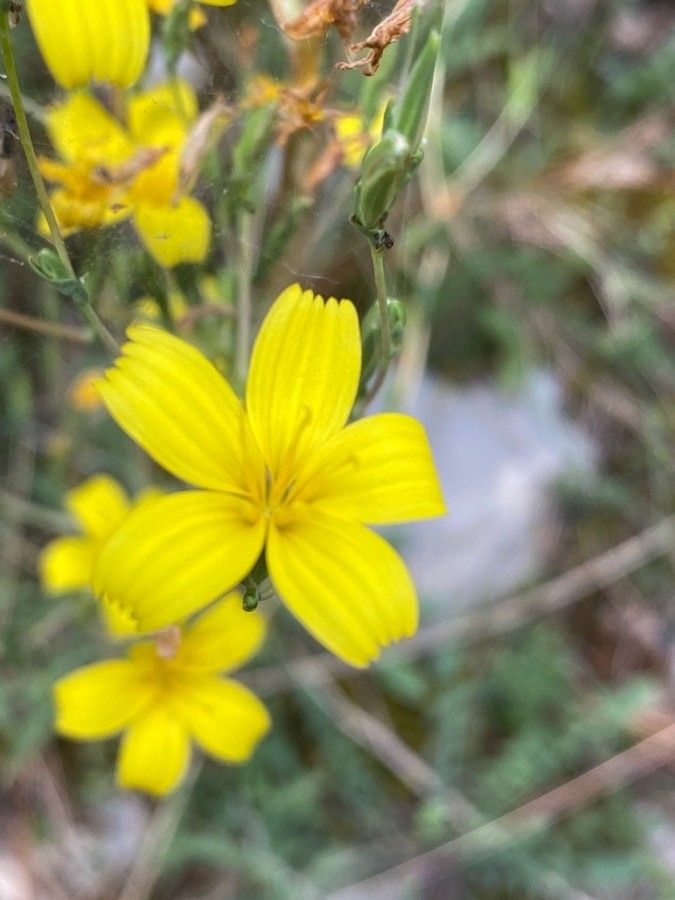
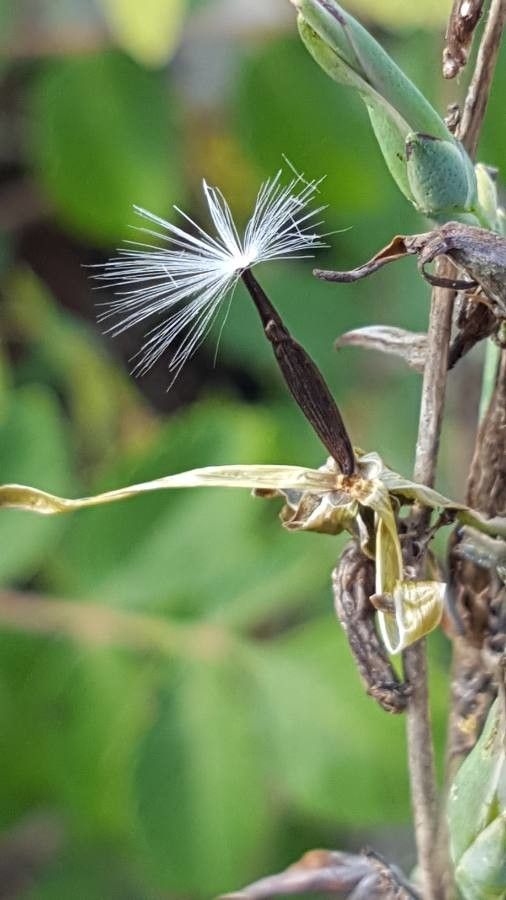
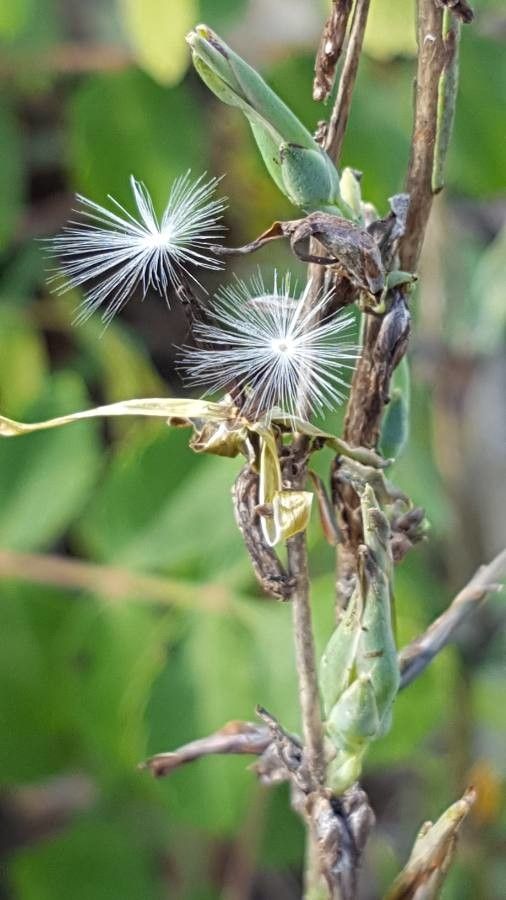
Lactuca viminea, commonly known as narrow-leaved lettuce or wild lettuce, is a flowering plant species in the Asteraceae family. Native to North America, this plant thrives in diverse habitats such as meadows, prairies, and open woods. It typically grows up to 1 meter tall and features narrow leaves that are deeply lobed or toothed. The yellowish-green flowers are small and cluster at the top of the stem.
For centuries, Native Americans have utilized Lactuca viminea for its medicinal properties. The plant contains lactucarium, which has sedative effects that can help alleviate pain and anxiety. Additionally, the leaves have been used as a natural remedy for coughs.
Lactuca viminea is also known to attract a variety of pollinators, including bees and butterflies, thanks to its nectar-rich flowers.
In summary, Lactuca viminea is a fascinating species with both medicinal benefits and ecological importance due to its role in supporting pollinators.
Pliant lettuce has strong disease resistance and is generally not susceptible to diseases. Regarding care, this plant is fairly low-maintenance. When grown outdoors it needs little watering, and larger plants typically do not require pruning. Smaller plants, however, should be pruned after they have finished blooming. Pliant lettuce is suitable for anyone with outdoor space, such as a garden or deck, and does not require much care experience.
How to keep Lactuca Viminea.
Light
Pliant lettuce usually flourishes in areas with abundant sunlight and can also adapt to spots with moderate sun. Excessive or inadequate sunlight may hinder its healthy development. In its native environments, pliant lettuce mainly grows in well-lit conditions. While it can go through different growth stages under moderate sun, it favors optimal sunlight.
Water
Lettuce, which comes from dry regions, is quite drought-tolerant and requires deep watering every 2 to 3 weeks. When grown outdoors, it thrives best when its growing season is aligned with local rainfall patterns. This alignment helps ensure optimal growth and efficient water use.
Temperature
Pliant lettuce shows strong adaptability to a wide range of climates, from blistering summers to frigid winters. However, it has a preferred temperature range for growth. If temperatures get excessively high, the plant is vulnerable to heat and humidity stress, which can cause its death. In areas where temperatures approach the lower limit of its cold tolerance, it is important to use insulation to protect the plant.
Fertilizer
Fertilize your Pliant lettuce in early spring to encourage healthy growth. Regular feeding improves its overall health, leading to vigorous growth, greater resilience to tough conditions, and enhanced resistance to diseases and pests. Keep a consistent fertilization schedule for your Pliant lettuce to ensure vibrant, deeply colored foliage and a lush appearance.
Pruning
Pliant lettuce has slender stems and lobed leaves. For healthy growth, prune it in early spring by removing dead stems and thinning out overcrowded areas to improve air circulation. Regularly pinching back the plants helps control their height. Making clean cuts prevents disease and encourages a robust structure along with vigorous growth.
Botanical profile.
- Plant Type
- Shrub
- Life Cycle
- Perennial
- Genus
- Lactuca
- Family
- Asteraceae
- Hardiness Zone
- 5-9
- Mature Height
- 0.34 m to 1.52 m
- Mature Spread
- 30 cm to 61 cm
- Leaf Color
- Green, Blue
- Leaf Type
- Semi-evergreen
- Flower Color
- Yellow
- Flower Size
- 1.02 cm to 1.52 cm
- Bloom Time
- Summer
- Planting Time
- Spring, Summer, Autumn
- Harvest Time
- Late summer, Early fall, Mid fall
Other names.
Reader questions.
What is the easiest way to water my flexible lettuce?
To promote excellent root development, consider placing a garden hose at the base of your plant. Be cautious not to directly spray the leaves, especially if they are exposed to direct sunlight outdoors. If needed, give the leaves extra watering. Another option is to use bubblers for each plant to keep the roots moist. When adding or removing plants, consider using soaker hoses that cover the entire garden or bed to encourage deep root growth. Remember to drain any excess water and wait for the soil to dry before watering again. Watering at ground level is recommended to prevent diseases. On a sunny day, it may be beneficial to spray the entire bush with water. Whether your lettuce is potted or in the ground, keep in mind that deep watering is preferred over light sprinkling for Pliant lettuce.
What are the sunlight requirements for Pliant Lettuce?
Pliant lettuce thrives best in environments that offer substantial levels of solar exposure, preferring full sun conditions, which means it requires above 6 hours of sunlight daily. It can also adapt to partial sun conditions, receiving about 3-6 hours of sunlight. However, careful observation of your garden to identify the perfect balance of light and shade is essential for ensuring the plant's health and happiness.
What should I do if I give Pliant lettuce too much or too little water?
Overwatering can cause Pliant lettuce to yellow and wilt, with leaves dropping off. Look out for dull and unhealthy appearances, as well as mushy stems. Adjust your watering schedule, as wilting can also indicate under watering. Underwatered leaves may turn crispy and dry, while overwatered leaves will be soft and wilted. If the soil is dry, a thorough watering is needed. However, even with enough water, the damaged root system may cause the plant to still have yellow and dry leaves after a few days. Regularly check the soil moisture when growing Pliant lettuce indoors and avoid overwatering. If there are black spots, let the soil dry out for a few days. Root rot can occur with overwatering, so transfer the plant to a different pot if discolored and slimy roots are present. Prevent root rot by avoiding overly soggy soil. When planting Pliant lettuce outdoors, ensure the soil is not too dry by checking with your fingers. Adequate watering is necessary for the plant's recovery.
How can artificial lighting support Pliant Lettuce growth indoors?
When natural sunlight is insufficient for Pliant Lettuce, especially indoors during winter or in less sunny spaces, artificial lighting offers a crucial solution for optimal growth. LEDs are recommended as they can provide specific light wavelengths needed by plants. For full sun plants, 30-50W/sq ft, for partial sun plants, 20-30W/sq ft, and for full shade plants, 10-20W/sq ft of artificial light is ideal. Ensure the light source is placed 12-36 inches above the plant to mimic natural sunlight, and provide 8-12 hours of light per day to encourage healthy growth.
How frequently do I need to water my Pliant lettuce?
The Pliant lettuce prefers deep and infrequent watering. When planted in pots, it's important to soak them in a gallon of water each time. Flower pots have limited water storage, so the soil dries out faster. In cold regions, watering is needed every 3 to 5 days. Watering should be done early in the morning when the soil is dry, whether the plants are indoors or outdoors. To determine if watering is necessary, check the soil inside. If the top 2-3 inches of soil is dry, it's time for a full watering. On hot days, check the moisture daily as the soil in the pot can dry out quickly due to the heat. If you have a garden, irrigation of the soil is also required. In hot climates, watering once a week is recommended. Only water when you notice that about 2 to 3 inches of soil have become too dry. Take into consideration the amount of rainfall and avoid watering too much to prevent root rot. If there's ample rainfall, additional watering may not be necessary. Pliant lettuce usually grows during spring and fall. When grown outdoors, adding mulch about 3 to 4 inches deep helps conserve water. Sandy soil drains faster, so more frequent watering is needed. On the other hand, clay soil requires less frequent watering, with intervals of 2-3 days to let the plant dry out and prevent root rot. It may be helpful to mark the watering dates on a calendar and look out for drooping leaves, which could indicate a need for timely watering.
What are the signs of insufficient sunlight in Pliant Lettuce?
Pliant lettuce may exhibit various symptoms indicating insufficient sunlight. These include small new leaves, leggy or sparse growth, faster leaf drop, slower or halted growth, lighter-colored new leaves, chlorosis, sunscald, leaf curling, wilting, and leaf scorching. Each of these symptoms suggests that the plant is struggling with light deficiency and might require a change in its environment to ensure better sunlight exposure.
How much water should I give my Pliant lettuce?
The Pliant lettuce generally needs a gallon of water on a regular schedule. For potted plants, water them deeply until water drips out of the bottom of the pot. Then, wait for the soil to dry before watering again. To determine how much water you've given your plant in a week, you can use a water calculator or a moisture meter. During the flowering period, provide plenty of water but let the moisture evaporate to prevent root rot. If the Pliant lettuce is planted outdoors with enough rainfall, it may not need extra watering. When the lettuce is young or newly planted, make sure it receives 1-2 inches of rain per week. As the lettuce grows, it can survive solely on rainfall. Only when the weather is very hot or there is no rainfall for 2-3 weeks should you consider giving the lettuce a thorough watering during cooler times of the day to prevent heat damage. Additional watering is necessary during prolonged dry periods.
How can you improve sunlight exposure for Pliant Lettuce outdoors and indoors?
To improve sunlight exposure for Pliant Lettuce, gradually shift the plant to sunnier locations, ensuring at least 6 hours of direct sunlight for outdoor plants, and use south-facing windows or artificial light for indoor plants. Obstructive elements should be minimized by pruning trees or moving plants to brighter areas. Moreover, for outdoor plants, avoid sudden changes in light intensity to prevent sunburn, and consider transplanting smaller plants during their dormant period to sites with better sunlight and drainage. Remember, while affected parts may not recover, new growth will be healthy with increased light exposure.
Do I need to change how often I water my Pliant lettuce depending on the time of year or the weather?
To help your Pliant lettuce grow well, it is important to provide the right amount of water depending on the season. During spring and fall, the soil should be kept moist but not soggy. Alternating between dry and moist soil conditions will promote good growth. In the summer, when it's hot, water can evaporate quickly, so you may need to water more often if there is not enough rainfall. However, during winter, the Pliant lettuce needs less water as it drops its leaves and goes dormant. Using a well-draining soil mixture, like terracotta, can help the water evaporate quickly. Once the lettuce is dormant, you can rely on fall and winter rains to keep it hydrated. When the plant is in a pot, ensure good drainage to prevent ponding or overly wet roots. Water the entire root system deeply once or twice a week, avoiding shallow sprinkles that can encourage fungal growth. Even during dormancy, do not let the lettuce dry out completely. However, be careful not to overwater and cause waterlogging, especially during winter. Applying mulch can reduce stress, conserve water, and encourage healthy blooms.
What things should I be cautious of when watering my Pliant lettuce at different times of the year, in various weather conditions, or during different stages of growth?
To properly care for pliant lettuce, consider the following tips: - When planting in the ground, rely on rain for watering. However, if there is no rainfall for 2-3 weeks, give the plants a deep watering. - Water pliant lettuce in the morning during the summer to avoid stressing the roots with a large temperature difference. - Avoid watering the bushes when it's too hot outside. - Start mulching the plants in the spring when the ground is not too cold. - Newly planted plants may fail to grow if they lack water, so ensure they receive enough. - Once established, reduce the watering schedule. - During the fall and winter, reduce watering, especially if there's water-retaining material in the soil. - Windy seasons require more watering to prevent drought. - Plants in pots dry out faster and need more frequent watering. - Reduce watering once you see less blooming and drying leaves. - Be cautious with watering potted plants and avoid letting them sit in water. - Too much watering in the fall can result in mottled or yellowish foliage. - Prevent overwatering regardless of the climate or season. - Increase watering frequency during flowering but reduce it once fully grown. - Water them every 3 to 5 days, but don't stick to a strict schedule. - Check the soil moisture by touching it or using a moisture meter. - Avoid overwatering or underwatering to prevent root rot and plant death, regardless of the climate or season.
Why do I need to water my Pliant lettuce?
Watering the Pliant lettuce is crucial for transporting the necessary nutrients throughout the plant. The plant's health depends on a balanced amount of moisture, which can be determined by considering the weather and soil conditions. While the Pliant lettuce prefers moist soil, it cannot tolerate excessive water. It is important to provide sufficient mulch when planting in the ground and avoid under-watering. When planted in a pot, they benefit from a thorough watering, ensuring the soil is moist at the base for optimal growth. If growing for foliage, water them to a depth of 10 to 20 inches to encourage continuous growth. During rainy periods, it is unnecessary to water, as the rainwater provides the necessary nutrients.