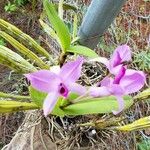
Laelia rubescens
Orchid · Pale laelia
Description
Source: leafsnapLaelia rubescens is a species of orchid native to Mexico and Central America.
Care Guide
💧 Water Once a week
The pale laelia needs sufficient moisture but can tolerate occasional drought. In the summer, water it once a week. During the fall and winter, water every 10 days. To maintain humidity, mist the plant regularly. Use water with a neutral pH: let tap or rainwater sit for a while before using, which helps to neutralize it.
☀️ Light Partial sun
Pale laelia originates in habitats like forest understories and rocky areas, where it grows under natural shade. It prefers partial sun but can adapt to full sun or deep shade, illustrating its hardy and adaptable nature.
🌡️ Temperature 20–37.8°C
Pale laelia prefers warm conditions. It grows best in moderately high temperatures that are not excessively hot and humid. Sunlight warms the plant and encourages flowering. However, extended periods of direct sun in summer can cause sunburn, so it is necessary to limit the amount of light it receives during that season. The plant typically does not tolerate cold well, so it needs proper protection and warmer temperatures in winter to avoid freezing.
What is the common name for Laelia rubescens?
The common name for Laelia rubescens is Pale laelia.
What are the symptoms of an unhealthy Pale laelia?
The information provided did not list any specific symptoms for an unhealthy Pale laelia.
What are the essential care tips for Pale laelia?
There were no specific essential care tips provided for the Pale laelia in the provided information.
💨 Humidity high (>60%)
This plant needs special care because it loves high humidity levels of 60-80% or more. The best way to achieve this is by placing a humidifier near the plant. Daily misting is also essential! Make sure the room has good ventilation.
🪴 Soil 5-6
🌱 Fertilizer Every 30 days
Pale laelia requires the most fertilizer during its active growth phase, which takes place mainly in spring, summer, and early fall. Fertilization supplies essential nutrients that the soil may lack, promoting healthy root and stem development as well as the attractive foliage that is a key characteristic of this plant.
🪴 Pot & Repot
When repotting Pale laelia, select a pot that is only slightly larger and provides good drainage; a clear orchid pot is preferred. Use an orchid-specific, well-draining mix that contains bark or moss. Gently clean the roots and trim any that are dead or rotting. Repot after flowering, typically in spring or fall, water thoroughly, and keep the plant in bright, indirect light. Avoid disturbing the roots once repotted.
✂️ Pruning
The Pale Laelia boasts attractive and hardy flowers, flourishing as an epiphytic plant. To ensure healthy growth and vibrant blooms, it is crucial to prune it in early spring. Focus on removing dead pseudobulbs and leaves, using sterilized shears for the job. Making clean cuts with minimal stress during pruning is essential for the plant's overall success.
🌿 Propagating
🐛 Diseases & pets
☠️ Toxicity
Both humans and pets are unaffected by Laelia Orchids (Laelia spp.). They can be grown safely inside.
Characteristics
- Plant Type
- Herb
- Life Cycle
- Perennial
- Genus
- Laelia
- Family
- Orchidaceae
- Hardiness Zone
- 10-12
- Mature Height
- 30 cm to 40 cm
- Mature Spread
- 20 cm to 30 cm
- Leaf Color
- Light Green
- Leaf Type
- Evergreen
- Flower Color
- Pink
- Flower Size
- 7.62 cm to 10.16 cm
- Bloom Time
- Winter, Early spring
- Planting Time
- Spring, Summer, Autumn
- Harvest Time
- Spring, Early summer