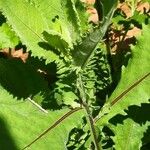
Laggera crispata
Care Guide
💧 Water
☀️ Light Full sun
Curly blumea is a perennial, herbaceous plant that favors sunny sites and comes from open habitats, commonly growing in meadows and grasslands. It prefers full sun but can also tolerate partial sun.
🌡️ Temperature 20–37.8°C
Curly blumea comes from tropical areas, where the climate is generally warm and humid. Consequently, it is adapted to high temperatures and moisture. It is sensitive to sudden temperature changes and prefers a steady thermal environment, so indoor temperature fluctuations should be avoided. It typically cannot tolerate cold and needs warmer conditions to grow. If the surrounding temperature falls too low, the plant may stop growing or even die.
💨 Humidity
🪴 Soil 6-7
🌱 Fertilizer
Curly blumea requires the greatest amount of fertilizer during its active growth phase, which occurs mainly in spring, summer, and early fall. Fertilization is needed to provide essential nutrients the soil may lack, encouraging healthy root and stem development and the attractive foliage that is a defining feature of this plant.
🪴 Pot & Repot
✂️ Pruning
🌿 Propagating
🐛 Diseases & pets
☠️ Toxicity
Characteristics
- Plant Type
- Herb
- Life Cycle
- Perennial
- Genus
- Laggera
- Family
- Asteraceae
- Hardiness Zone
- 9-11
- Mature Height
- 91 cm
- Mature Spread
- 20 cm to 49 cm
- Leaf Color
- Green
- Leaf Type
- Semi-evergreen
- Flower Color
- Red, Purple
- Flower Size
- 1.02 cm
- Bloom Time
- Late summer, Early fall, Mid fall
- Planting Time
- Spring, Summer, Autumn
- Harvest Time
- Mid fall, Late fall, Early winter
- Native Area
- Burkina Faso, India, Angola, Namibia, Kenya, Uganda, Tanzania, Zimbabwe, Guinea-Bissau, Benin, Sierra Leone, Cambodia, Cameroon, Liberia, Mozambique, Ghana, Ethiopia, Botswana, Central African Republic, South Africa, Zambia, Sudan, Bangladesh, Laos, Guinea, Chad, China, Vietnam, Togo, Bhutan, Senegal, Eswatini, Côte d'Ivoire, Congo (DRC), Thailand, Gabon