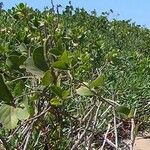
Laguncularia racemosa
White Mangrove · White buttonwood
Description
Source: leafsnapLaguncularia racemosa, commonly known as the white mangrove, is a species of flowering plant belonging to the Combretaceae family. This tree, which ranges from small to medium in size, can reach heights of up to 20 meters and features a dense, rounded crown. Its smooth gray bark and glossy green, oval-shaped leaves with pointed tips distinguish it. The white mangrove is native to coastal regions of the Americas, spanning from Florida in the United States through Central America and into South America. It thrives in brackish water or saltwater marshes along shorelines and riverbanks. This plant plays a crucial role in coastal ecosystems. Its extensive root system stabilizes shorelines by trapping sediment, while also providing habitats for various species of birds, fish, and other wildlife. Indigenous peoples throughout its range have utilized the white mangrove for various medicinal purposes. The bark serves as an antiseptic, and the leaves can be used to treat skin conditions such as eczema. Overall, Laguncularia racemosa is an ecologically and culturally significant plant species in the coastal areas of the Americas.
Care Guide
💧 Water Every 7 days
The white mangrove is well-suited to coastal ecosystems and thrives in saline environments. It can tolerate saltwater immersion and only needs watering every 2-3 weeks. This plant has specialized glands that help it excrete excess salt, making it an excellent choice for coastal gardens. Its evergreen foliage is resilient to salty mists and irregular rainfall, ensuring its robust growth in such challenging conditions.
How should I water my White mangrove plant?
Your White mangrove is not picky about how you water it. You can use any common watering tool like watering cans, hoses, or cups. Just make sure to water the soil directly and evenly to give all parts of the root system the water it needs. It's best to use filtered water to avoid harmful particles from tap water. Also, use water that is at or slightly above room temperature to prevent shocking the White mangrove. However, it typically responds well to any kind of water.
What do I do if I give my White mangrove too much or too little water?
If you have recently planted outdoor plants or seedlings, make sure to water them enough for the first few months. Once the roots are established, rainwater should be sufficient for white mangroves. However, when white mangroves are planted in pots, overwatering can be a problem. If you accidentally overwater your plant, first stop watering it to minimize the effects. Then, check the roots for signs of root rot. If there is no root rot, you can return the plant to its pot. If there is root rot, trim the affected roots and apply a fungicide. Repot the white mangrove in well-draining soil. On the other hand, if you underwater your white mangrove, simply water it more often. Watch for drooping and drying leaves, and adjust your watering frequency accordingly.
How much water does my White mangrove need?
If your area doesn't get much rain, you'll need to water your plants every 2 weeks in the spring and fall, more often in the summer, and less often in the winter. You may not need to water at all in the winter. Young or newly planted White mangrove plants need more frequent watering to help them establish and grow. For potted plants, there are two ways to determine how often to water your White mangrove. You can set a schedule and water once a week or every other week, but this may not always be accurate for your specific environment. Alternatively, you can check the soil moisture and wait until the top few inches have dried out before watering again.
How much water does my White mangrove plant need?
Watering your White mangrove may not require a high volume of water. Only give it about five to ten ounces of water if only a few inches of soil have dried since the last watering. You can also determine the water volume based on soil moisture by noting how many inches of soil have dried between waterings. To ensure your White mangrove gets enough moisture, water enough to moisten all the dry soil layers since the last watering. If more than half of the soil is dry, give more water than usual until you see excess water draining from the pot's holes. If your White mangrove is in an area with abundant rain, it may not need additional watering. When it's young or establishing, it should receive 1-2 inches of rain per week. As it grows, it can rely on rainwater alone unless there is hot weather and no rainfall for 2-3 weeks. In that case, give it a thorough watering to prevent stress.
How can I know if I am giving enough water to my White mangrove?
The White mangrove is often overwatered, and there are clear signs to watch out for. Typically, overwatering leads to yellow leaves and leaf drop. It can also make the plant structure shrink and contribute to root rot. Conversely, an underwatered White mangrove will wilt and display brown or brittle leaves. Regardless of whether you see signs of overwatering or underwatering, it is important to take action and revive your White mangrove's health.
☀️ Light Full sun
White mangrove does best when it receives plenty of sunlight, though it can tolerate lower light levels. Coming from habitats with abundant sun, white mangrove needs that kind of light for optimal growth and overall health. Extremely strong light is unlikely to harm it, but inadequate exposure can limit its development.
What are the sunlight requirements for white mangrove?
White mangrove thrives best under abundant sun exposure but can also tolerate less intense light conditions, making it adaptable to various lighting environments. For optimal growth, it ideally needs full sun, which translates to above 6 hours of direct sunlight per day. However, it can also grow well under partial sun, with about 3-6 hours of sunlight. It's important to observe how sunlight moves through your garden to choose spots that offer a perfect balance for your plant, ensuring its health and happiness.
How does artificial lighting affect white mangrove growth indoors?
Indoor white mangrove plants require adequate lighting for optimal growth, especially when natural sunlight is insufficient, such as in winter or in less sunny spaces. Artificial lights, particularly LED lights, are beneficial as they can be customized to provide specific wavelengths needed for the plant's growth. For plants needing full sun, 30-50W/sq ft of artificial light is recommended, whereas partial sun plants require 20-30W/sq ft, and full shade plants need 10-20W/sq ft. The light source should be placed 12-36 inches above the plant to mimic natural sunlight, and most plants benefit from 8-12 hours of light per day.
What are the symptoms of insufficient light in white mangrove?
When white mangrove is not receiving enough light, several symptoms may appear, indicating light deficiency. These include smaller new leaves compared to previous ones, leggy or sparse growth due to longer spaces between leaves or stems, faster leaf drop as the plant tries to conserve resources, delayed growth or halt in new leaf production, lighter-colored new leaves indicating a lack of chlorophyll, and conditions such as chlorosis, sunscald, leaf curling, wilting, and leaf scorching, each resulting from various levels of light exposure inadequacies.
How can I address light deficiency in indoor and outdoor white mangrove plants?
To improve light conditions for white mangrove, gradually acclimate your plant to a sunnier location, aiming for at least 6 hours of direct sunlight daily for indoor plants. Use south-facing windows and keep curtains open during the day. If the plant is large or not easily movable, consider artificial lighting, keeping lights on for at least 8 hours daily. For outdoor plants, avoid sudden changes in light exposure to prevent sunburn. Moving plants gradually to sunnier locations over several weeks is advised. If sunlight is obstructed, consider pruning or transplanting to a brighter location with good drainage, especially during the plant's dormant period.
🌡️ Temperature 20–37.8°C
White mangrove naturally occurs in places where ideal temperatures range from 68 to 100.4 °F (20 to 38 ℃). To promote healthy growth, provide warmth in colder seasons and shade during hot periods. It tolerates temperature fluctuations within that range.
What is the ideal temperature range for White mangrove?
White mangrove (Laguncularia racemosa) thrives in temperatures that ideally range from 68 to 100.4 °F (20 to 38 °C). It's vital to provide warmth during colder seasons and shade when it's particularly hot to ensure the plant's healthy growth. White mangrove is particularly heat-loving and can suffer damage from cold temperatures. In regions experiencing cold autumns, it's recommended to bring outdoor White mangrove plants indoors, placing them near a bright window yet away from direct heat sources to avoid harm. Keeping the temperature above 20°C during winter supports the plant's health, while temperatures nearing 5°C can be harmful.
How should White mangrove be cared for in low temperatures?
When White mangrove encounters low temperatures, particularly anything below 20°C, protective measures should be taken to ensure its survival. If temperatures drop below 1°C, you may notice the leaves lightening in color, which following frost damage, will turn brown or black as the plant begins to wilt and droop. To mitigate frost damage, trim away any frost-damaged parts and move the plant to a warmer indoor location immediately. Positioning the plant near a south-facing window will ensure it receives ample sunlight without the potential harm of being too close to heaters or air conditioning vents, which could cause the air around the plant to become overly dry.
What care is required for White mangrove in high temperatures?
During the summer, it's crucial to ensure that White mangrove's environment remains below 38°C to avoid heat stress. Exposure to temperatures above 43°C can lighten the leaves' color and make the plant more prone to sunburn. To care for a White mangrove that has suffered from excessive heat, trim away any sunburned or dried parts of the plant. It's beneficial to relocate the plant to a shaded spot, especially to protect it from the intense midday and afternoon sun. Regular watering, ideally in the morning or evening, is important to keep the soil moist and help the plant cope with the heat.
💨 Humidity
🪴 Soil 6-7
🌱 Fertilizer
Fertilizing is essential for the care of the White mangrove. Consistent feeding during the growing season preserves the energy required for its attractive foliage and encourages overall growth. Failing to fertilize can lead to unhealthy leaves, reduced ornamental value, and stunted or weak growth that is prone to breakage.
🪴 Pot & Repot
✂️ Pruning
White mangroves have leathery leaves and can tolerate salty conditions. To keep them healthy and well-shaped, prune them between early and late winter. During pruning, remove any dead or damaged branches. Using sharp tools to make clean cuts will improve air circulation, reduce pest problems, and encourage growth. For more detailed care instructions, refer to horticultural guides.
🌿 Propagating
🐛 Diseases & pets
☠️ Toxicity
Characteristics
- Plant Type
- Tree
- Life Cycle
- Perennial
- Genus
- Laguncularia
- Family
- Combretaceae
- Hardiness Zone
- 10-11
- Mature Height
- 1.83 m to 12.19 m
- Mature Spread
- 3.05 m to 6.1 m
- Leaf Color
- Green
- Leaf Type
- Evergreen
- Flower Color
- White
- Flower Size
- 2.54 cm
- Bloom Time
- Summer, Early fall, Mid fall
- Planting Time
- Spring, Summer, Autumn
- Harvest Time
- Late summer, Fall, Early winter
- Native Area
- Belize, Angola, Honduras, Mexico, Guatemala, Peru, Nigeria, Guinea, Gambia, Guinea-Bissau, Panama, Jamaica, Benin, Colombia, Bahamas, Cuba, Sierra Leone, Equatorial Guinea, Cameroon, Liberia, Venezuela, Brazil, Guyana, Ghana, El Salvador, Senegal, Nicaragua, Ecuador, Costa Rica, Gabon