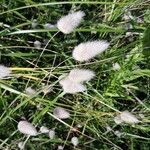
Lagurus ovatus
Hare's-tail · Hare-tail grass · Harestail grass · Hare's-tail Grass · Haretail Grass
Description
Source: leafsnapLagurus ovatus, commonly known as hare's tail grass or bunny tails, is an annual grass native to the Mediterranean region. As a member of the Poaceae family, it typically grows to a height of 30-60 cm. The plant produces dense, cylindrical flower spikes that resemble fluffy bunny tails, usually measuring 5-10 cm in length. Initially green, the flowers mature to a beige color. Lagurus ovatus is popular in ornamental gardening thanks to its unique appearance and its ability to add texture and interest to floral arrangements. The plant thrives in full sun or partial shade and prefers well-drained soil with moderate moisture. In addition to its ornamental uses, Lagurus ovatus has been used in traditional medicine for its diuretic properties and for treating skin conditions such as eczema. Overall, Lagurus ovatus is an attractive ornamental plant that enhances visual appeal with its distinctive flower spikes while also offering potential medicinal benefits.
Care Guide
💧 Water Every 7 days
Hare's-tail grass, native to the Mediterranean coasts, thrives in sunny areas with moderately moist conditions. To maintain its health, it needs weekly watering, particularly during its active growth phase, to support the development of its ornamental plumes. Paying close attention to soil moisture during the growing season is crucial for the plant's vitality.
What should I do if I give too much or too little water to my Hare's-tail grass?
Proper watering is essential for the health and performance of this beautiful ornamental grass. When the grass is planted in the ground, any watering issues can be resolved. However, in a container, both overwatering and underwatering can quickly kill Hare's-tail grass. Insufficient water can cause stunted growth, while overwatering can lead to yellow leaves with brown tips. Underwatering may result in drooping leaves, weak seed head production, and browned leaves. If you suspect improper watering, the first step is to determine whether there is too much or too little water. If there is excessive watering, stop watering immediately and wait patiently for heavy soils to dry out. Once you observe new growth, test the soil for moisture and decide if more water is needed. On the other hand, if the grass is receiving too little water, simply give it a deep drink and observe if it improves. Keep in mind that long, deep watering is preferable over frequent shallow waterings. This encourages the growth of deep roots, making the grass more resistant to drought and water-related issues.
How many times should I water my Hare's-tail grass?
The watering needs of Hare's-tail grass depend on its planting location. Generally, watering once a week is recommended. In hot climates, watering once or twice a week during the summer may be necessary. In moderate climates, watering once every seven days or more may be sufficient. Grass in containers usually requires more frequent watering than grass planted in the ground. Also, the location of the grass is important, as shaded grasses need less water than those planted in the ground. Only water Hare's-tail grass when the soil is dry. You can check the soil's dryness by pressing your finger a couple of inches into it or by weighing the potted grass to see if it feels light. When the roots lack water, the grass blades may appear folded and thinner. Despite its drought tolerance, regular, deep waterings will enhance the grass's color. In its natural habitat of open scrubland, Hare's-tail grass experiences extreme heat, bright sun, and intermittent rain, but it still requires care and attention. Although it can handle dry conditions, consistent watering is beneficial. When first planted, Hare's-tail grass needs more frequent watering until its roots establish. In pots, the soil dries out quickly, especially if the pot is exposed to hot, direct sun. Test the soil every 3 to 4 days and water only when it feels dry. Hare's-tail grass in the ground generally needs less watering, but this depends on the type of soil. Heavy clay soil may appear dry at the surface but still retain moisture below the ground, while sandy soils that drain quickly will require more frequent watering.
What should I watch out for when watering my Hare's-tail grass in different seasons, climates, or during different stages of growth?
To determine if you are watering enough, observe the rate of growth of your grass. Hare's-tail grass tends to double in size within a year during the hottest months. If it is hot and the grass is not growing vigorously, adjust your watering schedule. In winter, watering once a month may suffice, but check the soil's moisture level by touching it. In the warmer months, the grass requires more water during its growth cycle, while in winter and cooler months, its water needs decrease significantly. Remember to let the soil dry out completely before watering Hare's-tail grass.
☀️ Light Full sun
Hare's-tail grass grows best in full, unshaded sunlight throughout the day. It is native to open habitats where light is abundant. However, excessive exposure can scorch its delicate leaf blades, while too little light may impede its growth and vigor.
What are the sunlight requirements for growing Hare's-tail grass (Lagurus ovatus)?
Hare's-tail grass, also known by its botanical name Lagurus ovatus, thrives best when it receives more than 6 hours of sunlight daily, as it originates from open environments rich in ample light. It's vital for the plant's growth and vitality to receive a significant amount of sunlight. However, ensure to monitor the sunlight exposure carefully; too much direct light can scorch its delicate leaves, while too little can hinder its growth. It's recommended to observe the movement of sunlight through your garden, choosing spots that provide a perfect balance of light and shade to ensure the happiness of your plants.
What type of lighting should be used for indoor Hare's-tail grass plants?
For Hare's-tail grass plants grown indoors, where natural sunlight may be insufficient, especially during winter or in less sunny spaces, artificial lighting provides an essential solution. Optimal growth can be achieved by using LED lights, which can be customized to supply specific wavelengths needed by the plants. Full sun plants require 30-50W/sq ft, partial sun plants need 20-30W/sq ft, and full shade plants should have 10-20W/sq ft of artificial light. The light source should be placed 12-36 inches above the plant to mimic natural sunlight effectively, and plants typically need 8-12 hours of light per day to mimic the length of natural daylight hours closely.
What are the symptoms of inadequate lighting for indoor Hare's-tail grass?
When Hare's-tail grass is grown indoors with inadequate light, it may exhibit several symptoms indicating light deficiency. These include small leaves that are smaller in size compared to the prior ones, leggy or sparse growth with extended spaces between leaves or stems, leading to a weakened appearance, faster leaf drop as a result of conserving resources, delayed or halted growth due to poor light conditions, and lighter-colored or irregularly patterned new leaves indicating a lack of chlorophyll. Additionally, chlorosis (leaves turning yellow), sunscald (damage from intense light exposure), leaf curling (a defense against excessive sunlight), wilting (due to water loss from high transpiration), and leaf scorching (brown or crispy leaf edges from too much sunlight) are symptoms that can also manifest.
How can I address light-related issues for my Hare's-tail grass?
To address light-related issues in Hare's-tail grass, whether grown indoors or outdoors, a gradual adjustment to the proper light conditions is crucial. For indoor plants, move them weekly to progressively sunnier locations until they receive at least 6 hours of direct sunlight daily, and consider using a south-facing window. If the plant is large or not easily movable, artificial light such as desk lamps or professional plant grow lights can be used for at least 8 hours daily to supplement light. Outdoors, plants should also be moved gradually to sunnier spots to avoid sunburn, adapting to the change in light intensity over time. If sunlight is obstructed by trees or buildings, consider pruning or transplanting smaller plants to areas with better sunlight exposure and good drainage.
🌡️ Temperature 5–35°C
Hare's-tail grass is native to habitats with moderate to high temperatures, generally between 68 to 95 °F (20 to 35 ℃). Seasonal temperature adjustments should aim to keep conditions within this range, even in cooler months.
What is the native temperature range for Hare's-tail grass (Lagurus ovatus)?
Hare's-tail grass, scientifically known as Lagurus ovatus, is adapted to environments that experience moderate to high temperatures. The ideal temperature range for its growth extends from 68 to 95°F (20 to 35°C). To ensure the health of the plant, it is crucial to attempt to maintain these temperature conditions throughout the year, even during the typically cooler months.
Does Hare's-tail grass need special frost protection?
Hare's-tail grass exhibits strong resistance to cold temperatures and generally does not require special frost protection during the winter. Nonetheless, if the winter temperatures are expected to plummet below -30°C, it is important to take measures to protect the plant from the cold. Covering the plant with soil or straw can effectively shield it from extreme cold. Additionally, to prepare for winter, watering the plant abundantly before the first freeze in autumn is recommended. This ensures that the soil remains moist and enters a frozen state gradually, helping to prevent drought and water scarcity for the plant during the winter and early spring months.
What are the symptoms of low temperature effects on Hare's-tail grass and how can they be managed?
Hare's-tail grass thrives best in temperatures above 20°C and should ideally be kept above 0°C during the winter. If the temperature falls below -30°C, there may not be any noticeable changes during the winter; however, a decrease in sprouting or a complete lack of sprouting may occur in the spring. To manage this issue, any parts of the plant that have failed to sprout by spring should be removed to encourage new growth.
What are the symptoms of high temperature effects on Hare's-tail grass and how can they be managed?
During the summer months, Hare's-tail grass should ideally be kept below 35°C. Exposure to temperatures exceeding 41°C can result in the leaves turning lighter in color, becoming prone to curling, sunburn, and in severe cases, the entire plant may wilt and dry out. To remedy this, sunburned and dried-up parts of the plant should be trimmed away. Move the plant to a shaded location, especially away from the harsh midday and afternoon sun, or use a shade cloth to protect it. Additionally, watering the plant in the morning and evening can help maintain soil moisture and prevent heat stress.
💨 Humidity
🪴 Soil 6-7
🌱 Fertilizer
When most of the Hare's-tail grass blooms have fully opened, resume fertilizing. At the peak of flowering, apply fertilizer every three to four weeks, weather permitting. Then, once the plant begins producing fewer new blooms, stop fertilizing; there is no need to feed it when it can no longer produce additional flowers.
🪴 Pot & Repot
✂️ Pruning
To maintain the shape and health of hare's-tail grass, prune it from early to late spring. Start by cutting back the old foliage to encourage new growth. Be sure to remove any dead stems to improve air circulation and reduce the risk of disease. By pruning at the right time and using proper techniques, you can enhance the plant's vigor while preserving its natural beauty.
🌿 Propagating
🐛 Diseases & pets
☠️ Toxicity
Bunny Tail Grass is not considered toxic.
Characteristics
- Plant Type
- Grass
- Life Cycle
- Annual, Biennial, Perennial
- Genus
- Lagurus
- Family
- Poaceae
- Hardiness Zone
- 4-10
- Mature Height
- 49 cm
- Mature Spread
- 30 cm
- Leaf Color
- Green
- Leaf Type
- Semi-evergreen
- Flower Color
- White, Green, Cream, Brown
- Flower Size
- 1.02 cm to 2.03 cm
- Bloom Time
- Late spring, Early summer, Mid summer
- Planting Time
- Spring, Summer, Autumn
- Harvest Time
- Mid summer
- Native Area
- Mediterranean Basin