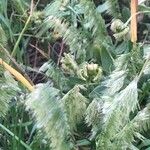
Lamarckia aurea
Golden lamarckia · Golden-top · Goldentop grass · Golden dog's-tail · Golden dogstail
Description
Source: leafsnapLamarckia is a Eurasian and African plant in the grass family. SpeciesThe only known species is Lamarckia aurea, the golden dog's-tail or goldentop grass It is an annual plant, typically 30-45 centimetres in height, with clusters of golden flowers in a panicle 5–8 cm long and 2–2.5 cm broad. The species is native to the Mediterranean Basin and neighboring regions from Portugal to the Canary Islands east to Ethiopia and northern India. It is also naturalized in parts of Australia and the Americas, considered an invasive weed in some areas. Formerly includedsee Aegopogon Lamarckia tenella - Aegopogon tenellus
🎭 Psychic abilities, protection. It represents food, concealment and resilience.
Care Guide
💧 Water
Golden dog's-tail, native to Mediterranean climates, is moderately drought-tolerant and can adapt to dry spells. It thrives with consistent moisture, so it's best to water it weekly. As an outdoor grass, it competes for water but makes efficient use of rainfall during its growing season.
How should I water my Golden dog's-tail plant?
To water Golden dog's-tail, you have a few options. You can use a garden hose with a spray nozzle, a watering can, or any other common watering tool. Golden dog's-tail is not too particular about how it receives water, as it can survive on rainwater, tap water, or filtered water. Avoid watering this plant from above, as it can harm the leaves and flowers and promotes disease. Instead, a drip irrigation system is often the best method, as it provides even and direct watering to the soil. If you have a container-grown Golden dog's-tail, you can follow a similar approach, just using a cup, watering can, or tap to water the soil directly.
What should I do if I give my Golden dog's-tail plant too much or too little water?
To ensure the health of your Golden dog's-tail plant, it's important to address both underwatering and overwatering. Underwatering can be fixed by simply increasing the frequency of watering when you notice the plant lacking moisture. On the other hand, overwatering is a more serious issue that can lead to diseases and the death of the plant if not detected early. To prevent overwatering, it's crucial to choose an appropriate growing location that receives ample sunlight and allows excess water to drain properly. If you have overwatered a potted Golden dog's-tail, it may be necessary to switch to a new pot with better drainage. During repotting, remember to use loose soil and a pot that efficiently drains excess water.
How often should I give water to my Golden dog's-tail?
Golden dog's-tail requires regular watering throughout the growing season. In the spring, watering once a week is sufficient. However, as the season progresses and the weather gets warmer, you may need to increase watering to two or three times per week. It's important to avoid overwatering, as this can harm the plant. Regardless of watering frequency, the soil should be kept moist but not overly wet. Watering a potted Golden dog's-tail is slightly different. Since the soil in pots can dry out faster, it is recommended to water container-grown plants a few times per week, compared to just once per week for plants in the ground.
How much water does my Golden Retriever's tail need?
Determining how much water to give your Golden dog's-tail can be done in a few different ways. Some gardeners prefer to rely on their senses by feeling the soil for moisture. In this method, you would water until the first six inches of soil feel moist. Alternatively, you can use a specific measurement to determine the appropriate watering amount. On average, Golden dog's-tail needs about two gallons of water per week, although this can vary depending on factors like temperature and soil dryness. However, it's important not to blindly follow these guidelines, as it could result in overwatering if your plant requires less. If you're growing Golden dog's-tail in a container, the watering method should be adjusted. In this case, you should water enough to moisten all dry layers of soil. You can test this by sticking your finger in the soil to check for moisture or by observing a slight trickle of excess water from the pot's drainage holes.
How do I know if I'm watering my Golden dog's-tail plant enough?
Avoiding overwatering your Golden dog's-tail can be tricky. These plants have deep roots, so watering the soil weekly is necessary. However, they are susceptible to root rot and can experience browning if overwatered. Underwatering is less of a concern as these plants can survive without extra watering for some time. Yet, if you wait too long to water them, they may wilt and develop dry leaves.
☀️ Light Full sun
Golden dog's-tail does best in locations that receive abundant sunlight all day, reflecting its native growing conditions. If it lacks adequate light, its health and growth can deteriorate. By contrast, too much light generally is not a serious problem for this hardy plant.
What are the sunlight requirements for Golden dog's-tail?
Golden dog's-tail requires above 6 hours of sunlight to thrive. It's important to observe the movement of sunlight through your garden to find spots that offer a good balance of light and shade, ensuring the plant's well-being. In its natural habitat, Golden dog's-tail is accustomed to being bathed in sunlight throughout the day, and insufficient light can negatively affect its health and growth. However, this plant is quite resilient and can usually withstand an abundance of light without significant issues.
How can artificial lighting be used for indoor plants?
For indoor plants, especially during winter or in less sunny spaces, artificial lighting is a crucial substitute for natural sunlight, promoting faster and healthier growth. LED lights are recommended due to their ability to provide specific wavelengths needed for plant growth. The intensity needed varies: 30-50W/sq ft for full sun plants, 20-30W/sq ft for partial sun plants, and 10-20W/sq ft for full shade plants. The light source should be placed 12-36 inches above the plant to mimic natural sunlight, and plants generally need 8-12 hours of light per day.
What are the signs of inadequate light exposure in Golden dog's-tail?
When Golden dog's-tail does not receive enough light, it may exhibit several symptoms indicating light deficiency. These include the development of smaller new leaves, leggy or sparse growth, faster leaf drop, slower or no new growth, lighter-colored new leaves indicating a lack of chlorophyll, chlorosis (leaves turning yellow), sunscald, leaf curling as a defense against excessive sunlight, wilting due to increased water loss, and leaf scorching characterized by brown, dry, and crispy leaf edges.
What solutions are recommended for inadequate light exposure in indoor and outdoor environments?
For indoor plants suffering from inadequate light, it's recommended to gradually move the plant to a sunnier location, aiming for at least 6 hours of direct sunlight daily, or use artificial lighting if the plant is large or not easily movable. Outdoor plants should also be moved gradually to prevent sunburn. Removing obstructions to sunlight and transplanting to a location with ample sunlight and good drainage are effective strategies for both indoor and outdoor plants. Note that parts of the plant damaged by insufficient light may not recover, but new growth should be healthy following these adjustments.
🌡️ Temperature 20–35°C
Golden dog's-tail does well in its native environment at temperatures from 68 to 95 °F (20 to 35 °C). As temperate plants, they tolerate temperature variations fairly well. However, in cooler seasons provide at least 68 °F (20 °C) to maintain their health.
What are the ideal temperature conditions for Golden dog's-tail?
Golden dog's-tail thrives best within the temperature range of 68 to 95 °F (20 to 35 °C). As a temperate plant, it can handle some fluctuation in temperature. It's important to maintain a minimum temperature of 68 °F (20 °C) during cooler seasons to ensure the plant stays healthy. While Golden dog's-tail has some cold tolerance and generally doesn't need extra protection when temperatures are above 0°C, precautions should be taken if temperatures are expected to drop below freezing by using protective measures such as wrapping the plant in plastic film, fabric, or other materials. These protections should be removed once temperatures rise again.
How does Golden dog's-tail react to low temperatures?
Golden dog's-tail has a moderate tolerance to low temperatures and performs best when the temperature is above 20°C. It is advisable to keep the plant above 0°C during the winter. If temperatures fall below -5°C, the leaves may start to droop, and although they can recover in mild cases, severe cold can cause leaves to wilt and eventually fall off. If frost damage occurs, trim off the damaged parts. To prevent future damage, wrap the plant with non-woven fabric, cloth, or construct a wind barrier to protect against cold wind.
How does Golden dog's-tail react to high temperatures?
During summer, it's crucial to maintain Golden dog's-tail's temperature below 35°C. Temperatures exceeding 41°C can cause the leaves' color to lighten, leaf tips to dry and wither, leaves to curl, and increase susceptibility to sunburn. To mitigate damage from high temperatures, trim away the sunburned and dried-up parts of the plant. Move the plant to a shaded location or use a shade cloth to protect it from the midday and afternoon sun. Additionally, ensure the soil remains moist by watering in the morning and evening.
💨 Humidity
🪴 Soil 6-7
🌱 Fertilizer
Golden dog's-tail responds well to regular, dilute fertilizer applications to encourage healthy leaf development. Fertilize Golden dog's-tail about once a month during the summer. Nitrogen is essential for the foliage, and providing nitrogen-rich sources helps Golden dog's-tail thrive.
🪴 Pot & Repot
When repotting Golden dog's-tail, choose a pot that is 1-2 inches (2.5–5.1 cm) larger in diameter and that offers good drainage. Use a well-draining potting mix, and consider adding perlite for extra drainage. Repot in spring or early summer, water thoroughly afterward, and place it in a shady spot at first.
✂️ Pruning
Golden dog's-tail is an ornamental grass known for its golden seed heads and tufted foliage. To promote growth and keep the plant tidy, prune it from early to late spring. Remember to clean your tools to prevent the spread of disease. These simple care methods make it a great choice for all gardeners, ensuring attractive plants throughout the year.
🌿 Propagating
🐛 Diseases & pets
☠️ Toxicity
Characteristics
- Plant Type
- Herb
- Life Cycle
- Annual
- Genus
- Lamarckia
- Family
- Poaceae
- Hardiness Zone
- 9-10
- Mature Height
- 20 cm
- Mature Spread
- 20 cm
- Leaf Color
- Green
- Leaf Type
- Deciduous
- Flower Color
- Gold, Yellow
- Flower Size
- 2.03 cm to 2.54 cm
- Bloom Time
- Mid spring, Late spring
- Planting Time
- Summer, Autumn
- Harvest Time
- Early summer, Mid summer
- Native Area
- Libya, Egypt, Turkey, India, Eritrea, Pakistan, Croatia, Morocco, Yemen, Ethiopia, Portugal, France, Saudi Arabia, Tunisia, Cyprus, Greece, Lebanon, Afghanistan, Syria, Italy, Spain, Iran, Azerbaijan, Algeria