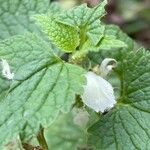
Lamium album
گزنه خام · White Dead-nettle · White-nettle · Blind Nettle · Deadnettle
Description
Source: leafsnapLamium album, commonly known as white dead-nettle, is a herbaceous perennial plant that belongs to the mint family, Lamiaceae. Native to Europe and Asia, this plant has spread and naturalized in many parts of the world. It typically grows up to 50 cm tall, featuring square stems and heart-shaped, toothed leaves arranged oppositely. The plant produces white or pinkish-purple flowers that bloom from April to September, forming whorls around the stem. White dead-nettle thrives in moist soils and is commonly found along roadsides, meadows, woodland edges, and waste places. It serves as an essential nectar source for bees during early spring when other flowers are scarce. Historically, Lamium album has been valued for its medicinal properties, particularly its anti-inflammatory effects. Early humans also used it as a food source, consuming its leaves either raw or cooked. In modern times, Lamium album continues to be used medicinally as an herbal remedy for various ailments, including respiratory infections, menstrual cramps, and digestive disorders. Overall, Lamium album is a versatile plant that offers ecological benefits like pollinator support while also providing medicinal properties. This combination makes it an important species both ecologically and culturally.
🌳 The white deadnettle plant is commonly grown for its vibrant green leaves, delicate white flowers, and its remarkable ability to thrive in deep shade. It serves as an excellent groundcover for shady areas and can be a beautiful addition to shade gardens or perennial beds that prefer low light.
Care Guide
💧 Water Every 7 days
White deadnettle flourishes in environments with gentle, filtered sunlight and consistent soil moisture, provided it doesn't become waterlogged. To maintain its lush foliage and white blooms, it needs weekly watering, especially during its active growing season. When grown outdoors, natural rainfall can supplement its care as an herbaceous perennial.
How should I water my White deadnettle?
To take care of the White deadnettle, it's best to use filtered water at room temperature or slightly warmer. Tap water may have harmful particles, so filtering it is safer. The plant prefers warm water as it's used to a warm environment, and cold water can be a shock. Avoid watering from above to prevent issues with the leaves. Instead, pour the filtered, room temperature water directly onto the soil until it's completely soaked. This helps the roots stay moist and spread throughout the soil to gather the nutrients necessary for the plant's well-being.
What should I do if I give my White deadnettle too much or too little water?
Overwatering can be more problematic than underwatering for the health of your White deadnettle. When this plant receives too much water, its stems and leaves may wilt and turn yellow. Overwatering can also lead to diseases like root rot, mold, and mildew, which can be fatal for your plant. Underwatering is less common, as the White deadnettle has decent drought tolerance. However, it is still a possibility, and when it happens, the leaves may become brittle and brown. It is important to recognize the signs of overwatering early. Some diseases caused by overwatering, such as root rot, may not be treatable if you wait too long. If you notice early signs, reduce your watering schedule immediately and check the soil's drainage. If the soil drains poorly, replace it with a loose, well-draining potting mix. On the other hand, if you notice signs of underwatering, increase your watering frequency until the signs improve.
How frequently should I water my White deadnettle?
If your White deadnettle is in a pot, the most accurate way to determine if it needs water is by checking the soil. If the top two to three inches of the soil are dry, it's time to water it. The same method can be used if you're growing it outdoors in the ground. Once the top few inches of soil are dry, it's time to water. Typically, this means watering once a week during spring and early fall. However, during very hot weather, you may need to water it twice a week or more. It's worth noting that mature, well-established White deadnettles have a great ability to withstand drought.
How much water does my White deadnettle plant need?
When watering your White deadnettle, don't hesitate to give it a generous amount of water. Make sure the first two to three inches of soil are dry before watering thoroughly. The goal is to fully saturate the soil, so don't be afraid to add enough water that it starts to drain out of the pot's drainage holes. If you don't see any excess water draining, it means you haven't watered enough. However, be careful not to let water accumulate in the soil, as that can harm the plant. Also, if water isn't draining properly, it could mean that the soil doesn't have good drainage, which isn't good for the plant's health. If the plant is outside, an inch of rain per week should be enough.
How should I water my White deadnettle as it grows?
The water needs of the White deadnettle can vary depending on its growth stages. When it is in its early years or has recently been transplanted, it will require more water to support the growth of new roots. These roots need extra moisture to perform their best. After a few seasons, the White deadnettle will need less water. Another stage where it may require more water is during the bloom period, as the development of flowers can use up a significant amount of moisture.
☀️ Light Partial sun
White deadnettle performs best in spots where sunlight is filtered, though it can also grow in fully sunlit or deeply shaded areas. Because it originates from habitats with varying light conditions, it is adapted to different levels of sun. Still, excessive or insufficient light can impede growth or lessen vigor.
What are the sunlight requirements for White Deadnettle?
White Deadnettle thrives best under varying degrees of sun exposure due to its versatile nature, originating from locations with diverse sunlight conditions. It can grow in partial sun, requiring about 3-6 hours of sunlight, and also in full sun or full shade, which entails receiving more than 6 hours of sunlight. It's crucial to observe the movement of sunlight through your garden to choose locations that offer a perfect balance of light and shade, ensuring optimal growth and health of your plants.
How does artificial lighting benefit White Deadnettle and other indoor plants?
Artificial lighting plays a crucial role in the growth of indoor plants, especially White Deadnettle, when natural sunlight is insufficient. It promotes faster, healthier growth by compensating for the lack of natural light. Using LED lights, which can be customized to provide specific wavelengths, is recommended. The intensity of artificial light needed varies with plant types: full sun plants require 30-50W/sq ft, partial sun plants need 20-30W/sq ft, and full shade plants should get 10-20W/sq ft. The light source should be placed 12-36 inches above the plant and kept on for 8-12 hours per day to mimic natural daylight hours adequately.
What are the signs of insufficient light in White Deadnettle?
When grown indoors with inadequate light, White Deadnettle may exhibit several symptoms indicating light deficiency. These include smaller new leaves, leggy or sparse growth, faster leaf drop, slower or halted growth, and leaves that are lighter in color or show signs of chlorosis (yellowing). Other symptoms can also develop due to excessive light, such as sunscald, leaf curling, wilting, and leaf scorching, which manifest as damage or stress responses to intense light exposure.
What strategies can help improve light conditions for White Deadnettle?
To optimize light conditions for White Deadnettle, gradual adaptation to sunlight is key. For indoor plants, gradually shifting them to sunnier spots or using artificial light, such as desk lamps or professional plant grow lights for at least 8 hours daily, can be beneficial. For outdoor plants, moving them to sunnier locations week by week helps them adapt without the risk of sunburn. Reducing obstructions, such as pruning trees or transplanting smaller plants to sunnier spots, are good practices for enhancing sunlight exposure. However, it's vital to recognize that parts of the plant damaged by insufficient light may not recover, but providing better light conditions will promote the growth of healthy new foliage.
🌡️ Temperature 5–35°C
White deadnettle is naturally found in temperate regions and prefers temperatures between 41 and 95°F (5 to 35℃). During seasonal shifts, maintain temperatures within this range for optimal growth.
What temperature is best for White deadnettle?
The ideal temperature for White deadnettle depends on the time of year. There are two main seasons to consider: the growing season and the dormancy season. During the growing season, when the plant is sprouting, the best temperature range is 65-80℉ (18-27℃). If it gets colder than 15℉ (-10℃), the plant may suffer and its leaves may brown and wilt. However, if it's just a brief cold snap, the plant might survive with some help. On the other hand, during the warmer parts of the year, it's important to protect White deadnettle from temperatures above 95-105℉ (35-40℃). Anything higher can damage the foliage and blooms, causing wilting, drooping, and even sunburn on the leaves. There are ways to easily combat this issue!
What temperature do first-year White deadnettle plants need to grow?
If it's the first year for your White deadnettle plant outside, it may require extra care during the coldest months. Frost can cause severe damage and prevent healthy regrowth in the spring. To ensure its well-being, the plant should be kept at a temperature of 40℉(5℃) or higher. This can be achieved by bringing the plant indoors for a month or two, or by using mulch or fabric barriers to protect it from frost. It is advisable to place the White deadnettle in a shadier area during its first year or two as younger and weaker plants struggle more to regulate their temperature in hotter conditions. For the first-year White deadnettle, it's important to limit direct sunlight exposure to no more than five hours a day, especially if the daytime temperature exceeds 80℉(27℃). To control the impact of summer heat, use shadecloth and regularly water or mist the plant.
How can I keep White deadnettle safe from very hot or very cold weather?
To protect White deadnettle from frost or cold damage, there are a few measures you can take if temperatures drop below 15℉(-10℃) during the growing season. If you're growing White deadnettle in a container, simply bring it inside in bright, indirect light until temperatures rise above the lower threshold. For ground-planted White deadnettle, you can use mulch or horticultural fabric to create an insulated barrier around the plant. This will protect it from frost and cold wind. In case the temperature goes higher than 80℉(27℃) in the shade during the day, it's important to limit the plant's exposure to sunlight. Ideally, expose it to no more than six hours of sunlight per day, preferably in the morning. To reduce the amount of direct sunlight hitting the plant during the hottest parts of the day, you can put up shade cloth or a fine plastic mesh. Additionally, installing a misting system around the base of the plant can help release cooling mist during the day, lowering ground temperatures.
"Recommended temperatures during the dormant season for White deadnettle"
White deadnettle requires a specific amount of cold during winter to remain dormant until it's time to sprout. Sprouting too early, before the threat of frost has passed, can be harmful, especially if it has already started growing. Ideally, winter temperatures should be below 32℉(0℃), but up to 40℉(5℃) is acceptable. However, in temperate climates like woodland rainforests, there may be unexpected warm periods that could cause early sprouting. If there is still a risk of frost, you can protect the new sprout by covering it with clear plastic on stakes. This cover can be removed once the threat of frost has passed. Although White deadnettle may naturally sprout at the right time without assistance, using this method increases the chances of successful second sprouting.
💨 Humidity dry (<40%)
This plant prefers dry conditions, so don't mist it. However, watering it less often can also thrive in higher humidity.
🪴 Soil 6-7
🌱 Fertilizer
The best time to fertilize a White deadnettle is in early spring, when it is coming out of dormancy and starting active growth. Fertilizing supplies essential nutrients needed for healthy growth. Although White deadnettle has fairly low fertilizer requirements, applying fertilizer annually can improve its survival and encourage better, longer-lasting flowers.
Why should I put fertilizer on my White deadnettle?
The White deadnettle's leaves are a key part of its structure, and fertilization is an important way to ensure they look great and function properly. By fertilizing correctly, you can maintain consistent leaf color and a healthy texture. Fertilization also benefits the plant below the surface, promoting the growth of new roots and maintaining existing ones. This not only keeps the plant healthy in the present, but also improves its ability to absorb nutrients from the soil in the future.
What is the ideal time to fertilize my White deadnettle?
If you grow White deadnettle outdoors, it will send out new growth in early spring. This is a signal that it's time to start fertilizing. Normally, one application of fertilizer is enough for the plant to thrive. But if you want maximum growth, you can fertilize multiple times in spring and early summer. In this case, you can feed the plant every month to a month and a half.
When is it not a good idea to add fertilizer to my White deadnettle?
During the late fall and winter, your White deadnettle goes into a dormant phase and stops producing new growth. It's important to not fertilize it during this time. In the spring and summer, if you choose to fertilize multiple times, gradually reduce the amount as summer approaches because the plant's growth rate slows down. Overall, it's not a good idea to fertilize the White deadnettle when the weather is unusually hot or when the soil is very dry as this can cause stress and premature death.
What kind of fertilizer should I use for my White deadnettle?
Choosing the best fertilizer for a White deadnettle is actually quite simple. These plants do well with a general-purpose garden fertilizer that has equal amounts of nitrogen, phosphorus, and potassium. The most effective ratio is 10-10-10 or something similar. It's important to avoid fertilizers with high nitrogen content if you're unsure. Granular fertilizers are generally the best option for White deadnettles, especially those that release slowly and are easy to apply to the soil. Additionally, feeding your White deadnettle with organic compost can be beneficial.
How can I make my White deadnettle healthy and grow well?
To ensure the best growth for your White deadnettle, wait until the first leaves begin to emerge in early spring. Once you notice this, apply a slow-release fertilizer with a balanced formula to the soil around the base of the plant. If desired, you can repeat this process later in the season. Remember to apply the fertilizer to the soil, not directly to the plant. This may require moving some leaves aside to access the soil near the roots. It's also beneficial to water your White deadnettle before and after fertilizing.
🪴 Pot & Repot Every 12 months
✂️ Pruning
White deadnettle is a resilient perennial plant that resembles a nettle and is characterized by its white flowers. To encourage healthy growth, it is best to prune the plant from early to late spring. This involves removing old stems to make way for new shoots and ensuring good air circulation. After the plant flowers, further pruning can prolong the blooming period and help maintain its vigor and appearance.
🌿 Propagating
🐛 Diseases & pets
☠️ Toxicity
Lamium album has no toxic effects reported.
Characteristics
- Plant Type
- Herb
- Life Cycle
- Perennial
- Genus
- Lamium
- Family
- Lamiaceae
- Hardiness Zone
- 5-9
- Mature Height
- 49 cm to 91 cm
- Mature Spread
- 40 cm
- Leaf Color
- Green
- Leaf Type
- Deciduous
- Flower Color
- White
- Flower Size
- 0.20 cm to 0.25 cm
- Bloom Time
- Mid spring, Late spring, Early summer
- Planting Time
- Spring
- Harvest Time
- Early summer, Mid summer
- Native Area
- Turkey, Austria, Sweden, Pakistan, Belarus, Russia, Uzbekistan, Germany, Iraq, Koppen, Romania, South Korea, Belgium, France, Nepal, Netherlands, Tajikistan, Bulgaria, Poland, Ukraine, China, Afghanistan, Norway, Italy, Kazakhstan, Kyrgyzstan, Spain, Switzerland, Denmark, Japan, Finland, Mongolia, Iran, Hungary, Turkmenistan