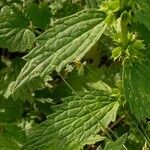
Lamium galeobdolon
Yellow archangel · Yellow Dead-nettle · Yellow deadnettle · Aluminium plant · Artillery plant
Description
Source: leafsnapLamium galeobdolon, commonly known as yellow archangel, artillery plant, aluminium plant, or yellow weasel-snout, is a widespread wildflower in Europe, and has been introduced elsewhere as a garden plant. It displays the zygomorphic flower morphology, opposite leaves, and square stems typical of the mint family, Lamiaceae. The flowers are soft yellow and borne in axial clusters, with a prominent 'hood' (the dorsal lobe of the corolla). It spreads easily and so has been commonly used as an ornamental ground cover. It can be invasive in places where it is not native and caution must be taken when planting in these areas.
🌳 Yellow archangel is more than just a simple ground cover; it is frequently identified as an indicator species of ancient woodlands, which are forests that have existed for several centuries and therefore hold distinct ecological importance. It does well in those settings, and its presence can indicate a well-established ecological habitat. Moreover, its dense matting habit can help prevent soil erosion, and its flowers attract bees, making it valuable to pollinators and contributing to biodiversity.
🎭 Illumination
Care Guide
💧 Water
Yellow archangel thrives in its native understory habitat, where it prefers soil that is evenly moist. To maintain its lush foliage, it needs to be watered weekly. This plant adapts well to outdoor environments, flourishing when the soil moisture mimics the humidity of a forest floor. This level of moisture is essential for its growth during the active season.
How should I water my Yellow archangel plant?
To properly water the Yellow archangel, it is best to use filtered water at room temperature. Tap water may contain harmful particles that can negatively affect the plant's health. Since the Yellow archangel originates from a warm environment, it is important to avoid using cold water as it can shock the plant. Additionally, overhead watering should be avoided to prevent foliage complications. Instead, you should apply the filtered room temperature water directly to the soil until it is completely soaked. This will benefit the plant by moistening the roots and aiding in their spread through the soil to collect necessary nutrients.
What should I do if I give too much or too little water to my Yellow archangel?
Overwatering is a more common issue for Yellow archangel plants, and it can lead to wilting, yellowing of stems and leaves, and diseases like root rot, mold, and mildew, which can be fatal. Underwatering is less common but still possible, causing brittle and brown leaves. It's important to recognize the signs of overwatering early as some diseases may be irreversible if left untreated. If you notice early signs of overwatering, reduce watering immediately and check the soil's drainage. If it drains poorly, replace it with a well-draining mix. Conversely, if signs suggest underwatering, simply water more regularly until the signs subside.
How often do I need to water my Yellow archangel plant?
To determine if your Yellow archangel plant needs water, follow these steps based on whether it is in a pot or planted in the ground. For potted plants, check the moisture level by sticking your finger into the soil. If the top two to three inches are dry, it's time to water. For plants in the ground, use a similar method to test the soil and water when the top few inches are dry. During spring and early fall, watering about once a week is usually sufficient. However, in extremely hot weather, you may need to water twice or more per week. It's worth noting that mature and well-established Yellow archangel plants have a good tolerance for drought.
How much water does my Yellow archangel plant need?
When watering your Yellow archangel, don't hold back on the amount of water you give. Make sure the first two to three inches of soil are dry, then water the plant thoroughly. It's important to soak the soil completely, allowing excess water to flow out of the drainage holes at the bottom of the pot. If you don't see excess water draining, you may have underwatered the plant. However, be careful not to let the water accumulate in the soil, as this can be harmful. On the other hand, if water doesn't drain properly from the pot, it could mean the soil doesn't drain well, which is bad for the plant's health. If the plant is outdoors, 1 inch of rain per week should be enough.
How do I water my Yellow archangel as it grows?
The water needs of the Yellow archangel can vary depending on its growth stages. In the first few years of its life or after transplanting, it requires more water than usual. During these stages, the Yellow archangel focuses on developing new roots to support future growth, and these roots require additional moisture. As the Yellow archangel matures, it will need less water. Additionally, during the bloom period, when the plant is producing flowers, it may require more water to support the development of the blooms.
☀️ Light Partial sun
The yellow archangel favors bright places where the sun is softened, such as beneath trees. However, it can also thrive in locations with reduced sunlight. Throughout its different growth phases, the yellow archangel stays adaptable to varying light levels. An environment that is too sunny or too shaded can potentially impede its healthy growth. This adaptability reflects its original habitat, which featured changing sunlight exposure.
What are the sunlight requirements for the Yellow Archangel?
The Yellow Archangel flourishes in locations where sunlight is filtered, such as beneath trees, but can adapt to areas with less sun exposure. This plant prefers about 3-6 hours of sunlight daily (partial sun), whereas full shade refers to less than 3 hours of sunlight. An excessively sunny or too dark environment might prevent healthy growth. The flexibility in light conditions is tied to its natural growth environment, which experiences variable sunlight.
How can artificial lighting support Yellow Archangel's growth indoors?
Indoor Yellow Archangels require adequate lighting, especially in winter or less sunny spaces. Artificial lights can be a vital solution for optimal growth, mimicking natural sunlight. LED lights are ideal because they can be customized to provide specific light wavelengths needed by plants. Full sun plants need 30-50W/sq ft, partial sun plants need 20-30W/sq ft, and full shade plants need 10-20W/sq ft of artificial light. The light source should be placed 12-36 inches above the plant for 8-12 hours per day to simulate natural daylight hours.
What are the symptoms of light deficiency or excess in Yellow Archangel?
Symptoms of light deficiency in Yellow Archangel include smaller new leaves, leggy or sparse growth, early leaf drop, halted growth, pale new leaves, and possible chlorosis. Excessive sunlight can result in chlorosis, sunscald, leaf curling, wilting, and leaf scorching. These symptoms indicate either a lack of sufficient light or an overexposure, leading to a range of growth and health issues for the plant.
What solutions can optimize Yellow Archangel's growth in different environments?
To optimize growth indoors, gradually shift plants to sunnier spots each week until they receive 3-6 hours of direct sunlight daily or use artificial light for plants that are not easily movable. Outdoors, gradually move your plants to sunnier locations each week to prevent sunburn. If sunlight is obstructed, consider pruning trees or transplanting smaller plants to sunnier spots with ample sunlight and good drainage. Observe your garden to ensure plants receive the perfect balance of light and shade.
🌡️ Temperature 5–32.2°C
Yellow archangel is native to temperate regions and favors temperatures of 68 to 95 °F (20 to 35 ℃). Seasonal temperature adjustments can promote its healthy growth, especially during extreme weather.
What is the origin of Yellow archangel and what climate does it prefer?
Yellow archangel, whose botanical name is Lamium galeobdolon, originates from regions with a temperate climate. It thrives in temperatures ranging from 68 to 95 °F (20 to 35 °C). Making adjustments to accommodate seasonal temperatures can help ensure its healthy growth, particularly in extreme weather conditions. This plant is particularly adept at surviving cold conditions and generally does not require special frost protection measures during winter.
What should be done to protect Yellow archangel in extreme cold?
Although Yellow archangel has strong resistance to cold, if the winter temperatures are anticipated to drop below -30°C, it's important to take steps to protect the plant from the cold. This protection can be provided by covering the plant with materials like soil or straw. Additionally, before the onset of the first freeze in autumn, it's recommended to water the plant abundantly. This ensures the soil stays moist and enters a frozen state, which helps prevent drought and water scarcity for the plant during the harsh winter months and into the early spring.
How does low temperature affect Yellow archangel and what are the solutions?
Yellow archangel is tolerant to cold and fares best when temperatures remain above 20°C. During winter, it's advised to ensure temperatures stay above 0°C. If temperatures fall below -30°C, while the plant may not show noticeable changes during the winter, there could be a reduction, or even absence, of sprouting in spring. Should this occur, it's recommended to remove any parts of the plant that have failed to sprout in spring as a solution to encourage new growth.
What impact does high temperature have on Yellow archangel and how can it be mitigated?
In summer, it's important to maintain the temperature around Yellow archangel below 35°C. If the temperature rises above 38°C, the leaves may lighten in color, become prone to curling, and suffer from sunburn. In severe cases, the entire plant may wilt and dry out. To mitigate these effects, any sunburned and dried parts should be trimmed away. Moving the plant to a shaded area or using a shade cloth to protect it from the midday and afternoon sun can be beneficial. Additionally, watering the plant in the morning and evening to maintain soil moisture is advised.
💨 Humidity normal (40-60%)
This plant will thrive in moderate humidity, which is probably the level in your home. However, misting it a few times a week can be very beneficial. Make sure the room has good ventilation.
🪴 Soil 6-7
🌱 Fertilizer
A single fertilizer application in spring is generally adequate for Yellow archangel, though several feedings can boost growth to its fullest. Apply fertilizer about once every month to a month and a half. Fertilizing improves the leaves' appearance and function, helping maintain even color and a healthy texture. It also promotes root development and nutrient uptake, supporting the plant's long-term health.
Why is it important to add fertilizer to my Yellow archangel plant?
The main structure of the Yellow archangel is made up mostly of leaves. Fertilization is a great way to ensure that these leaves not only look great but also function properly. When you fertilize your Yellow archangel, it will help maintain the leaves' consistent color and healthy texture. Additionally, fertilization benefits the plant below the soil's surface by promoting the growth of new roots and maintaining existing roots. This not only keeps the plant healthy presently but also helps it absorb soil nutrients more effectively in the future.
When should I fertilize my Yellow archangel plant?
If you grow your Yellow archangel outdoors each year, you can tell it's time to start fertilizing when new growth shoots out in early spring. Generally, one application of fertilizer in spring is sufficient. However, if you want to maximize growth, you can fertilize your Yellow archangel multiple times throughout spring and early summer, around once every month to a month and a half.
When is the best time to not fertilize my Yellow archangel?
During the late fall and winter, your Yellow archangel goes into a dormant phase and stops producing new growth. As a result, it is best to avoid fertilizing it during this time. In the spring and summer, if you decide to fertilize, start decreasing the amount you use as summer approaches because the growth rate of your Yellow archangel will also slow down. In general, it is not recommended to fertilize your Yellow archangel when the weather is unusually hot or when the soil is extremely dry, as doing so can cause stress and premature death.
What kind of plant food does my Yellow archangel plant need?
Choosing the best fertilizer for a Yellow archangel is actually quite simple. These plants thrive with a general-purpose garden fertilizer that contains equal amounts of nitrogen, phosphorus, and potassium. A fertilizer with a 10-10-10 ratio or something similar will work well. It's best to avoid fertilizers with high nitrogen levels if you're unsure. Granular fertilizers are the most effective for Yellow archangel and should be slow-release for easy application to the soil. Additionally, using an organic soil amendment like compost can be beneficial for feeding your Yellow archangel.
How should I fertilize my Yellow archangel plant?
To ensure healthy growth of your Yellow archangel in early spring, wait until its first leaves emerge from the soil's surface. Apply a balanced, slow-release fertilizer to the soil surrounding the plant's base. If desired, you can repeat this process later in the season. Remember to apply fertilizer to the soil rather than directly onto the plant, which may require moving some leaves aside. It's also beneficial to water the Yellow archangel before and after fertilizing.
🪴 Pot & Repot Every 12 months
✂️ Pruning
Yellow archangel, known for its distinctive yellow flowers and variegated leaves, needs to be pruned from early to late spring to control its growth and prevent it from becoming invasive. To do this, remove any dead stems and shape the plant to improve airflow. Make sure to sterilize your tools beforehand to prevent the spread of disease, ensuring the plant remains healthy and its blooms stay vibrant.
🌿 Propagating
🐛 Diseases & pets
☠️ Toxicity
Characteristics
- Plant Type
- Herb
- Life Cycle
- Perennial, Annual
- Genus
- Lamium
- Family
- Lamiaceae
- Hardiness Zone
- 4-8
- Mature Height
- 40 cm to 76 cm
- Mature Spread
- 30 cm to 61 cm
- Leaf Color
- Green, Variegated, Silver
- Leaf Type
- Evergreen
- Flower Color
- Yellow
- Flower Size
- 2.54 cm
- Bloom Time
- Mid spring, Late spring, Early summer
- Planting Time
- Spring
- Harvest Time
- Early summer, Mid summer
- Native Area
- Turkey, Austria, Sweden, Slovakia, Montenegro, Croatia, Belarus, Russia, Germany, Estonia, Romania, Latvia, Belgium, France, Netherlands, Czech Republic, Bulgaria, Poland, Ukraine, Serbia, Lithuania, Italy, Switzerland, Denmark, Iran, Albania, Ireland, United Kingdom, Hungary