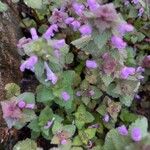
Lamium hybridum
Cut-leaved purple dead-nettle · Purple Dead-nettle · Cut-leaved Dead-nettle · Northern Dead-nettle · Cut-leaved red dead-nettle
Description
Source: leafsnapLamium hybridum, commonly known as spotted dead-nettle, is a herbaceous perennial plant belonging to the mint family. Native to Europe and Asia, it has been introduced and naturalized in many regions worldwide. The plant typically grows up to 30 cm tall and has a spreading habit with square stems covered in fine hairs. The leaves of Lamium hybridum are opposite, heart-shaped or oval, and have toothed margins. They are green with white or silver markings, which give the plant its common name, "spotted dead-nettle." The flowers bloom from late spring to early summer on spikes that rise above the foliage. The flowers are tubular with two lips: an upper hooded lip and a lower lip with three lobes. Depending on the cultivar, the flowers of Lamium hybridum can be pinkish-purple or white. These blooms attract bees, butterflies, and other pollinators, making the plant an excellent choice for pollinator gardens. Lamium hybridum thrives in moist but well-drained soil in partial shade, although it can also tolerate full sun if given sufficient moisture. It is easy to grow from seed or by dividing established clumps, making it a popular choice for low-maintenance ground cover in gardens. Besides its ornamental value as a ground cover, Lamium hybridum possesses medicinal properties. It contains compounds such as tannins, which have anti-inflammatory properties traditionally used for treating wounds, diarrhea, and other ailments.
Care Guide
💧 Water Every 7 days
The cut-leaved dead-nettle thrives in moist conditions and requires evenly moist soil, necessitating weekly watering. This resilient plant, often used as ornamental ground cover, benefits from mulching to help retain soil moisture, reflecting its forest origin. It shows moderate drought tolerance and flourishes in shaded environments.
How should I water my Cut-leaved dead-nettle plant?
To water Cut-leaved dead-nettle, you have several options. You can use a garden hose with a spray nozzle, a watering can, or any other common watering tool. This plant is not too particular about the type of water it receives, so rainwater, tap water, or filtered water will all work fine. However, it's generally best to avoid watering from overhead as this can harm the leaves and flowers and potentially cause disease. Instead, you can consider setting up a drip irrigation system, which applies water evenly and directly to the soil. If you have a container-grown Cut-leaved dead-nettle, the same watering approach applies, but you can use a cup, watering can, or simply pour water from your tap directly onto the soil.
What should I do if I give my Cut-leaved dead-nettle too much water or too little water?
The solution for underwatering Cut-leaved dead-nettle is simple: when you notice the plant is lacking moisture, water it more regularly. Overwatering, on the other hand, can be a more serious issue if not detected early. Overwatered Cut-leaved dead-nettle can develop diseases leading to its decline and death. To prevent this, choose a suitable location with ample sunlight to dry the soil and good drainage to avoid stagnant water. If you overwater your potted Cut-leaved dead-nettle, consider changing to a new pot with proper drainage and loose soil.
How frequently should I water my Cut-leaved dead-nettle?
Cut-leaved dead-nettle requires regular watering during the growing season. In the spring, water it once a week. As the weather gets hotter, increase watering to two to three times a week. However, be careful not to exceed this rate as it can be harmful to the plant. Regardless of watering frequency, the soil should remain moist but not wet. When watering potted cut-leaved dead-nettle, you will generally need to water more frequently than if it was planted in the ground. Potted soil tends to dry out faster, so watering a few times per week is usually necessary compared to once a week for plants in the ground.
How much water does my Cut-leaved dead-nettle plant need?
There are a few different ways to determine how much water to give to your Cut-leaved dead-nettle. Some gardeners feel the soil to assess moisture levels. They suggest watering until the top six inches of soil feel moist. Another option is to use a set measurement. Generally, Cut-leaved dead-nettle needs about two gallons of water per week, depending on temperature and soil dryness. However, following exact guidelines may cause overwatering if your plant requires less water. When growing in a container, the approach is different. Moisture should be applied to all dry soil layers. You can test this by sticking your finger in the soil or watering until a slight trickle exits the drainage holes.
How can I know if I'm giving enough water to my Cut-leaved dead-nettle?
Avoiding overwatering your Cut-leaved dead-nettle can be a bit challenging due to conflicting needs. These plants have deep roots and require weekly watering to keep the soil moist. However, these plants are also very susceptible to root rot, which can cause browning. Underwatering is less likely to be an issue as Cut-leaved dead-nettle can survive for a while without additional watering. However, if you go too long without watering, the plant may wilt and develop dry leaves.
☀️ Light Full sun
Cut-leaved dead-nettle needs a generous amount of sunlight for healthy growth. At first the plant can tolerate some shade, but to truly prosper it requires abundant light. Its native habitat, which reflects its light needs, receives ample light. Both excessive and insufficient light can restrict its growth.
What are the sunlight requirements for Cut-leaved dead-nettle?
Cut-leaved dead-nettle thrives in conditions where it can receive an ample supply of sunlight, essential for its healthy growth. While it can initially tolerate some shadow, for optimal development, it requires a significant amount of light. The plant's natural habitat, which is rich in sunlight, reflects its need for bright conditions. However, both too much and too little light can adversely affect its growth. There are specific categories to consider: full sun, which means the plant should receive above 6 hours of sunlight daily, and partial sun, indicating about 3-6 hours of sunlight.
How can artificial lighting be used for indoor Cut-leaved dead-nettle plants?
When natural sunlight is insufficient, particularly during winter or in less sunny indoor locations, artificial lighting becomes crucial for the growth of indoor Cut-leaved dead-nettle plants. Optimal growth under artificial lighting requires selecting the right type of light, such as LED lights, which can provide specific light wavelengths needed by the plant. The intensity of artificial light should be 30-50W/sq ft for full sun plants, 20-30W/sq ft for partial sun plants, and 10-20W/sq ft for full shade plants. The light source should be placed 12-36 inches above the plant to mimic natural sunlight conditions, and the plants should be exposed to this artificial light for 8-12 hours per day.
What symptoms indicate insufficient or excessive sunlight in Cut-leaved dead-nettle?
When Cut-leaved dead-nettle is grown under inadequate light conditions, it may exhibit symptoms such as smaller new leaves, leggy or sparse growth, faster leaf drop, slowed or halted growth, paler new leaves, and conditions like chlorosis, sunscald, leaf curling, wilting, and leaf scorching. Chlorosis involves the loss of green color, turning leaves yellow because of chlorophyll breakdown under excessive sunlight, negatively impacting photosynthesis. Sunscald damages leaves or stems with intense light exposure, leaf curling reduces surface area exposure to minimize water loss, wilting occurs from loss of turgor pressure under extreme sunlight, and leaf scorching is characterized by brown, dry edges on leaves.
What solutions can help manage sunlight exposure for Cut-leaved dead-nettle?
To manage sunlight exposure for optimal growth of Cut-leaved dead-nettle, gradually adjust the plant to brighter conditions, aiming for at least 6 hours of direct sunlight daily. For indoor plants, use natural sunlight from a south-facing window or artificial lighting, such as a desk lamp or grow lights, for a minimum of 8 hours daily. For outdoor plants, transition them to sunnier spots weekly to avoid shock and sunburn. If sunlight obstruction is an issue, prune blocking trees or transplant smaller plants to sunnier locations with good drainage during their dormant period, typically late winter or early spring.
🌡️ Temperature 0–25°C
Cut-leaved dead-nettle is suited to prosper in a temperate climate, with an optimal temperature range of 68 to 95°F (20 to 35℃). Originating from a native habitat similar to this climate, it favors those temperatures to grow well.
What is the ideal climate for Cut-leaved dead-nettle?
Cut-leaved dead-nettle thrives in a temperate climate, with its ideal temperature range being between 68 to 95°F (20 to 35°C). Originating from regions that naturally provide such conditions, it flourishes best within this temperature range. Additionally, it is highly tolerant to cold temperatures and doesn't require special frost protection measures in winter. It is beneficial, though, to water the plant generously before the first freeze of autumn to ensure the soil remains moist and enters a frozen state. This preparation helps the plant to avoid drought and water scarcity during the colder months and early spring.
How does Cut-leaved dead-nettle handle low temperatures?
Cut-leaved dead-nettle exhibits extreme tolerance to cold temperatures, managing to endure winter conditions well above -35°C. Should the temperatures dip below this threshold, the plant might not show immediate adverse effects during the winter. However, this could lead to reduced sprouting or a complete lack of sprouting in the following spring. To mitigate any potential damage, it's advised to remove any parts of the plant that have failed to sprout once the warmer spring weather arrives.
What should I do if the Cut-leaved dead-nettle is exposed to high temperatures?
Cut-leaved dead-nettle struggles with high temperatures exceeding 35°C, at which point its growth halts and it becomes more vulnerable to rot. To protect and salvage the plant in such conditions, you should remove any parts that have become sunburned or dried out. Relocating the plant to shade, especially during the peak sun of midday and afternoon, or using a shade cloth can be effective measures. Additionally, watering the plant in the cooler times of morning and evening will help keep the soil moist, assisting in the plant's recovery from heat stress.
💨 Humidity
🪴 Soil 6-7
🌱 Fertilizer
Cut-leaved dead-nettle does well with regular, diluted fertilizer applications to encourage healthy leaf development. Fertilize Cut-leaved dead-nettle roughly once a month during the summer. Nitrogen is important for foliage, and supplying nitrogen-rich sources helps Cut-leaved dead-nettle thrive.
🪴 Pot & Repot
✂️ Pruning
The cut-leaved dead-nettle is a hardy annual plant featuring distinctive cut leaves and purple flowers. To encourage blooming and manage its growth, prune the plant from early to late spring. This also helps improve air circulation and prevent disease. Make sure to use clean, sharp tools to ensure effective pruning and maintain the plant's health.
🌿 Propagating
🐛 Diseases & pets
☠️ Toxicity
Lamium hybridum has no toxic effects reported.
Characteristics
- Plant Type
- Herb
- Life Cycle
- Annual, Perennial
- Genus
- Lamium
- Family
- Lamiaceae
- Hardiness Zone
- 3
- Mature Height
- 10 cm to 30 cm
- Mature Spread
- 30 cm to 61 cm
- Leaf Color
- Green, Dark Green
- Leaf Type
- Deciduous
- Flower Color
- Pink, Purple, White
- Flower Size
- 1.52 cm to 2.03 cm
- Bloom Time
- All year round
- Planting Time
- Spring, Summer, Autumn
- Harvest Time
- All year round