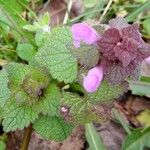
Lamium purpureum
Purple deadnettle · Purple Archangel · Red Deadnettle · Red Dead-nettle · Purple dead-nettle
Description
Source: leafsnapLamium purpureum, commonly known as purple dead-nettle, is a herbaceous flowering plant belonging to the mint family, Lamiaceae. Native to Europe and Asia, it has been introduced and naturalized in many parts of the world. The plant can grow up to 30 cm tall and features square stems with opposite, heart-shaped leaves that have serrated edges. The leaves are green on top and purplish underneath, which gives the plant its common name, "purple dead-nettle." The flowers of Lamium purpureum bloom from March to November in clusters at the tops of the stems. They are small and tubular-shaped with a pinkish-purple coloration that attracts bees for pollination. Lamium purpureum prefers moist soils in shaded areas such as hedgerows, woodland edges, or disturbed areas like roadsides and waste grounds. In traditional medicine practices across Europe and Asia, Lamium purpureum has been used for its anti-inflammatory properties as well as for treating respiratory ailments such as coughs and bronchitis. Overall, this hardy little herbaceous perennial is an attractive addition to any garden border, providing early-season color when few other plants have started blooming!
💡 Purple dead-nettle is a vital wildflower for bees, both wild and cultivated, in temperate regions of Eurasia. It is especially important for hungry bumblebee queens at the peak of their breeding season. Since Lamium purpureum can bloom almost year-round, it continuously nourishes pollinators throughout the spring, summer, and even autumn.
🌳 Contrary to being regarded as an invasive weed, dead Nettle plays an interesting role as a useful companion plant. Its purple flowers attract pollinators, which is important for the biodiversity of gardens. Surprisingly, it is also used as an indicator plant for phosphate-rich soil, making it a practical, unobtrusive way to gauge soil health.
🎭 Self-assurance, bravery, joy, dignified perseverance, clarity of thought, emotional stability
Care Guide
💧 Water Every 3 days
Purple dead-nettle, native to temperate climates, thrives in moist, well-drained soil. While it requires weekly watering, it is also drought-tolerant and benefits from consistent moisture. Rainfall patterns significantly influence its growth cycle, playing a vital role in its seasonal water uptake and overall health.
When should I water my Purple Dead-nettle?
Watering Purple Dead-nettle is essential for its health and growth, requiring attention to soil moisture levels, indicating when to water. Check the soil moisture by inserting your finger into the soil up to 1-2 inches deep; if it feels dry or barely moist, it's time to water. Observe the plant's leaves for signs of wilting or yellowing, which suggest a need for water. Additionally, slow or stunted growth may indicate insufficient hydration. During hot or dry weather, increase watering frequency. Always check the root ball's moisture, and be mindful of the risks associated with both under and over-watering. Proper watering promotes vibrant growth, flowering, and disease resistance.
How should I water my Purple Dead-nettle?
Watering Purple Dead-nettle correctly involves several techniques and tools to maintain evenly moist soil without over-saturation. Bottom-watering by placing the pot in a dish of water allows the plant to absorb moisture evenly. Misting can help replicate the plant's preferred humid conditions, and using a watering can with a narrow spout helps target water to the base, avoiding foliage wetness. Utilize a moisture meter to accurately gauge soil moisture and prevent extremes. Focus watering on the plant's base, monitor for signs of overwatering, and reduce watering during the plant's rest period in winter. Using room-temperature water and watering in the early morning are best practices.
How much water does Purple Dead-nettle really need?
The amount of water Purple Dead-nettle requires depends on various factors, including pot size, root depth, and plant size. With a shallow root system, it's crucial to avoid overwatering. Water until the soil is moist but not waterlogged, ensuring water penetration of at least 1-2 inches deep. Signs of proper hydration include bright green leaves and sturdy stems, while over or under-watering can lead to yellow leaves, wilting, or reduced vigor. Although drought-tolerant to an extent, Purple Dead-nettle thrives in consistently moist soil with good drainage. Checking soil moisture and incorporating organic mulch can help maintain optimal hydration.
What kind of water is best for Purple Dead-nettle?
Purple Dead-nettle performs best with natural rainwater due to its balanced pH and lack of chemicals. Distilled and filtered water are suitable alternatives, ensuring they're free of harmful contaminants. While tap water is usable, it may contain chlorine, fluoride, and minerals that could affect the plant, especially if concentrations are high. To use tap water safely, let it sit out for at least 24 hours to evaporate chlorine or use a water filter. The plant prefers water at room temperature to avoid shock. Managing water type is important for maintaining healthy growth and minimizing stress.
How do Purple Dead-nettle's watering needs change with the seasons?
Purple Dead-nettle's watering needs vary seasonally. In spring, keep the soil reasonably moist to support its growth phase, adjusting for rainfall and soil condition. Summer may require more frequent watering due to heat and dryness, although overwatering should be avoided. In autumn, maintain moisture for root development but reduce water as temperatures cool. Watering needs decrease significantly in winter; allow the soil to dry more between waterings to prevent root rot. Seasonal adjustments ensure the plant remains healthy and resilient throughout the year.
☀️ Light Full sun
The dead Nettle flourishes with abundant light and can tolerate moderately lit conditions, matching its native habitat where luminosity is quite intense. Sunlight enhances its health and growth, but overexposure or too little light can weaken the plant's vitality due to excess or deficiency.
What are the sunlight requirements for purple dead-nettle?
Purple dead-nettle thrives under full sun, which means it requires above 6 hours of sunlight daily, but it can also grow in partial sun, receiving about 3-6 hours of sunlight. It's essential to monitor the movement of sunlight through your garden to find spots that offer a balanced mix of light and shade, ensuring the plants' optimal growth and happiness. The native habitat of purple dead-nettle is in areas where it can be exposed to intense luminosity, which is crucial for its health and growth. However, too much or too little light can be detrimental, causing various growth issues.
How can artificial lighting benefit indoor purple dead-nettle plants?
When natural sunlight isn't sufficient, especially during winter or in less sunny spaces, artificial lighting becomes a crucial solution for indoor plants like the purple dead-nettle. It promotes faster and healthier growth by providing adequate lighting. LED lights are recommended because they offer customizable wavelengths essential for the plant's needs. Full sun plants should have 30-50W/sq ft of artificial light, partial sun plants need 20-30W/sq ft, and full shade plants require 10-20W/sq ft. The artificial light source should be placed 12-36 inches above the plant, mimicking natural sunlight, and it's suggested that plants get 8-12 hours of light per day.
What are the symptoms of insufficient or excessive light exposure in purple dead-nettle?
Insufficient light causes new leaves to grow smaller, leads to leggy or sparse growth, increases leaf drop, slows or stops growth, and results in lighter-colored or pale leaves due to a lack of chlorophyll. On the other hand, excessive light can cause chlorosis, where leaves turn yellow and lose their green color, sunscald that appears as pale or necrotic areas on the plant, leaf curling as a defense mechanism, wilting due to increased water loss, and leaf scorching, characterized by brown, dry edges on leaves. These symptoms indicate the plant's struggle with either too much or too little light.
How can you improve light conditions for indoor and outdoor purple dead-nettle plants?
For indoor plants, gradually move them to a sunnier location each week until they receive at least 6 hours of direct sunlight daily, using a south-facing window for maximum exposure. If the plant is large or not easily movable, consider using artificial light, keeping a lamp on for at least 8 hours daily, or investing in grow lights. For outdoor plants, adapt them to brighter conditions by gradually moving them to sunnier spots each week to prevent sunburn. If parts of a plant have been damaged by insufficient light, they may not recover, but new growth should be healthy with increased light exposure. Additionally, minimizing obstructions like pruning trees or transplanting smaller plants can help increase sunlight access.
🌡️ Temperature 10–35°C
Dead Nettle comes from habitats that typically maintain temperatures of 68 to 95 °F (20 to 35 °C). Because it prefers warmer conditions, it may need to be moved indoors or placed in warmer parts of the garden when temperatures drop below that range in colder seasons.
What is the native temperature range for Purple dead-nettle, and how does it affect its cultivation?
Purple dead-nettle thrives in environments that maintain a regular temperature range of 68 to 95 °F (20 to 35 °C), preferring warmer climates. This suggests that in regions where temperatures fall below this range in colder seasons, the plant may either need to be grown indoors or in warmer spots of the garden. Despite its preference for warmth, Purple dead-nettle has significant cold resistance and usually does not require special frost protection measures. However, in extreme cold where temperatures are expected to drop below -25°C, protection such as covering the plant with soil or straw is recommended. Additionally, before the onset of the first freeze in autumn, it's advisable to water the plant abundantly to ensure the soil remains moist and enters a frozen state, aiding in the prevention of drought and water scarcity during winter and early spring.
How does Purple dead-nettle react to low temperatures, and what are the recommended solutions?
Purple dead-nettle is cold-tolerant and can best thrive when the temperature remains above 20°C, and it should ideally be kept above 0°C during winter. When temperatures plummet below -25°C, while there may not be noticeable changes during the winter, there is a risk of decreased sprouting or even no sprouting during the following spring. To counteract the effects of such extreme cold, it is recommended to remove any parts of the plant that have failed to sprout in the spring, revitalizing the plant for the new growth season.
How does Purple dead-nettle react to high temperatures, and what are the recommended solutions?
During the summer, it's important to ensure that Purple dead-nettle is kept below 35°C. Temperatures exceeding 38°C can cause the leaves to lighten in color, become prone to curling, suffer sunburn, and in severe cases, cause the entire plant to wilt and dry out. To manage these symptoms, it's recommended to trim away any sunburned and dried-up parts of the plant, move the plant to a location that offers shade from the midday and afternoon sun, or use a shade cloth as needed. Additionally, watering the plant in the morning and evening can help keep the soil moist, further mitigating the risk of heat stress.
💨 Humidity
🪴 Soil 6-7
🌱 Fertilizer
Dead Nettle benefits from regular, dilute applications of fertilizer to encourage healthy leaf growth. You should fertilize Dead Nettle about once a month during the summer months. Nitrogen is vital for foliage, and providing nitrogen-rich sources helps Dead Nettle thrive.
🪴 Pot & Repot
✂️ Pruning
To encourage rapid branching in purple dead-nettle, consider pruning the top shoots either after blooming or before spring. In late summer, you may need to cut back about one-third of the dense branches to improve air circulation and light exposure. Additionally, promptly trimming any faded leaves will help maintain the plant's ornamental value and prevent diseases.
🌿 Propagating
🐛 Diseases & pets
☠️ Toxicity
Characteristics
- Plant Type
- Herb
- Life Cycle
- Annual, Perennial, Biennial
- Genus
- Lamium
- Family
- Lamiaceae
- Hardiness Zone
- 6-9
- Mature Height
- 5 cm to 30 cm
- Mature Spread
- 20 cm
- Leaf Color
- Purple
- Leaf Type
- Deciduous
- Flower Color
- Purple, Pink
- Flower Size
- 1.02 cm to 2.03 cm
- Bloom Time
- Spring
- Planting Time
- Spring
- Harvest Time
- Late spring, Early summer, Mid summer
- Native Area
- Saudi Arabia, Turkey, Austria, Sweden, Tunisia, Bulgaria, Poland, Greece, Croatia, Morocco, Belarus, Ukraine, Russia, Norway, Hungary, Germany, Portugal, Italy, Spain, Switzerland, Finland, France, Albania, Ireland, Algeria, Romania, Belgium, Netherlands