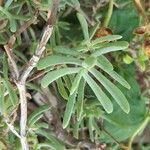
Lampranthus multiradiatus
Creeping redflush · Rosy Dewplant
Description
Source: leafsnapLampranthus multiradiatus, commonly known as the Pink Vygie or Pink Ice Plant, is a succulent belonging to the Aizoaceae family. Native to South Africa, this plant features fleshy, cylindrical green leaves that can grow up to 10 cm in length. Its pink flowers, which have a diameter of 3-4 cm, bloom from late spring through summer. This plant thrives in well-drained soil with full sun exposure, making it an excellent choice for rock gardens or ground cover. Although it can withstand drought conditions, it requires occasional watering during prolonged dry spells. In addition to its ornamental value, Lampranthus multiradiatus possesses several medicinal properties. Traditionally, it has been used to treat various ailments, including coughs, colds, fever, headaches, and stomach disorders. Overall, this succulent is an attractive addition to any garden. Its vibrant pink flowers provide a burst of color throughout the summer months, and its easy-care nature makes it a popular choice among gardeners worldwide.
Care Guide
💧 Water Every 7 days
Creeping redflush is a plant that flourishes in dry environments due to its strong drought tolerance. It typically needs watering only every 2-3 weeks. This plant prefers bright light and well-draining soil, which help support its water-conserving abilities. As an evergreen, creeping redflush retains moisture, allowing it to maintain its foliage throughout the year.
☀️ Light Full sun
Native to dry areas, Creeping redflush does best in full sun, since its native habitat features intense sunlight and very little shade. It will also tolerate partial sun, providing some flexibility in how it grows.
🌡️ Temperature 20–37.8°C
Creeping redflush prefers warm conditions and needs higher temperatures during the growing season to support growth and metabolic processes. It does well with plenty of sunlight, proper moisture, and good air circulation. However, it is vulnerable to injury from very low temperatures and from excessive watering. Maintaining balance is essential, and extremely high temperatures or overly dry conditions should also be avoided.
💨 Humidity normal (40-60%)
This plant will thrive in moderate humidity, which is probably the level in your home. However, misting it a few times a week can be very beneficial. Make sure the room has good ventilation.
🪴 Soil 0-0
🌱 Fertilizer
Creeping redflush only needs light applications of fertilizer once or twice a year during the growing season. Do not fertilize in winter or summer when it is dormant. Cut back on fertilizer for plants that have been repotted and wait a couple of months after repotting before feeding. Fertilizing promotes healthy growth and helps encourage blooms.
🪴 Pot & Repot
✂️ Pruning
Creeping redflush is a low-growing succulent known for its vibrant blooms. To encourage dense growth and remove any damage, it's best to prune in early to late winter. Cutting back leggy shoots by one-third improves the plant's health and appearance. Additionally, using clean tools minimizes stress and reduces the risk of disease, thereby enhancing future flowering.
🌿 Propagating
🐛 Diseases & pets
☠️ Toxicity
Characteristics
- Plant Type
- Shrub
- Life Cycle
- Perennial
- Genus
- Lampranthus
- Family
- Aizoaceae
- Hardiness Zone
- 9-11
- Mature Height
- 49 cm
- Mature Spread
- 49 cm
- Leaf Color
- Medium Sea Green
- Leaf Type
- Evergreen
- Flower Size
- 4.06 cm to 6.35 cm
- Bloom Time
- Mid spring, Late spring, Early summer, Mid summer
- Planting Time
- Spring, Summer, Autumn
- Harvest Time
- Summer, Early fall
- Native Area
- South Africa