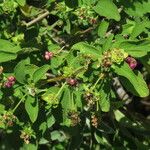
Lantana involucrata
Buttonsage · Black Sage · Bush Tea · Common Sage Bush · Sage
Description
Source: leafsnapLantana involucrata, commonly known as buttonsage, is a species of flowering plant in the verbena family. It is native to the American tropics, where it is widespread in well-drained areas. It is also found on the Galapagos Islands and Bermuda.
🎭 Eternal life, extended lifespan, insight
Care Guide
💧 Water
Buttonsage thrives in moderate humidity and can withstand short periods of dryness, as long as the soil moisture is balanced. Watering once a week is ideal. It prefers outdoor conditions where it can benefit from natural rainfall, making it well-suited for temperate climates. As an evergreen, it requires minimal changes to its irrigation routine throughout the year.
☀️ Light Full sun
Buttonsage is a sun-loving, perennial herbaceous plant native to open habitats and frequently thriving in meadows and grasslands. It prefers full sun but can tolerate partial sun conditions.
What are the sunlight requirements for Buttonsage (Lantana involucrata)?
Buttonsage, also known by its botanical name Lantana involucrata, thrives in areas that receive full sun, defined as above 6 hours of sunlight per day. It's important to observe the movement of sunlight through your garden carefully, selecting locations that offer an ideal combination of light and shade. This careful selection ensures that your Buttonsage plants remain happy and healthy, allowing them to grow optimally in their environment.
🌡️ Temperature 20–37.8°C
Buttonsage comes from tropical regions, where the weather is generally warm and humid. Therefore it is adapted to high temperatures and humidity. It does not tolerate abrupt temperature changes and prefers a constant thermal environment, so avoiding indoor temperature swings is important. It typically cannot endure cold and needs warmer conditions to develop. If the surrounding temperature falls too low, the plant may stop growing or even die.
What is Buttonsage?
Buttonsage, known botanically as Lantana involucrata, is a plant species recognized for its distinctive characteristics. However, the provided information does not include specific details about its essentials or symptoms associated with it.
💨 Humidity
🪴 Soil 6-8
🌱 Fertilizer
Appropriate fertilization is essential for Buttonsage's health and appearance. Fertilize Buttonsage during the summer, repeating the application monthly throughout the season. Nutrients provide the fuel for growth and help maintain the plant's components. Fertilizing also improves Buttonsage's flowering, ensuring the best blooms.
🪴 Pot & Repot
✂️ Pruning
Buttonsage benefits from pruning in early to late spring to encourage blooming and improve its shape. To achieve bushier growth, remove dead branches, thin out crowded areas, and shorten long stems. Regular pruning also helps to promote air circulation and reduces the risk of disease. For the best results, always use clean, sharp tools to ensure optimal regrowth.
🌿 Propagating
🐛 Diseases & pets
☠️ Toxicity
Characteristics
- Plant Type
- Herb
- Life Cycle
- Perennial
- Genus
- Lantana
- Family
- Verbenaceae
- Hardiness Zone
- 9-11
- Mature Height
- 30 cm to 91 cm
- Mature Spread
- 0.61 m to 1.22 m
- Leaf Color
- Dark Green, Forest Green
- Leaf Type
- Semi-evergreen
- Flower Color
- White
- Flower Size
- 1.02 cm to 2.03 cm
- Bloom Time
- All year round
- Planting Time
- Spring, Summer, Autumn
- Harvest Time
- All year round
- Native Area
- Bahamas, Belize, Cuba, Honduras, Mexico, Venezuela, Panama, Jamaica