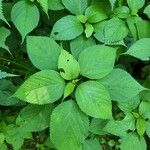
Laportea canadensis
Wood-nettle · Itchweed · Canadian Wood-Nettle · Canadian woodnettle · Canada Lettuce
Description
Source: leafsnapLaportea canadensis, commonly called Canada nettle or wood-nettle, is an annual or perennial herbaceous plant of the nettle family Urticaceae, native to eastern and central North America. It is found growing in open woods with moist rich soils and along streams and in drainages.
🎭 Expelling spirits, Safeguarding, Restoration
Care Guide
💧 Water
Canadian wood nettle thrives in moist woodlands, where it prefers consistent moisture but can tolerate short periods of dryness. To mimic its natural habitat, it's best to water it weekly, while seasonal rainfall further supports its growth cycles, resulting in lush, green foliage.
How should I water my Canadian wood nettle to make sure it grows well?
To effectively water the Canadian wood nettle, it is suggested to use filtered water at room temperature. Tap water should be avoided as it may contain harmful particles. The reason for using room temperature water is that the plant is accustomed to warm environments, and the shock of cold water can be detrimental. Additionally, overhead watering should be avoided as it can cause issues with the foliage. Instead, it is recommended to thoroughly soak the soil with filtered room temperature water. This helps to moisturize the roots and facilitate their spread in the soil, allowing for the collection of necessary nutrients.
What do I do if I give my Canadian wood nettle too much or too little water?
Overwatering is a more common issue and can harm your Canadian wood nettle by causing wilting, yellowing leaves, and diseases like root rot, mold, and mildew. Underwatering is less common due to the plant's drought tolerance, but it can still happen and result in brittle, brown leaves. To prevent overwatering, monitor your plant for early signs and reduce watering immediately. Consider the soil's drainage and switch to a loose, well-draining potting mix if needed. If your plant shows signs of underwatering, simply increase watering until the signs improve.
How frequently should I give water to my Canadian wood nettle?
If your Canadian wood nettle is in a pot, you can determine if it needs water by checking the soil. Simply stick your finger into the soil, and if the top two to three inches are dry, it's time to water it. If you have the Canadian wood nettle planted outdoors in the ground, you can use a similar method to test the soil. Again, if the first few inches of soil have dried out, it's time to give it water. During spring and early fall, you'll typically need to water it about once a week. But during extremely hot weather, you may need to increase watering to twice a week or more. That being said, mature and well-established Canadian wood nettles have a great ability to tolerate drought.
How much water does my Canadian wood nettle require?
Watering your Canadian wood nettle requires a generous amount of water. When the top two to three inches of soil are dry, it's best to give the plant a thorough watering, ensuring that the soil is completely soaked. The water should be enough to cause excess water to flow through the drainage holes at the bottom of the pot. In case you don't see any excess water draining, you may have not provided enough water, potentially leading to underwatering. However, be cautious not to let the water accumulate in the soil, as this can be harmful to the plant. On the other hand, if water doesn't drain properly through the pot, it indicates poorly draining soils, which can be detrimental to the plant's health and should be avoided. If the plant is located outside, 1 inch of rain per week will suffice.
How should I water my Canadian wood nettle as it grows?
The water requirements of the Canadian wood nettle vary depending on its growth stages. In the early years or after transplanting, the plant needs more water to support root growth, which is crucial for future development. At this stage, the roots thrive with extra moisture. As the plant matures, it requires less water. Additionally, during the bloom period, the flower development consumes a significant amount of moisture, so you may need to water the plant more.
☀️ Light Partial sun
The Canadian wood nettle performs best in moderate light but can also grow in dimmer locations. Native to habitats with changing light levels, it can adjust to places where sunlight is limited. Too much exposure can hinder its growth, while too little sun may result in slow development.
What are the sunlight requirements for Canadian wood nettle?
Canadian wood nettle thrives in both partial sun and full shade environments, meaning it requires about 3-6 hours of sunlight for partial sun conditions and less than 3 hours of sunlight for full shade. It's essential to observe the movement of sunlight through your garden throughout the day to find spots offering an optimal light balance. While this plant is adaptable, too much direct sunlight can hinder its growth, and insufficient light may slow its development. Hence, choosing the right location with the appropriate amount of sunlight is crucial for the plant's health.
How do I use artificial lighting for Canadian wood nettle indoors?
When natural sunlight is not enough, especially during winter or in areas of your home that do not receive sufficient sunlight, artificial lights can be a great solution. Indoor Canadian wood nettles require adequate lighting to ensure optimal growth. LED lights are recommended due to their ability to provide specific wavelengths needed by plants. The intensity of light required varies by plant type: full sun plants need 30-50W/sq ft, partial sun plants need 20-30W/sq ft, and full shade plants need 10-20W/sq ft. Place the artificial light source 12-36 inches above the plant and keep it turned on for 8-12 hours per day to mimic natural sunlight duration.
What are the symptoms of light deficiency in Canadian wood nettle?
Symptoms of light deficiency in Canadian wood nettle include smaller new leaves, leggy or sparse growth, faster leaf drop, delayed growth or a complete halt in new leaf production, lighter-colored new leaves, and conditions like chlorosis, sunscald, leaf curling, wilting, and leaf scorching. These symptoms suggest the plant is not receiving sufficient light, which affects its ability to photosynthesize and maintain health. In contrast, signs like chlorosis, sunscald, and leaf scorching indicate damage from overexposure to sunlight.
What solutions can I apply if my Canadian wood nettle is not receiving adequate sunlight?
To address insufficient sunlight for Canadian wood nettles, gradually relocate them to sunnier spots to receive 3-6 hours of direct daylight daily, ensuring they adapt to the light conditions progressively. For indoor plants that are too large or not easy to move, consider using artificial lighting, like a desk or ceiling lamp for at least 8 hours daily, or invest in professional grow lights. For outdoor plants, a gradual move to sunnier spots while avoiding sudden changes is crucial to prevent sunburn. Reducing obstructions such as trimming tree branches can also enhance sunlight exposure. Additionally, transplanting smaller plants during their dormant period to more illuminated locations with good drainage can be beneficial. Remember, parts of the plant damaged due to light deficiency might not recover, but new growth should be healthy with improved light exposure.
🌡️ Temperature 5–32.2°C
The Canadian wood nettle requires a cool to temperate climate to grow optimally. Its native growth environment corresponds to temperature requirements between 5 and 32 ℃ (41 to 89.6 ℉). Across seasons, it is advisable to adjust the temperature accordingly for the plant to flourish.
What are the essential care requirements for the Canadian wood nettle (Laportea canadensis)?
The Canadian wood nettle thrives in a cool to temperate climate, with optimal growth temperatures ranging from 5 to 32°C (41 to 89.6°F). It's important to adjust the temperature according to the season to ensure the plant flourishes. The Canadian wood nettle is highly resistant to cold, and special frost protection measures are not usually necessary. However, if winter temperatures are expected to fall below its tolerance limit, it's essential to protect the plant by covering it with soil or straw. Additionally, watering the plant abundantly before the first freeze in autumn to keep the soil moist is recommended, as this helps prevent drought and water scarcity during winter and early spring.
How should you care for Canadian wood nettle in low temperatures?
Canadian wood nettle is cold-tolerant and flourishes best when temperatures are kept above its minimum growth threshold. Throughout winter, it's important to ensure the temperature remains above the plant's tolerance level. If temperatures drop below this threshold, the plant may not show immediate signs of distress; however, you might observe a decrease in sprouting or a complete lack of sprouting in the spring. To address this, remove any parts of the plant that have failed to sprout in the spring.
What steps should be taken if the Canadian wood nettle experiences high temperatures?
During the summer, it's crucial to maintain temperatures below the maximum suitable growth temperature for the Canadian wood nettle. Exceeding the tolerable maximum can result in lighter leaf colors, curling, susceptibility to sunburn, and in severe cases, wilting and drying of the plant. To mitigate these issues, trim away sunburned and dried-up parts of the plant. Move the plant to a shaded location during the midday and afternoon sun, or use a shade cloth to protect it. Additionally, watering the plant in the morning and evening can help keep the soil moist and reduce stress on the plant.
💨 Humidity
🪴 Soil 6-7
🌱 Fertilizer
A single fertilizer application in spring is generally enough for Canadian wood nettle, though multiple feedings can enhance growth. Apply fertilizer roughly once a month to every six weeks. Fertilizing improves the leaves' appearance and function, helping maintain uniform color and a healthy texture. It also encourages root development and nutrient uptake for long-term plant health.
🪴 Pot & Repot
✂️ Pruning
🌿 Propagating
🐛 Diseases & pets
☠️ Toxicity
Characteristics
- Plant Type
- Herb
- Life Cycle
- Perennial
- Genus
- Laportea
- Family
- Urticaceae
- Hardiness Zone
- 4-8
- Mature Height
- 0.3 m to 1.52 m
- Mature Spread
- 30 cm to 46 cm
- Leaf Color
- Green
- Leaf Type
- Deciduous
- Flower Color
- Green, Yellow
- Flower Size
- 2.54 cm
- Bloom Time
- Early summer, Mid summer
- Planting Time
- Spring, Summer
- Harvest Time
- Mid summer
- Native Area
- Mexico