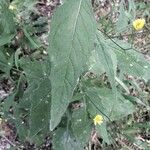
Lapsana communis
Nipplewort · Hawk's-beard · Common Nipplewort · Zgăbunţică · Lapsana
Description
Source: leafsnapLapsana communis, the common nipplewort, is a species of flowering plant in the family Asteraceae. It is native to Europe and southwestern Asia. and widely naturalized in other regions including North America.
💡 Common nipplewort is a wild plant that can be either annual or perennial. Its young leaves and shoots are edible, either raw or cooked, but they should be harvested before the plant flowers. This plant is a common and often invasive weed, found in many parts of the world, including the United States and Canada.
🌳 Though common nipplewort is often dismissed as just a weed, recent research indicates it holds promise in agricultural systems as a companion plant because it attracts beneficial insects that can contribute to pest control. It thus has potential within agroecological strategies, enhancing biodiversity.
Care Guide
💧 Water
Common nipplewort, native to temperate regions, thrives best in moderately moist soils. It does well with consistent moisture, as long as the soil is not waterlogged. Watering once a week is ideal to prevent saturation. Typically grown outdoors, common nipplewort is resilient during the growing season and requires adequate moisture for optimal growth.
How should I water my Common nipplewort plant?
To water Common nipplewort, you have several options. You can use a garden hose with a spray nozzle, a watering can, or any other common watering tool you have. This plant isn't too picky about its water source - it can survive on rainwater, tap water, or filtered water. However, it's best not to water Common nipplewort from overhead as it can harm the leaves and flowers and possibly lead to disease. Instead, a drip irrigation system is often the most effective way to water this plant. These systems evenly distribute water directly to the soil. If you're growing Common nipplewort in a container, you can use a cup, watering can, or tap to water it directly at the soil.
What should I do if I give my Common nipplewort too much water or too little water?
The remedy for underwatering Common nipplewort is simple: water it more regularly if you notice it lacking moisture. On the other hand, overwatering can be a serious problem that may lead to diseases and the plant dying. To prevent this, it is important to choose a proper growing location with enough sunlight and good drainage. If you have overwatered nipplewort in a pot, it may be necessary to transfer it to a new pot with better soil and drainage.
How often should I give water to my Common nipplewort?
Common nipplewort needs regular watering throughout the growing season. In spring, water the plant about once per week. As the season progresses and it gets warmer, increase watering to about two to three times per week. However, be careful not to exceed this rate as it can harm the plant. Regardless of watering frequency, make sure the soil remains moist but not overly wet. When it comes to potted Common nipplewort, you'll need to water it more frequently. Potted soil can heat up and dry out faster than ground soil. In most cases, plan to water a container-grown plant a few times per week, compared to just once for an in-ground plant.
How much water does my Common nipplewort plant require?
To determine how much water to give to your Common nipplewort, there are a few approaches you can take. One way is to feel the soil for moisture and water until the first six inches of soil feel moist. Another option is to follow a set measurement, typically around two gallons per week, depending on temperature and soil dryness. However, be cautious not to overwater if your plant requires less than two gallons. When growing Common nipplewort in a container, a different method is needed. Water enough to moisten all dry layers of soil, which can be tested by sticking your finger in the soil or observing a slight trickle of excess water from drainage holes.
How can I know if I'm giving my Common nipplewort plant enough water?
Avoiding overwatering your Common nipplewort can be a challenge. These plants have deep roots that need to be watered weekly, but they are also prone to root rot and browning when overwatered. Underwatering is less of a concern as these plants can survive without additional watering for a period of time. However, if you go too long without watering, your Common nipplewort may wilt and develop dry leaves.
☀️ Light Partial sun
Common nipplewort has a flexible relationship with sunlight, favoring spots with filtered light but also tolerating full sun. This stems from its native habitat, which offers a range of light conditions. Excessive exposure can cause stress, while too little light may impede healthy growth.
What are the sunlight requirements for Common nipplewort?
Common nipplewort (Lapsana communis) thrives in varying sunlight conditions. It enjoys areas with filtered light but can also tolerate full sun exposure. Native to environments with diverse lighting, it requires about 3-6 hours of sunlight (partial sun) for optimal growth, but can withstand more than 6 hours (full sun). However, too much direct sunlight may stress the plant, while insufficient light could impede its growth. Therefore, observing your garden's sunlight pattern and choosing locations that balance light and shade ensures the plant's well-being.
How can artificial lighting be used for Common nipplewort indoors?
When natural sunlight is not sufficient for Common nipplewort indoors, especially during winter or in less sunny spaces, artificial lighting serves as an excellent alternative. LED lights are recommended because they can be tailored to supply specific wavelengths needed by the plants. For full sun plants, 30-50W per square foot is needed, partial sun plants require 20-30W, and full shade plants need 10-20W. The light source should be placed 12-36 inches above the plant to mimic natural sunlight, and plants typically need 8-12 hours of light per day. This setup encourages healthier, faster growth by compensating for the lack of natural sunlight.
What are the symptoms of inadequate lighting in Common nipplewort?
Symptoms of insufficient lighting in Common nipplewort include smaller new leaves compared to older ones, leggy or sparse growth, early leaf drop, slowed or halted growth, paler new leaves, and conditions such as chlorosis (yellowing leaves), sunscald (damaged areas from intense sun), leaf curling, wilting, and leaf scorching. These signs indicate that the plant is struggling with the lighting conditions, either from too little light, causing it to enter survival mode, or from excessive sunlight, leading to damage and stress.
What solutions can help Common nipplewort adjust to its light environment?
To optimize growth for Common nipplewort, gradually acclimate it to its ideal light conditions. For indoor plants, move them to sunnier spots weekly until they receive the right amount of sunlight or use artificial lights to supplement light, ensuring they're on for at least 8 hours daily. For outdoor plants, also move them gradually to avoid sunburn. Reducing obstructions like pruning trees can help, and for those in the ground, consider transplanting during the dormant season to a brighter location with good drainage. Although parts affected by insufficient light may not recover, new growth will be healthier after adjusting the light exposure.
🌡️ Temperature 5–32.2°C
Common nipplewort naturally prospers in climates where temperatures usually range from 68 to 95 °F (20 to 35 ℃). Its preference for warmth may require adjusting settings in colder seasons to keep conditions within that range.
What temperatures are ideal for the growth of Common Nipplewort?
Common nipplewort, known botanically as Lapsana communis, thrives best in climates where temperatures consistently remain within a range of 68 to 95 °F (20 to 35 °C). This plant prefers warmth and may require adjustments in its environment during colder seasons to maintain these ideal temperatures. Although it exhibits strong cold resistance, it is notable that special frost protection measures are usually not necessary. However, in instances where winter temperatures are anticipated to fall below -30°C, it is crucial to provide cold protection by covering the plant with insulating materials such as soil or straw. Additionally, abundant watering before the first freeze in autumn is recommended to ensure the soil stays moist and freezes, helping prevent drought and water scarcity for the plant during winter and early spring.
How does Common Nipplewort respond to low temperatures, and what are the solutions?
Common nipplewort is known for its cold tolerance, thriving best when temperatures are above 20°C and should be kept above 0°C during winter. Despite not showing noticeable changes at temperatures falling below -30°C, such conditions may lead to a reduction or even absence of sprouting in the spring. To manage these situations, it is advised to remove any parts of the plant that have failed to sprout come spring, ensuring the healthier growth of the remaining plant.
What effects do high temperatures have on Common Nipplewort, and how can they be mitigated?
During the summer, it is essential to ensure that Common nipplewort’s surroundings do not exceed 35°C. Exposure to temperatures above 38°C can cause the plant’s leaves to become lighter in color, curl, become prone to sunburn, and in extreme cases, result in the entire plant wilting and drying out. To mitigate these effects, trimming away sunburned and dried-up parts of the plant is advisable. Moving the plant to a shadier location or utilizing a shade cloth to protect it from the midday and afternoon sun can also be beneficial. Additionally, maintaining soil moisture through watering in the morning and evening is crucial during these hotter periods.
💨 Humidity high (>60%)
This plant needs special care because it loves high humidity levels of 60-80% or more. The best way to achieve this is by placing a humidifier near the plant. Daily misting is also essential! Make sure the room has good ventilation.
🪴 Soil 6-7
🌱 Fertilizer
Common nipplewort benefits from frequent, weak applications of fertilizer to encourage healthy leaf growth. Fertilize Common nipplewort about once a month during the summer. Nitrogen is essential for foliage, and providing nitrogen-rich sources helps Common nipplewort thrive.
🪴 Pot & Repot
✂️ Pruning
🌿 Propagating
🐛 Diseases & pets
☠️ Toxicity
Lapsana communis has no toxic effects reported.
Characteristics
- Plant Type
- Herb
- Life Cycle
- Annual
- Genus
- Lapsana
- Family
- Asteraceae
- Hardiness Zone
- 4-8
- Mature Height
- 0.91 m to 1.22 m
- Mature Spread
- 30 cm
- Leaf Color
- Green
- Leaf Type
- Deciduous
- Flower Color
- Yellow
- Flower Size
- 1.02 cm to 2.03 cm
- Bloom Time
- Late spring, Early summer, Mid summer
- Planting Time
- Spring
- Harvest Time
- Early summer, Mid summer